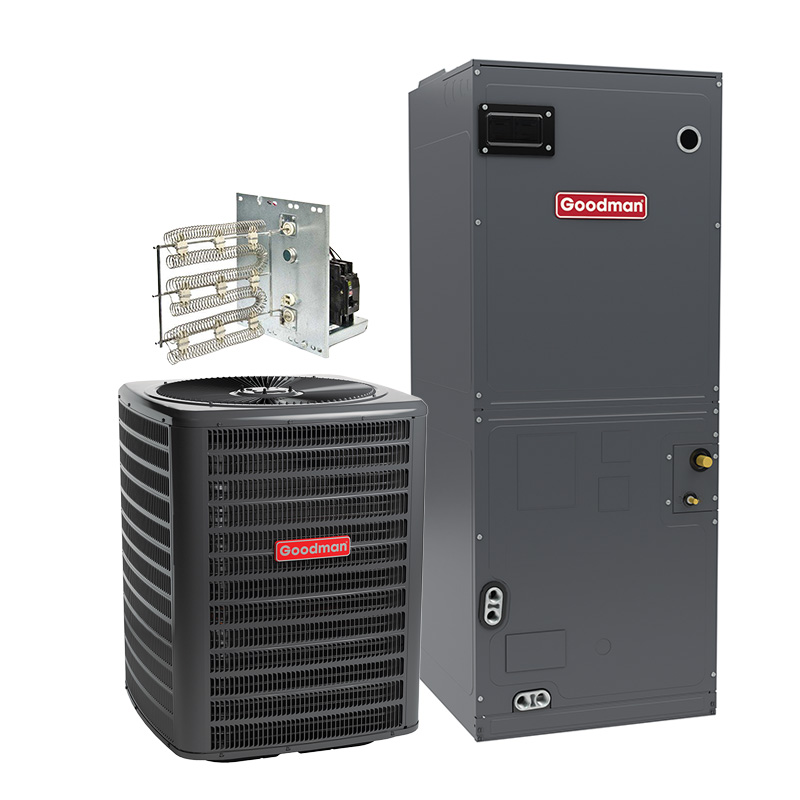
Goodman 3 Ton 14.5 SEER2 R32 Air Conditioner Split System With Electric Heat
View on AC Direct see your lowest price →Check current price on AC Direct →
Key features
- 3-ton cooling capacity suited to roughly 1,400 to 1,800 sq ft depending on load conditions
- 14.5 SEER2 efficiency meets current federal minimums for most U.S. regions
- R-32 refrigerant with lower global warming potential than R-410A
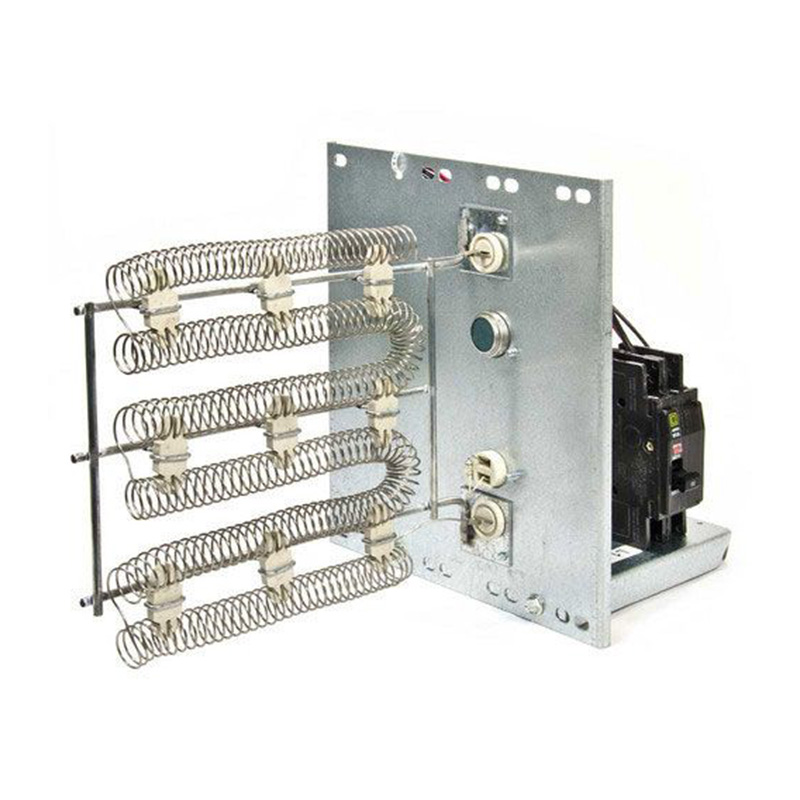
- Electric heat strips in air handler provide supplemental or primary heating
- Single-stage compressor operation for straightforward, predictable performance
- Priced approximately 15 to 25 percent below comparable Trane, Lennox, and Carrier equipment
About this system
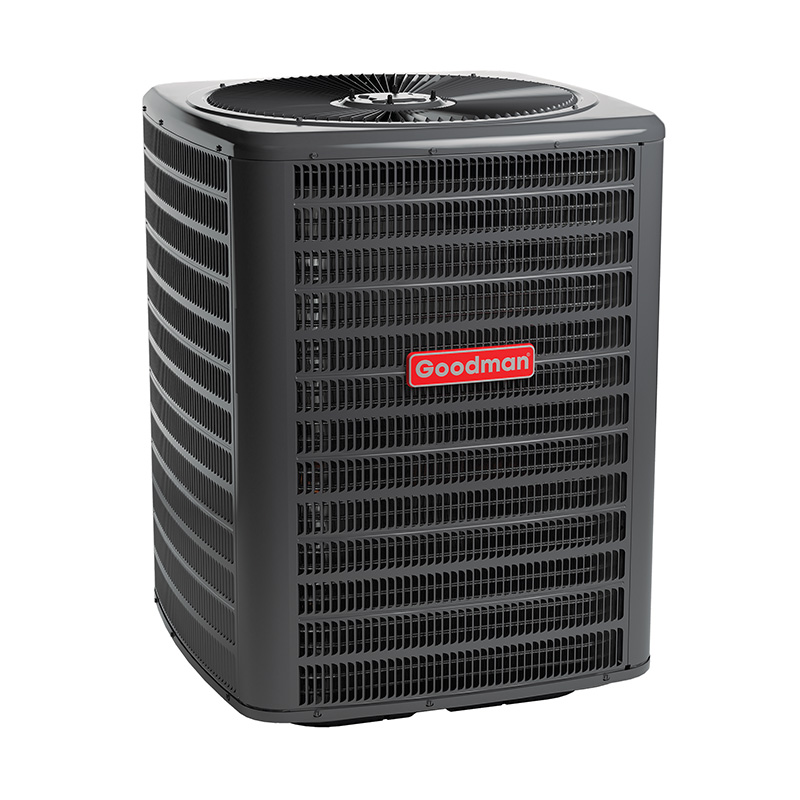
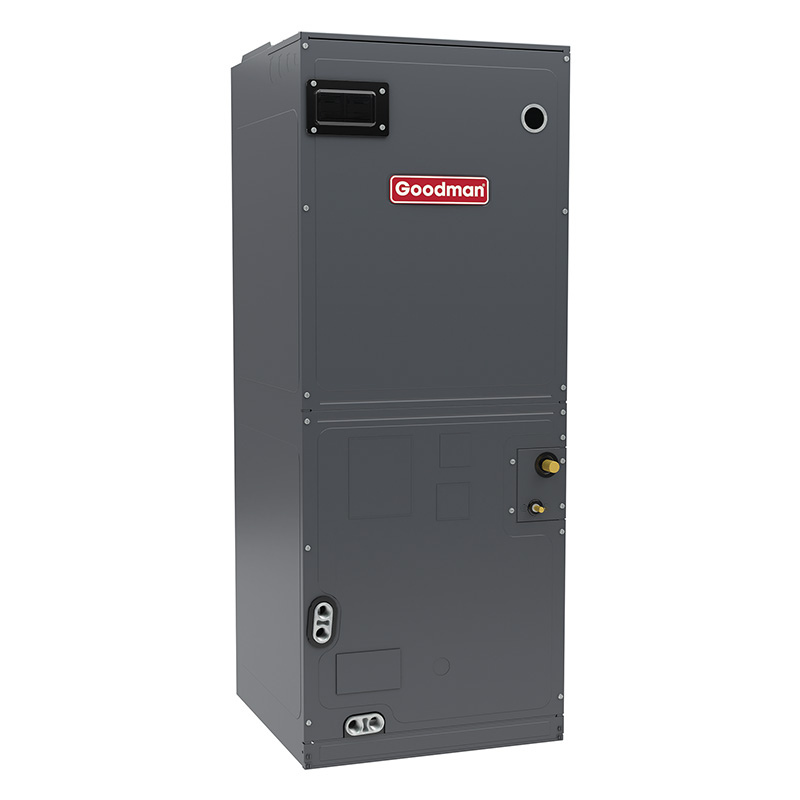
The Goodman 3 Ton 14.5 SEER2 R-32 split system pairs an outdoor condensing unit with an electric air handler to cool and heat a home typically in the 1,400 to 1,800 square foot range, depending on local climate, insulation, and ceiling height. Running on R-32 refrigerant rather than the older R-410A puts this system ahead of the regulatory curve: R-32 has a significantly lower global warming potential and is becoming the industry standard, which matters for long-term parts and refrigerant availability. The 14.5 SEER2 efficiency rating clears the federal minimum for most U.S. climate zones, meaning you will not be buying a system that is immediately outdated, though it sits at the entry tier rather than the high-efficiency category.
This configuration suits homeowners who need a reliable, code-compliant replacement or new installation without paying a premium brand markup. The electric heat component handles supplemental or primary heating through resistance elements in the air handler, making it straightforward in mild-to-moderate heating climates or wherever a heat pump is not practical. As a single-stage system, the compressor runs at full capacity or not at all, which is efficient enough for average use but means less humidity control and more on-off cycling compared to two-stage or variable-speed equipment. Budget-conscious buyers who prioritize upfront cost over long-term efficiency gains will find this system squarely in their wheelhouse, provided the installation is done correctly.
The Goodman 3 Ton 14.5 SEER2 R-32 split system is a sensible, budget-friendly choice for homeowners who need a code-compliant cooling and electric heat solution without stretching their budget toward a premium brand. Performance and longevity lean heavily on installation quality, and the documented track record includes some failure modes worth knowing before you buy. If your priorities are low upfront cost and a straightforward system, this unit delivers on that promise with the trade-offs of a value-tier product.
Overall score is the average of the five ratings above.
What we like
- Meaningfully lower purchase price than Carrier, Trane, or Lennox equivalents at similar efficiency
- R-32 refrigerant is forward-looking and easier to source as R-410A phases out
- 14.5 SEER2 meets federal standards and avoids the efficiency penalty of older minimum-spec systems
- Electric heat integration in one split system simplifies installation in homes without gas
- Dual-run capacitor failures, the most common documented issue, are relatively low-cost repairs in the $300 to $600 range
Trade-offs
- Compressor lifespan averages 10 to 14 years versus 15 to 20 years for premium brands
- Evaporator coil leaks appear in a meaningful share of owner reviews and can be costly to address
- Single-stage operation provides less humidity control and comfort precision than two-stage or variable-speed systems
- ConsumerAffairs scores around 2.5 out of 5, with repair cost escalation commonly reported after year seven
What homeowners and pros say about Goodman
Owners who rate Goodman positively on dealer platforms, where the aggregate Google dealer score sits around 3.8 out of 5, most often point to the price advantage as the deciding factor and report satisfactory cooling in the early years of ownership. The picture on ConsumerAffairs, which scores closer to 2.5 out of 5, is less favorable and leans toward owners who have experienced repair costs climbing after roughly year seven. For a system like this 3-ton R-32 unit, the documented failure modes worth knowing are dual-run capacitor failures, which are the most commonly reported issue and generally a manageable repair in the $300 to $600 range, and evaporator coil leaks, which appear in a meaningful share of owner accounts and carry higher repair costs. A minority of owners also report refrigerant leaks in the first year, and technicians consistently attribute those to installation or initial charge issues rather than a defect in the unit itself.
HVAC professionals who work on Goodman equipment regularly have a measured view: the hardware is functional and the parts are widely available, but they emphasize that installation quality is the single biggest variable in how long one of these systems performs. For a value-tier unit running R-32, that advice is especially relevant because proper line set compatibility and refrigerant charge accuracy matter more when there is less margin built into the components. Compressor longevity in Goodman units tends to average 10 to 14 years according to documented service histories, which is shorter than the 15 to 20 years more commonly seen with premium brands. For buyers who understand these trade-offs and pair this system with a qualified installer, the value proposition is genuine; for those expecting premium-brand durability at a value-brand price, the real-world record suggests tempered expectations are wise.
Sources: ConsumerAffairs Goodman owner reviews, AHRI Directory of Certified Product Performance, U.S. DOE appliance and equipment efficiency standards, Goodman product specification sheets.
What it costs to run
At 14.5 SEER2, cooling this 3-ton system for a typical 1200-hour cooling season at the U.S. average electricity rate of $0.17/kWh works out to roughly $506 per year in cooling, about $42 less per year than a minimum-efficiency 13.4 SEER2 unit of the same size. Your real cost depends on your climate and local rate.
Method: (36,000 BTU/hr ÷ 14.5 SEER2) × 1200 hours ÷ 1000 × $0.17/kWh. Rate source: U.S. EIA average; cooling hours: moderate-climate estimate.
How it compares
| Brand | Comparable model | SEER2 | Stage | Price position |
|---|---|---|---|---|
| Goodman | 3 Ton 14.5 SEER2 R-32 AC Split System with Electric Heat | 14.5 | Single-stage | Value pick |
| Carrier | Comfort Series (24ACC6) | 14.5 | Single-stage | Typically 15 to 25 percent more than Goodman |
| Trane | XR14c | 14.5 | Single-stage | Typically 15 to 25 percent more than Goodman |
| Lennox | Merit Series (ML14XC1) | 14.5 | Single-stage | Typically 15 to 25 percent more than Goodman |
Competitor rows are comparable single-stage units at similar efficiency; price is relative position, not a quote.
Questions about this system
Will this system work with my existing R-410A line set and air handler?
R-32 systems typically require dedicated line sets and components rated for R-32, and mixing with R-410A equipment is not recommended. You should confirm with your installer that the full system, including the air handler and refrigerant lines, is compatible before purchase.
What size home will a 3-ton system actually cool?
A rough rule of thumb puts 3 tons at 1,400 to 1,800 square feet, but the real answer depends on your climate zone, insulation, window area, and ceiling height. A proper Manual J load calculation by your HVAC contractor is the only reliable way to confirm the right size for your home.
How does the electric heat component work and what will it cost to run?
The electric heat uses resistance strips in the air handler, similar to a large hair dryer, which are effective but less efficient than a heat pump. In colder climates or for primary heating, operating costs can be substantially higher than gas or heat pump alternatives, so this setup is best suited to mild heating climates or as a backup.
What are the most common repairs I should expect on a Goodman system like this?
Dual-run capacitor failure is the most frequently documented issue and typically runs $300 to $600 to fix. Evaporator coil leaks show up in a meaningful share of owner accounts and are more involved repairs. Refrigerant leaks reported within the first year are usually traced to installation or initial charge quality rather than the equipment itself.
Why is installation quality emphasized so much with Goodman equipment?
Goodman's own performance and longevity are heavily dependent on how well the system is sized, charged, and commissioned. Technicians consistently cite installation quality as the single biggest factor in how long a Goodman unit lasts, so choosing an experienced, licensed contractor matters more with a value-tier brand than it might with a premium one.
Specifications
| Cooling capacity | 3 Ton |
| Efficiency | 14.5 SEER2 |
| Refrigerant | R-32 |