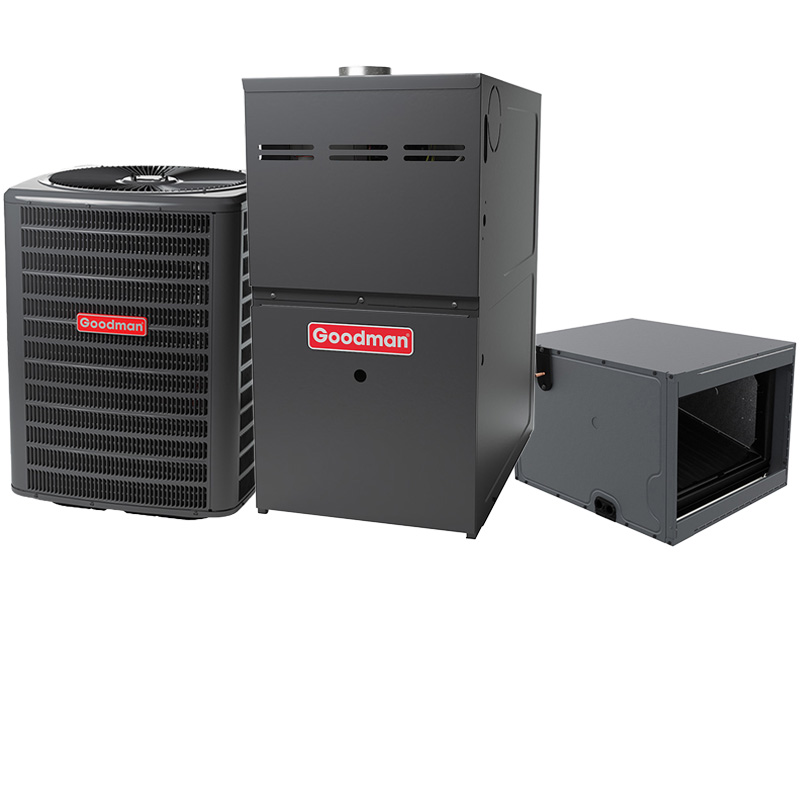
Goodman R32 4 Ton 13.4 SEER2 80000 BTU 80% Multi-Speed ECM Gas Furnace and Air Conditioner System – Horizontal
View on AC Direct see your lowest price →Check current price on AC Direct →
Key features
- 4-ton capacity suits homes roughly 1,800 to 2,400 sq ft depending on load calculation
- 13.4 SEER2 meets 2023 federal minimum efficiency standards for most U.S. regions
- R-32 refrigerant offers lower global-warming potential than legacy R-410A systems
- Multi-speed ECM blower motor improves humidity control and reduces fan electricity use
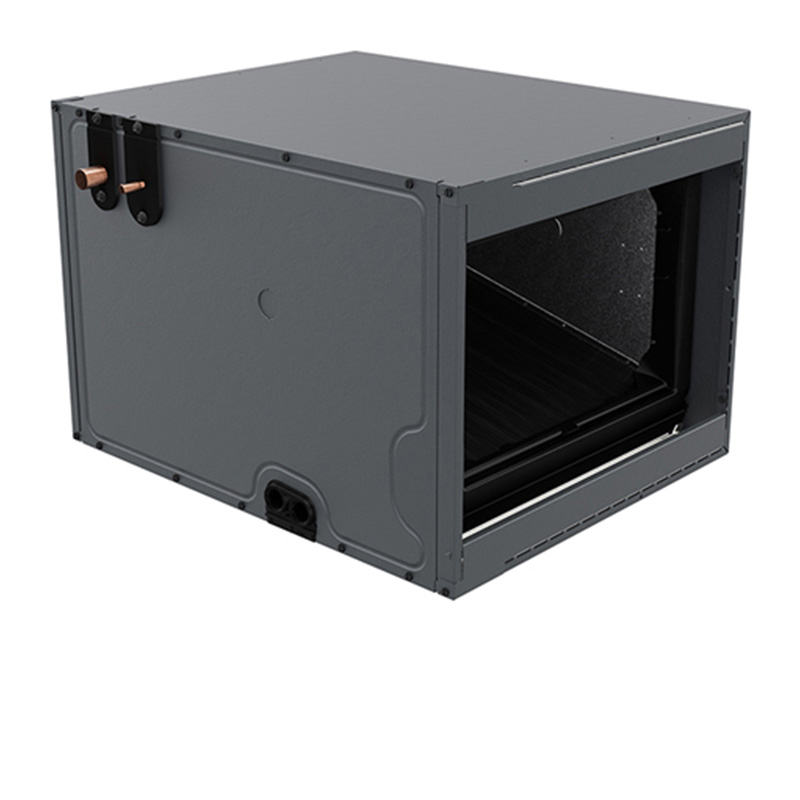
- Horizontal cabinet configuration designed for attic, crawlspace, and manufactured-home installs
- 80,000 BTU output at 80% AFUE covers moderate to large heating loads in mixed climates
About this system
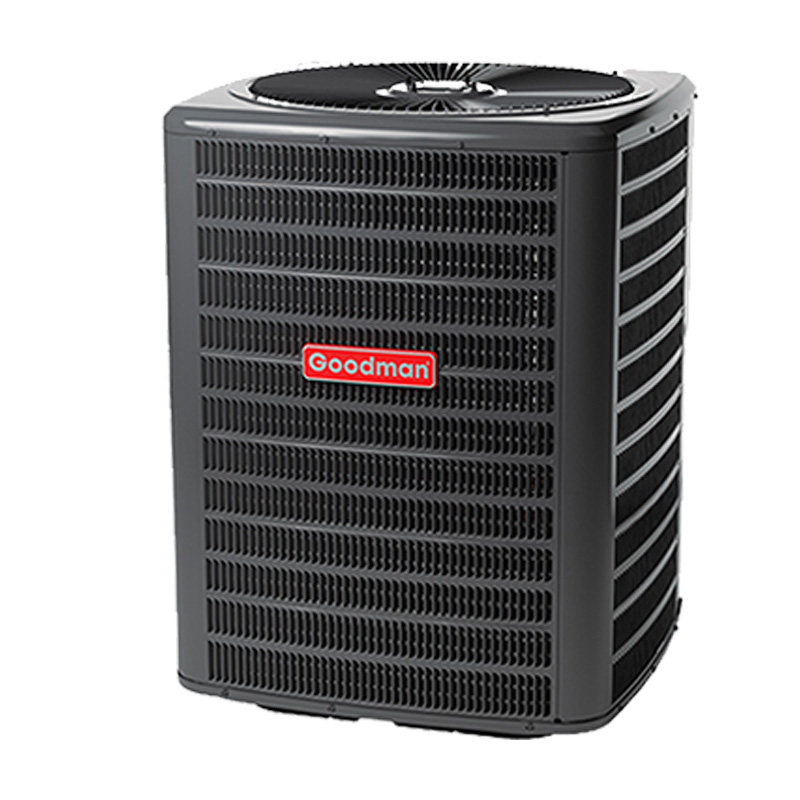
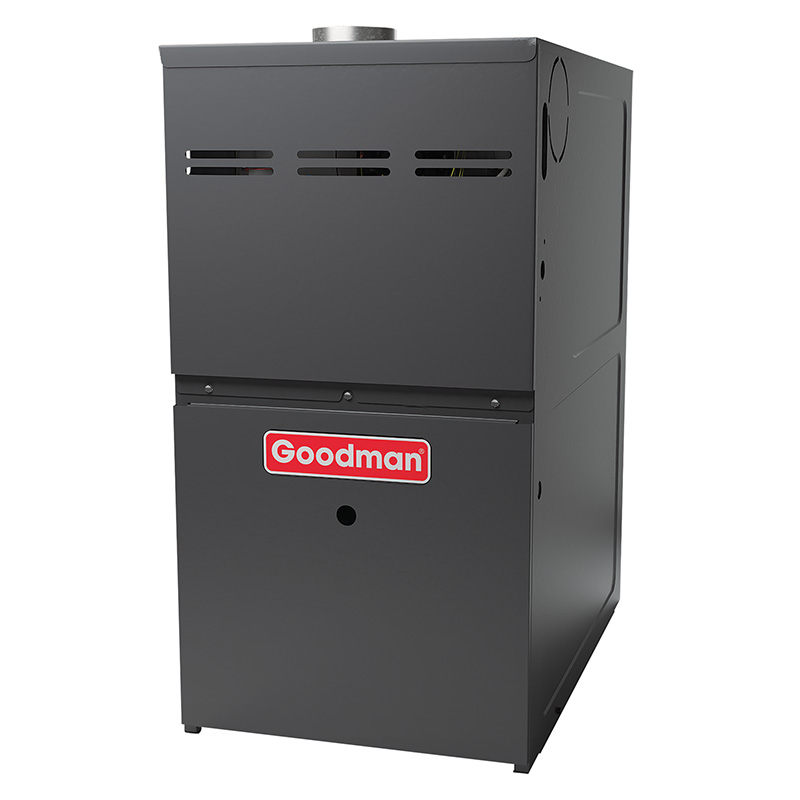
This Goodman package combines a 4-ton, 13.4 SEER2 air conditioner using the newer R-32 refrigerant with an 80,000 BTU, 80% AFUE multi-speed ECM gas furnace in a single horizontal configuration. The horizontal cabinet is designed for tight attic installs, crawlspace applications, or manufactured homes where upflow and downflow units simply will not fit. At 4 tons, it covers roughly 1,800 to 2,400 square feet depending on your climate zone, insulation level, and local Manual J load calculation.
The 13.4 SEER2 rating sits right at the federal minimum efficiency threshold that took effect in 2023, meaning you get code-compliant performance without paying for mid-tier or high-efficiency upgrades. The multi-speed ECM blower motor is a meaningful step above a single-speed PSC motor: it runs at lower speeds during moderate conditions, which improves humidity control, reduces temperature swings, and cuts blower electricity consumption. R-32 refrigerant carries a lower global-warming potential than the R-410A it replaces, and its higher efficiency per unit volume means the system can use a smaller refrigerant charge overall. This system suits buyers replacing an aging unit in an attic or manufactured home on a defined budget who want a straightforward, code-minimum setup without the premium brand markup.
This Goodman horizontal system is a practical, budget-conscious choice for attic or crawlspace installations where code-minimum efficiency and a lower upfront cost matter most. The ECM blower is a genuine comfort upgrade over basic single-speed alternatives, but the brand's documented history of capacitor failures, coil leaks, and compressor longevity that trails premium competitors means long-term ownership costs can erode the initial savings. Buyers who pair it with a quality installation and a solid service plan will get reasonable value; those expecting set-and-forget reliability over 15-plus years may be disappointed.
Overall score is the average of the five ratings above.
What we like
- Priced 15 to 25 percent below comparable Carrier, Trane, and Lennox systems
- Horizontal cabinet fills a real gap for attic, crawlspace, and manufactured-home applications
- Multi-speed ECM blower improves dehumidification and comfort compared to single-speed units
- R-32 refrigerant is more environmentally responsible and increasingly well-supported by technicians
- Widely available parts network makes repairs faster and often cheaper than with niche brands
Trade-offs
- Dual-run capacitor failures are the most commonly reported issue, typically appearing mid-life at a cost of $300 to $600 per repair
- Evaporator coil leaks appear in a meaningful share of owner reports and can be a costly mid-term repair
- Compressor lifespan averages 10 to 14 years versus 15 to 20 for premium-brand compressors, shortening the replacement cycle
- 13.4 SEER2 is code-minimum efficiency, so utility savings are modest compared to 15-plus SEER2 alternatives
What homeowners and pros say about Goodman
Homeowners who choose Goodman most often point to the lower upfront price as the deciding factor, and dealer-level Google reviews reflect that satisfaction, averaging around 3.8 out of 5 across hundreds of locations where affordability is the recurring praise. The picture shifts on complaint-driven channels: ConsumerAffairs scores sit around 2.5 out of 5, and the pattern there is consistent. Owners are largely fine for the first several years, then repair costs begin to climb around year seven. The two failure modes that generate the most frustration are evaporator coil leaks, which can surface in the mid-life of the system, and dual-run capacitor failures, a more forgiving problem that typically runs $300 to $600 to fix but still stings if it happens repeatedly.
HVAC technicians tend to have a nuanced view of Goodman. Many install it routinely and report acceptable outcomes when the job is done right. They flag compressor longevity as a genuine gap: Goodman compressors average 10 to 14 years in real-world reports, compared to 15 to 20 years for premium brands, which matters on a horizontal attic unit where access and replacement labor costs are higher than a standard closet install. A small but noted share of owners report refrigerant leaks in the first year, which techs generally attribute to factory charge issues or installation error rather than a design flaw. For this horizontal configuration specifically, attic heat and access difficulty make a careful initial install and regular maintenance checks more important than they would be in a ground-level application.
Sources: ConsumerAffairs Goodman owner reviews, AHRI Directory of Certified Product Performance, U.S. DOE appliance and equipment efficiency standards, Goodman product specification sheets.
What it costs to run
At 13.4 SEER2, cooling this 4-ton system for a typical 1200-hour cooling season at the U.S. average electricity rate of $0.17/kWh works out to roughly $731 per year in cooling, about $0 less per year than a minimum-efficiency 13.4 SEER2 unit of the same size. Your real cost depends on your climate and local rate.
Method: (48,000 BTU/hr ÷ 13.4 SEER2) × 1200 hours ÷ 1000 × $0.17/kWh. Rate source: U.S. EIA average; cooling hours: moderate-climate estimate.
How it compares
| Brand | Comparable model | SEER2 | Stage | Price position |
|---|---|---|---|---|
| Goodman | R-32 4-Ton 13.4 SEER2 Horizontal Gas System | 13.4 | Multi-speed | Value pick |
| Carrier | Comfort Series (CA14 / 58STA pairing) | 13.4-14.0 | Single-stage | Typically 15 to 25 percent more than the Goodman |
| Trane | XR14 / S8X1 series pairing | 13.4-14.0 | Single-stage | Typically 15 to 25 percent more than the Goodman |
| Lennox | Merit ML14 / ML180 series pairing | 13.4-14.0 | Single-stage | Typically 15 to 25 percent more than the Goodman |
Competitor rows are comparable single-stage units at similar efficiency; price is relative position, not a quote.
Questions about this system
Why does this system have a horizontal configuration instead of upflow or downflow, and can it be converted?
Horizontal units are engineered to lie on their side, routing supply and return air through the ends rather than the top or bottom. This makes them the standard choice for attic installations and certain manufactured homes. Most horizontal Goodman units are not field-convertible to upflow or downflow, so confirm your installation orientation with your installer before purchasing.
What does R-32 refrigerant mean for service costs compared to my old R-22 or R-410A system?
R-32 is the refrigerant Goodman is transitioning to under new EPA regulations. It requires technicians with current EPA 608 certification, which most established HVAC companies already hold. R-32 equipment and refrigerant are increasingly available through wholesale distributors, so service costs should be comparable to R-410A going forward, and the smaller charge required can modestly reduce material costs on a recharge.
Goodman has mixed reviews online. How much does install quality actually affect how this unit performs?
HVAC technicians consistently identify installation quality as the single biggest variable in how a Goodman system performs and how long it lasts. Proper refrigerant charging, correctly sized ductwork, and a sealed horizontal cabinet in the attic are particularly important. Hiring a licensed contractor who performs a Manual J load calculation and pressure-tests the system at startup significantly reduces the risk of early refrigerant leaks and efficiency loss.
What are the most likely repairs I should budget for over the first 10 years?
Based on the documented failure pattern for Goodman equipment, dual-run capacitor replacement is the most common repair, typically running $300 to $600 and usually a straightforward fix. Evaporator coil leaks are the more serious concern and can cost considerably more depending on coil pricing and labor. Setting aside a service reserve and keeping the unit under a maintenance agreement helps catch early refrigerant loss before it becomes a compressor issue.
Is 13.4 SEER2 going to cost me significantly more on my electric bill than a higher-efficiency system?
Compared to a 16 or 17 SEER2 system, a 13.4 SEER2 unit will use roughly 15 to 25 percent more electricity to move the same amount of cooling. In a high-cooling-demand climate running the system four or more months per year, that difference can add up to a few hundred dollars annually. In milder climates or shorter cooling seasons, the payback period on a higher-efficiency unit stretches considerably, so the code-minimum system may make financial sense for your situation.
Specifications
| Cooling capacity | 4 Ton |
| Efficiency | 13.4 SEER2 |
| Furnace output | 80000 BTU |
| Configuration | Horizontal |
| Refrigerant | R-32 |