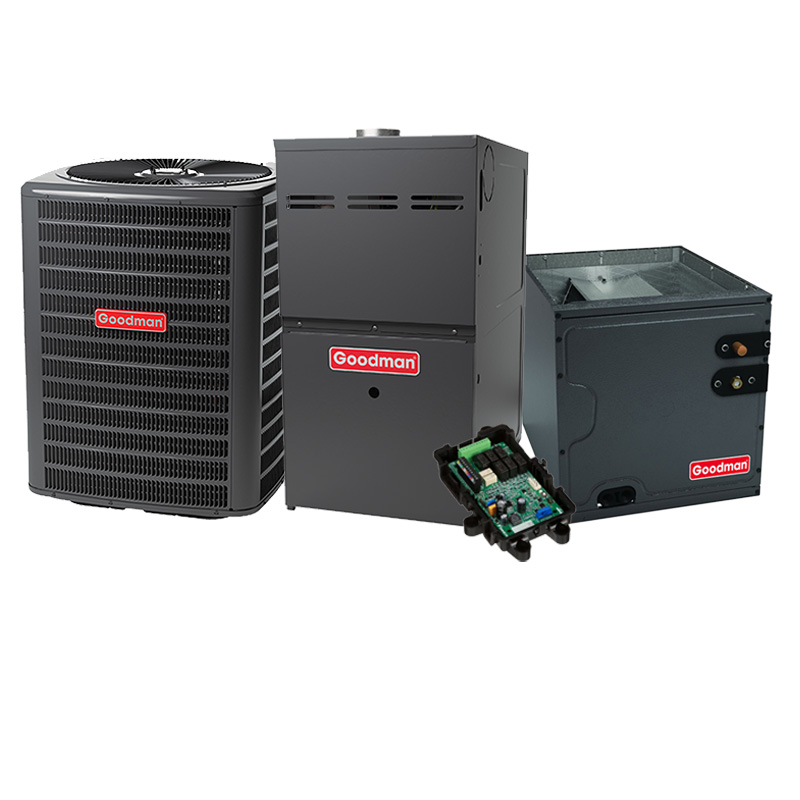
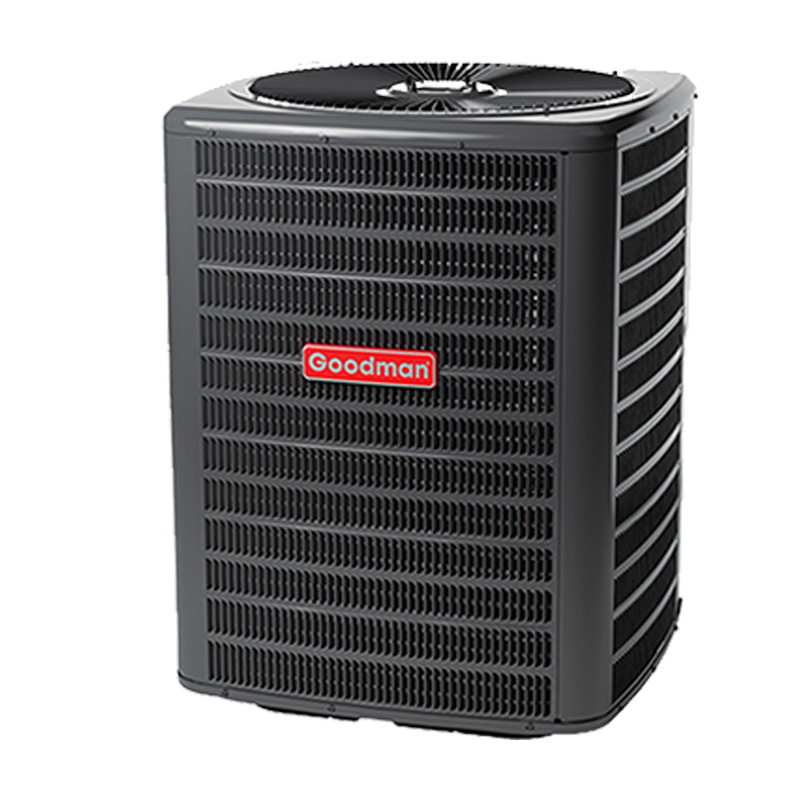
Goodman 4 Ton 13.5 SEER2 100000 BTU 80% Gas Furnace With R32 Air Conditioning Condenser And Coil System – Upflow
View on AC Direct see your lowest price →Check current price on AC Direct →
Key features
- 4-ton cooling capacity rated at 13.5 SEER2 for entry-level efficiency compliance
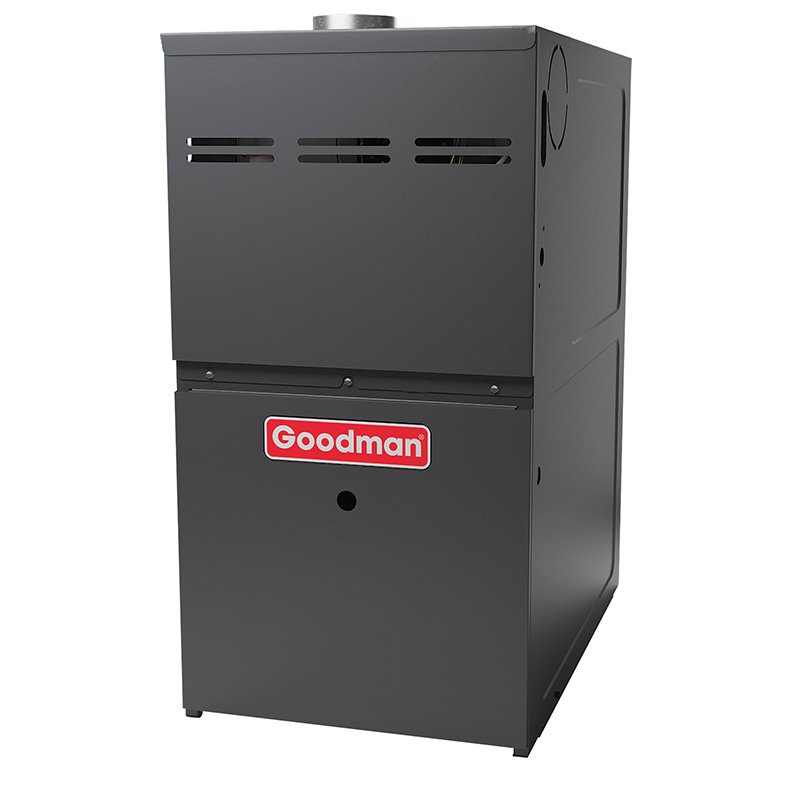
- 100,000 BTU 80% AFUE upflow gas furnace suits basement and closet installations
- R-32 refrigerant with lower global warming potential than R-410A
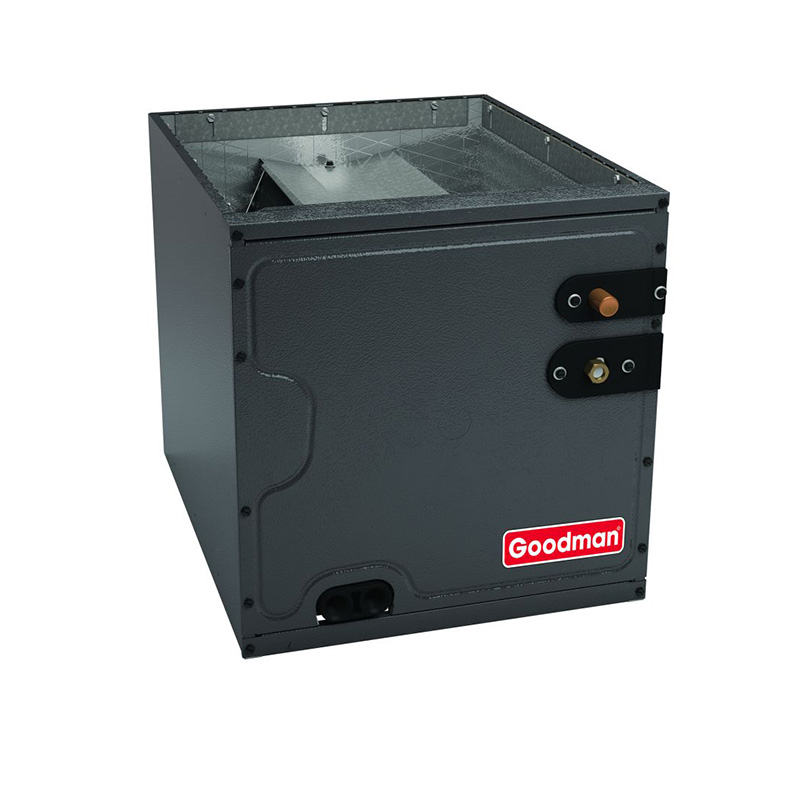
- Matched coil included, pre-engineered for this condenser and furnace combination
- Priced approximately 15 to 25 percent below comparable Carrier, Trane, and Lennox bundles
- Single-stage cooling and heating operation for straightforward controls and servicing
About this system
This Goodman bundle pairs a 4-ton, 13.5 SEER2 R-32 condensing unit with a matching evaporator coil and a 100,000 BTU 80% AFUE upflow gas furnace, covering homes in the 2,000 to 2,600 square foot range depending on climate zone and insulation. The 13.5 SEER2 rating sits just above the federal minimums that took effect in 2023, so this is an entry-level efficiency system rather than a premium one. That means operating costs will be higher than a 16 or 18 SEER2 system, but the purchase price is correspondingly lower, which can make the math work for buyers who plan to sell the home within a decade or who simply need reliable cooling on a budget.
The upflow configuration suits homes where the furnace sits in a basement or utility closet and conditioned air rises into living spaces above. R-32 refrigerant is a step forward from R-410A in terms of global warming potential and is now common on new equipment. The 80% AFUE furnace is code-compliant in most of the country but not in some northern states and select other jurisdictions that now require 90% or higher, so verify local codes before purchasing. Taken together, this is a workhorse bundled system aimed at replacement projects where budget matters more than chasing top-tier efficiency or extended longevity.
This Goodman bundle is a budget-honest entry-level system that delivers adequate efficiency and solid upfront savings but asks you to accept shorter expected compressor life, a documented coil-leak history, and performance that depends heavily on the quality of whoever installs it. It is a reasonable choice for cost-focused buyers who understand the trade-offs and commit to a qualified installer.
Overall score is the average of the five ratings above.
What we like
- Purchase price is meaningfully lower than comparable premium-brand bundles
- R-32 refrigerant is a current-generation refrigerant with lower environmental impact
- Matched coil and furnace simplify permitting and warranty documentation
- Upflow configuration is widely understood by HVAC technicians, reducing installation risk
- Single-stage operation keeps service diagnostics and repair costs straightforward
Trade-offs
- 13.5 SEER2 is near the minimum threshold, so monthly energy bills will run higher than mid- or high-efficiency alternatives
- Compressor lifespan averages 10 to 14 years versus 15 to 20 years typical of premium brands
- Dual-run capacitor failures and evaporator coil leaks are documented recurring issues in owner feedback
- 80% AFUE furnace does not meet the stricter efficiency codes now in effect in some northern states
What homeowners and pros say about Goodman
Homeowners who bought Goodman equipment tend to leave feedback in two waves. Early on, the praise centers on price: a full replacement system for noticeably less than a Carrier or Trane quote is hard to argue with, and Google dealer reviews land around 3.8 out of 5, where affordability is the most common reason for a positive rating. The picture shifts as systems age. On ConsumerAffairs, where the audience skews toward people with something to complain about, Goodman scores around 2.5 out of 5, and the recurring theme is repair costs that start climbing after roughly year seven. Dual-run capacitor failures come up frequently in those accounts, though technicians note the fix is usually in the 300 to 600 dollar range and not a system-ending event. Evaporator coil leaks and a compressor lifespan that owners put at 10 to 14 years rather than the 15 to 20 years common on premium brands are the more serious concerns that surface in longer-term ownership feedback.
HVAC professionals are pragmatic about Goodman. Many install it regularly and will say plainly that it is a serviceable system when the job is done right. The industry-wide observation is that Goodman performance leans harder on install quality than premium brands do, meaning a careful, experienced technician narrows the reliability gap considerably while a rushed or underqualified install widens it. Pros also flag the first-year refrigerant leak issue as almost always an installation or charge error rather than a manufacturing problem, which reinforces the message that who installs this system matters at least as much as the equipment itself. For this specific 4-ton R-32 bundle, the newer refrigerant is a genuine plus from a service and compliance standpoint, even if the base efficiency and expected component life remain entry-level.
Sources: ConsumerAffairs Goodman owner reviews, AHRI Directory of Certified Product Performance, U.S. DOE appliance and equipment efficiency standards, Goodman product specification sheets.
What it costs to run
At 13.5 SEER2, cooling this 4-ton system for a typical 1200-hour cooling season at the U.S. average electricity rate of $0.17/kWh works out to roughly $725 per year in cooling, about $6 less per year than a minimum-efficiency 13.4 SEER2 unit of the same size. Your real cost depends on your climate and local rate.
Method: (48,000 BTU/hr ÷ 13.5 SEER2) × 1200 hours ÷ 1000 × $0.17/kWh. Rate source: U.S. EIA average; cooling hours: moderate-climate estimate.
How it compares
| Brand | Comparable model | SEER2 | Stage | Price position |
|---|---|---|---|---|
| Goodman | 4-Ton 13.5 SEER2 R-32 Bundle with 80% AFUE Upflow Furnace | 13.5 | Single-stage | Value pick |
| Carrier | Comfort 24ACC6 Series with 80% AFUE Upflow Furnace | ~14 | Single-stage | Typically 15 to 25 percent more than this Goodman bundle |
| Trane | XR14c Series with S8X1 80% AFUE Upflow Furnace | ~14 | Single-stage | Typically 15 to 25 percent more than this Goodman bundle |
| Lennox | Merit 14ACX Series with ML180 80% AFUE Upflow Furnace | ~14 | Single-stage | Typically 15 to 25 percent more than this Goodman bundle |
Competitor rows are comparable single-stage units at similar efficiency; price is relative position, not a quote.
Questions about this system
Is 80% AFUE legal in my state for a new installation?
Not everywhere. Several northern states and some local jurisdictions now require a minimum of 90% AFUE for new furnace installations. Check your state energy code and local building department before ordering, because returning a large bundled system is complicated and costly.
How important is the installer for a Goodman system specifically?
Critically important. Technicians consistently identify install quality as the single biggest factor in how long a Goodman unit lasts. A minority of owners report refrigerant leaks in the first year, and these are usually traced to improper charging or connection issues at installation rather than a factory defect.
What is the most likely repair I will face and what will it cost?
Dual-run capacitor failure is the most commonly reported issue on Goodman condensers. It is generally a straightforward repair in the 300 to 600 dollar range and does not require replacing major components. Evaporator coil leaks are the next most cited problem and are more expensive to address.
Does this system qualify for any federal tax credits?
As of 2024, the federal 25C tax credit for central air conditioners requires a minimum of 16 SEER2, which this 13.5 SEER2 system does not meet. The 80% AFUE furnace also falls below the 97% AFUE threshold required for furnace credits. Confirm current IRS guidance before assuming any credit applies.
Why does this bundle use R-32 instead of R-410A?
R-410A is being phased down under EPA regulations due to its high global warming potential, and equipment manufactured after January 2025 must use lower-GWP refrigerants. R-32 meets that requirement and is now the standard refrigerant on many new residential systems, including this Goodman lineup.
Specifications
| Cooling capacity | 4 Ton |
| Efficiency | 13.5 SEER2 |
| Furnace output | 100000 BTU |
| Configuration | Upflow |
| Refrigerant | R-32 |