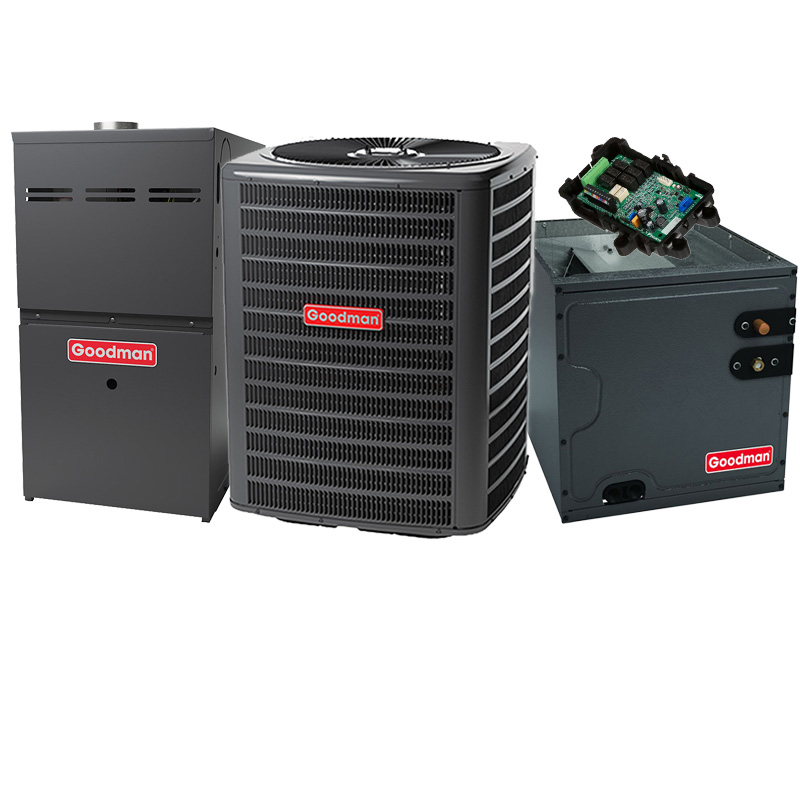
Goodman 4 Ton 14 SEER2 100000 BTU 80% Two-Stage Gas Furnace With R32 Air Conditioner Condenser And Coil System – Upflow
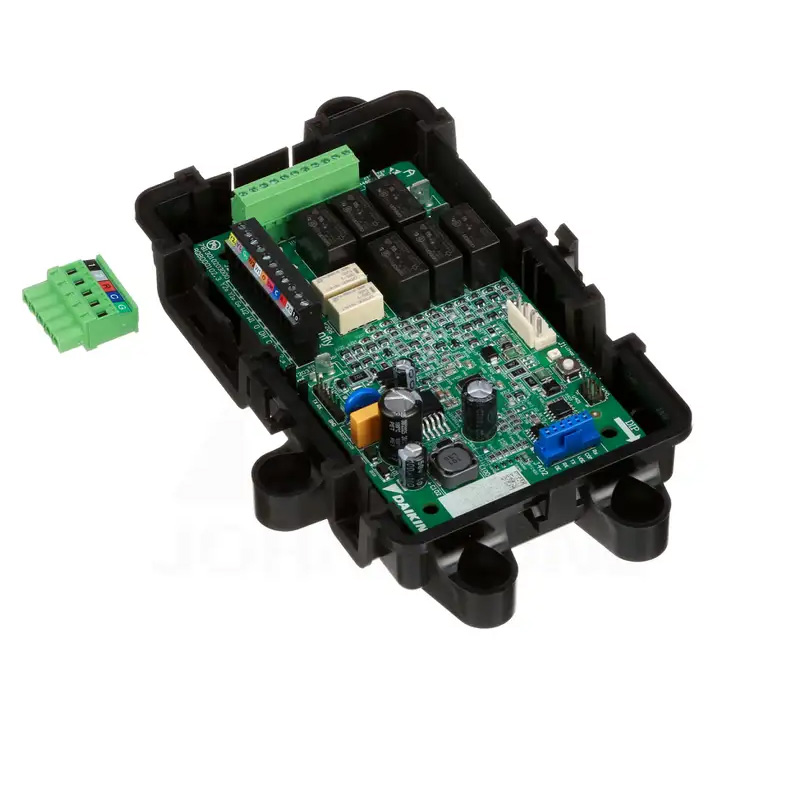
View on AC Direct see your lowest price →Check current price on AC Direct →
Key features
- 4-ton cooling capacity with 14 SEER2 efficiency rating
- 100,000 BTU two-stage gas furnace at 80% AFUE
- Upflow configuration for basement or closet installations
- R-32 refrigerant with lower global warming potential than R-410A
- Matched condenser, evaporator coil, and furnace sold as a single system
- Two-stage heating reduces temperature swings and short cycling
About this system
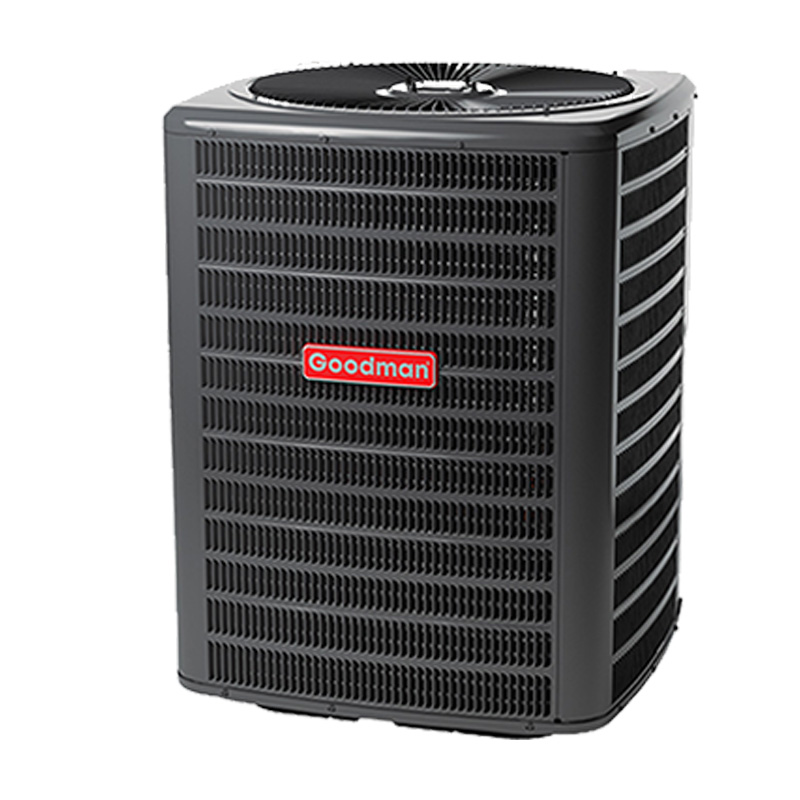
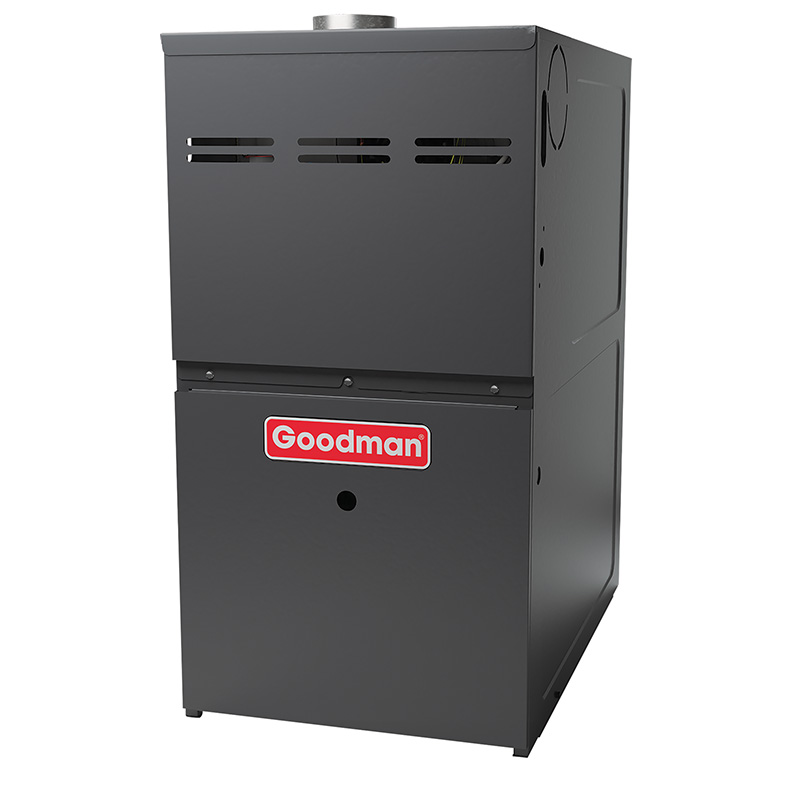
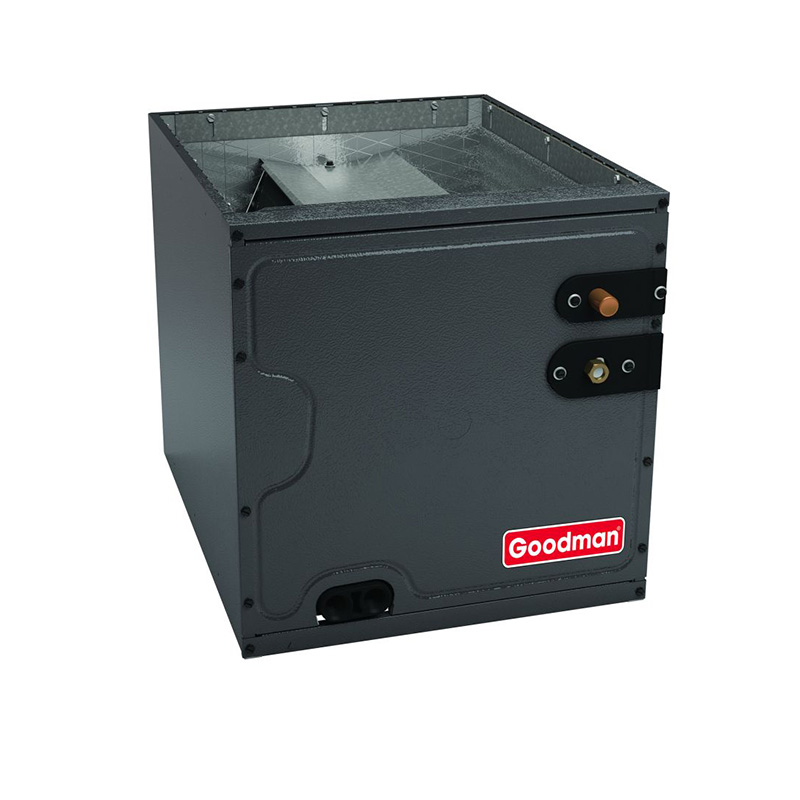
This Goodman bundle pairs a 4-ton, 14 SEER2 R-32 air conditioner condenser and matching evaporator coil with a 100,000 BTU, 80% AFUE two-stage gas furnace in an upflow configuration. The package is sized for larger homes, typically in the 2,000 to 2,800 square foot range depending on climate, insulation, and window load. Buying the condenser, coil, and furnace as a matched system ensures refrigerant-circuit compatibility and simplifies warranty registration compared to mixing brands.
The two-stage furnace is a meaningful comfort upgrade over single-stage models. Running on low fire for most of the heating season reduces temperature swings, keeps the blower running longer at lower speeds for better air distribution, and cuts down on the abrupt on-off cycling that makes single-stage furnaces feel drafty. The 80% AFUE rating is the federal minimum for most northern climate installations, so it covers the regulatory baseline but leaves roughly 20 cents of every fuel dollar going out the flue. Homeowners in cold climates who run their furnace heavily from October through April may want to weigh a 96% two-stage unit against the price difference. The R-32 refrigerant used in the cooling side has a lower global warming potential than R-410A and is the direction the industry is moving, which is a practical advantage for long-term serviceability as R-410A availability tightens.
Goodman positions this system as a budget-conscious choice, and that framing is accurate. It is a real, functional HVAC system sold at prices typically 15 to 25 percent below Trane, Lennox, and Carrier equivalents. The trade-off is that Goodman’s long-term reliability record, based on documented owner feedback, runs shorter on compressor life and carries a higher rate of evaporator coil issues than premium-tier competitors. Installation quality matters more with Goodman than with any other single variable, so the contractor you choose is at least as important as the equipment itself.
This Goodman bundle delivers a functional, code-compliant matched system at a price point that is hard to argue with on day one. The two-stage furnace is a genuine comfort upgrade over single-stage units, but the 80% AFUE is the regulatory floor and the documented reliability gaps, particularly around evaporator coil longevity and compressor lifespan, mean total cost of ownership over 15 years can close the gap with pricier brands. It is a reasonable buy with the right installer, not a guaranteed one without.
Overall score is the average of the five ratings above.
What we like
- Priced 15 to 25 percent below Trane, Lennox, and Carrier equivalents, lowering initial outlay
- Two-stage furnace operation improves comfort and reduces on-off cycling versus single-stage
- Matched system simplifies installation, refrigerant circuit compatibility, and warranty registration
- R-32 refrigerant is better positioned for long-term service availability as R-410A is phased down
- Upflow furnace is widely compatible with existing ductwork in homes with basement or closet mechanical rooms
Trade-offs
- 80% AFUE is the minimum federal standard, not an efficiency leader, costing more to operate than 96% AFUE alternatives in cold climates
- Compressor lifespan averages 10 to 14 years versus 15 to 20 years for premium brands, raising replacement risk in the second decade
- Evaporator coil leaks appear in a meaningful share of owner reports, potentially adding repair costs after year 7
- A minority of owners have reported refrigerant leaks within the first year, typically traced to install quality or factory charge issues
What homeowners and pros say about Goodman
Homeowners who leave reviews about Goodman equipment tend to sort into two clear camps. Buyers who got a clean install from an experienced contractor and caught any issues early generally report satisfaction with how the equipment runs day to day, and that experience is reflected in the roughly 3.8 out of 5 score Goodman earns across Google dealer reviews, where affordability is the most consistently cited reason people say they would recommend it. The story shifts on ConsumerAffairs, where Goodman sits at around 2.5 out of 5, a lower number that reflects a complaint-skewed audience, but where the recurring pattern is instructive: repair costs start climbing after roughly year 7, and owners often find themselves weighing whether to fix or replace equipment that has not yet hit the 12-year mark.
HVAC technicians who work on Goodman equipment regularly will tell you two things almost universally. First, dual-run capacitors are the most common service call on these systems, usually a straightforward fix in the 300 to 600 dollar range that does not signal deeper trouble. Second, the bigger concerns are evaporator coil leaks, which show up in a meaningful share of owner histories, and compressor longevity, where Goodman compressors average roughly 10 to 14 years compared to 15 to 20 for premium brands. A small number of owners also report refrigerant leaks within the first year on systems using R-32, which technicians generally attribute to install or factory charge issues rather than a systemic product flaw. The bottom line from the field is consistent: Goodman is not a bad product, but it rewards careful installation and routine maintenance more than premium equipment does, and the savings at purchase are real only if those conditions are met.
Sources: ConsumerAffairs Goodman owner reviews, AHRI Directory of Certified Product Performance, U.S. DOE appliance and equipment efficiency standards, Goodman product specification sheets.
What it costs to run
At 14 SEER2, cooling this 4-ton system for a typical 1200-hour cooling season at the U.S. average electricity rate of $0.17/kWh works out to roughly $699 per year in cooling, about $32 less per year than a minimum-efficiency 13.4 SEER2 unit of the same size. Your real cost depends on your climate and local rate.
Method: (48,000 BTU/hr ÷ 14 SEER2) × 1200 hours ÷ 1000 × $0.17/kWh. Rate source: U.S. EIA average; cooling hours: moderate-climate estimate.
How it compares
| Brand | Comparable model | SEER2 | Stage | Price position |
|---|---|---|---|---|
| Goodman | 4-Ton 14 SEER2 100K BTU 80% Two-Stage System (this unit) | 14 | Two-stage furnace, single-stage cooling | Value pick |
| Carrier | Performance 14 Series (24ACC4) | 14 | Single-stage cooling | Typically 15 to 25 percent more than this Goodman system |
| Trane | XR14c Series | 14 | Single-stage cooling | Typically 15 to 25 percent more than this Goodman system |
| Lennox | Merit ML14XC1 Series | 14 | Single-stage cooling | Typically 15 to 25 percent more than this Goodman system |
Competitor rows are comparable single-stage units at similar efficiency; price is relative position, not a quote.
Questions about this system
Is 80% AFUE going to cost me significantly more to heat my home than a higher-efficiency furnace?
On a 100,000 BTU furnace, 80% AFUE means about 80,000 BTU of usable heat per therm of gas burned. A 96% AFUE unit would deliver roughly 96,000 BTU from the same fuel. In a climate with long, cold winters, that 16-point gap adds up to real money over the heating season. If you are in the South or have mild winters, the payback on a 96% unit stretches out and the 80% model makes more financial sense.
What does two-stage heating actually mean for day-to-day comfort?
A two-stage furnace runs on a lower firing rate, roughly 65 percent of full capacity, for most calls for heat, only stepping up to full output on the coldest days. This means longer, quieter cycles, more even temperatures across rooms, and less of the blast-of-hot-air-then-silence pattern that single-stage furnaces produce. For most homeowners it is a noticeable improvement in how the heat feels.
Why does the condenser use R-32 refrigerant instead of R-410A, and does that affect service?
R-32 has a lower global warming potential than R-410A and is the refrigerant the industry is transitioning toward under EPA phasedown rules. From a service standpoint, R-32 requires technicians to use compatible equipment and follow updated handling procedures, but it is not exotic or hard to source. Over the next decade, R-32 will likely be easier and cheaper to service than aging R-410A systems.
How worried should I be about the evaporator coil leak issue that shows up in Goodman reviews?
Evaporator coil leaks are a documented pattern in Goodman owner feedback, not a universal defect, but they are reported at a higher rate than with premium brands. Buying the matched Goodman coil, having it properly installed with leak-tested connections, and scheduling a first-year refrigerant check can reduce, though not eliminate, the risk. The Goodman limited parts warranty covers the coil, so a leak caught within the warranty window should be covered for parts, though labor typically is not.
How important is it to use a certified installer for this specific system, and what should I ask them before hiring?
Goodman technicians and independent data both point to install quality as the single biggest factor in how long this equipment lasts and how well it runs. You should ask any installer whether they will perform a proper Manual J load calculation before sizing the system, whether they pressure-test and leak-check the refrigerant circuit after install, and whether they will verify the gas valve and burner operation on the furnace. Skipping these steps is where a large share of first-year refrigerant leaks and early equipment failures originate.
Specifications
| Cooling capacity | 4 Ton |
| Efficiency | 14 SEER2 |
| Furnace output | 100000 BTU |
| Configuration | Upflow |
| Refrigerant | R-32 |