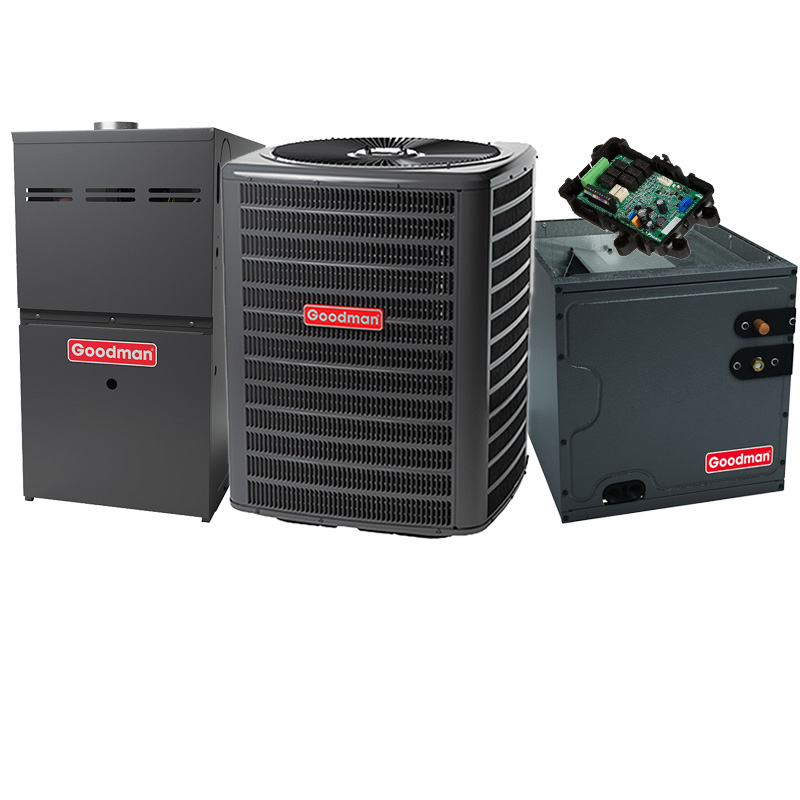
Goodman 4 Ton 14 SEER2 80000 BTU 80% Two-Stage Gas Furnace With R32 Air Conditioner Condenser And Coil System – Upflow
View on AC Direct see your lowest price →Check current price on AC Direct →
Key features
- 4-ton cooling capacity with 14 SEER2 efficiency rating
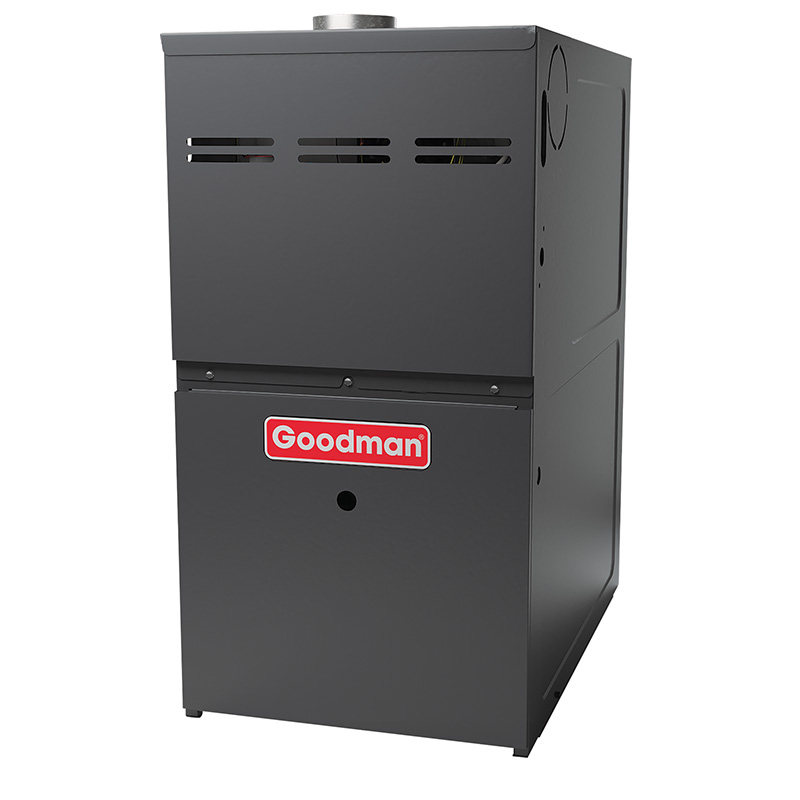
- 80,000 BTU two-stage gas furnace at 80% AFUE
- R-32 refrigerant with lower global warming potential than R-410A
- Upflow air handler orientation for basement or utility closet installs
- Factory-matched condenser, evaporator coil, and furnace for AHRI certification
- Two-stage heating reduces temperature swings and lowers blower noise on most cycles
About this system
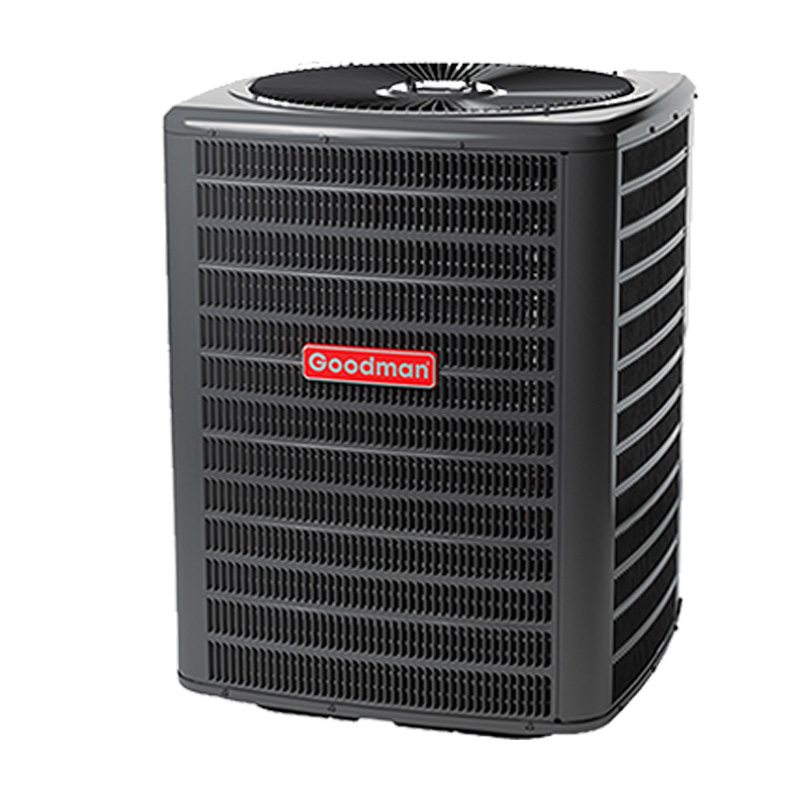
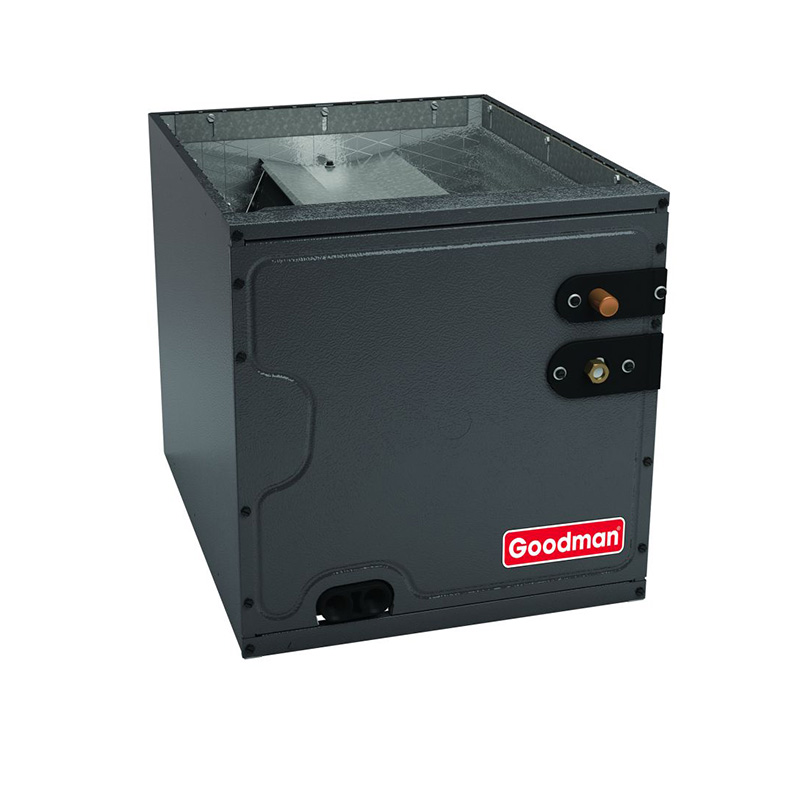
This Goodman bundle pairs a 4-ton, 14 SEER2 R-32 air conditioner condenser and matching evaporator coil with an 80,000 BTU, 80% AFUE two-stage gas furnace in an upflow configuration. The 14 SEER2 rating sits at the federal minimum efficiency threshold for most U.S. climate zones, which keeps the purchase price down but means operating costs will be higher than systems rated 16 SEER2 or above over a 10-to-15-year lifespan. R-32 refrigerant is a step forward environmentally, carrying a lower global warming potential than the R-410A it is replacing across the industry.
The two-stage furnace is a meaningful comfort upgrade over single-stage equipment. Running on the lower stage the majority of the time means quieter operation, more even heat distribution, and less temperature swinging between cycles. The upflow configuration directs conditioned air upward into the ductwork, making it well-suited for installations in basements, utility closets, or crawl spaces where the air handler sits below the living space. This is a full system, so the coil, furnace, and condenser are matched from the factory, which simplifies AHRI certification and avoids compatibility guesswork.
This bundle is most practical for homeowners replacing aging equipment on a firm budget, landlords managing mid-tier rental properties, or buyers in moderate climates where the system will not be pushed to its limits for months at a time. Anyone in a hot-humid region running the air conditioner heavily from May through October will want to weigh whether the savings at purchase close the gap against higher monthly utility bills compared to a 16 SEER2 or 18 SEER2 system.
This Goodman system delivers a complete, factory-matched heating and cooling package at a price point that is genuinely hard to match from premium brands. The two-stage furnace adds real comfort value, but buyers should go in with clear eyes: efficiency sits at the regulatory minimum, compressor longevity trails premium competitors, and long-term costs depend heavily on who installs it and how.
Overall score is the average of the five ratings above.
What we like
- Purchase price runs roughly 15 to 25 percent below comparable Carrier, Trane, and Lennox systems
- Factory-matched components simplify permitting and AHRI certification for the installer
- Two-stage furnace operation improves comfort and reduces blower noise on low-demand days
- R-32 refrigerant is a forward-looking choice with a lower environmental impact than R-410A
- Dual-run capacitor failures, the most common Goodman repair call, are typically a straightforward and low-cost fix
Trade-offs
- 14 SEER2 is the minimum allowed efficiency, so monthly cooling bills will be higher than higher-SEER2 alternatives
- Compressor lifespan averages 10 to 14 years, shorter than the 15 to 20 years seen from premium-brand compressors
- Evaporator coil leaks appear in a meaningful share of owner reviews and can be costly to address out of warranty
- A minority of owners report refrigerant leaks within the first year, typically tied to installation or initial charge quality rather than a defective unit
What homeowners and pros say about Goodman
Homeowners who post about Goodman equipment tend to split into two camps, and that split shows up clearly in the brand’s ratings. On ConsumerAffairs, Goodman scores around 2.5 out of 5, a platform where complaints dominate and the recurring theme is repair bills climbing after roughly year seven. On Google dealer reviews the picture is less dire, averaging around 3.8 out of 5 across hundreds of reviews per location, where affordability is the most consistent praise. For this particular system, buyers most often mention that the two-stage furnace genuinely delivers quieter, more even heating compared to the single-stage units they replaced, and that the matched-system approach made the installation and inspection process straightforward.
HVAC technicians who work on Goodman equipment regularly point to dual-run capacitor failures as the predictable maintenance item, usually an easy same-day fix but something to budget for after the five-year mark. Evaporator coil leaks are a more serious documented concern that surfaces in owner reviews with enough frequency to warrant attention, and compressor longevity, averaging 10 to 14 years against 15 to 20 for premium brands, is the honest long-term trade-off at this price point. Pros are consistent on one point: a well-installed Goodman will outperform a poorly installed Trane, and the opposite is equally true. If you hire an experienced contractor who pressure-tests the line set, verifies the refrigerant charge, and commissions the system properly, this bundle can deliver solid years of service. Cut corners on the install and you are likely to end up in that ConsumerAffairs comment section.
Sources: ConsumerAffairs Goodman owner reviews, AHRI Directory of Certified Product Performance, U.S. DOE appliance and equipment efficiency standards, Goodman product specification sheets.
What it costs to run
At 14 SEER2, cooling this 4-ton system for a typical 1200-hour cooling season at the U.S. average electricity rate of $0.17/kWh works out to roughly $699 per year in cooling, about $32 less per year than a minimum-efficiency 13.4 SEER2 unit of the same size. Your real cost depends on your climate and local rate.
Method: (48,000 BTU/hr ÷ 14 SEER2) × 1200 hours ÷ 1000 × $0.17/kWh. Rate source: U.S. EIA average; cooling hours: moderate-climate estimate.
How it compares
| Brand | Comparable model | SEER2 | Stage | Price position |
|---|---|---|---|---|
| Goodman | 4-Ton 14 SEER2 Two-Stage Bundle (this system) | 14 | Two-stage furnace / single-stage condenser | Value pick |
| Carrier | Comfort 14 Series (CA14NA) | 14 | Single-stage | Typically 15 to 25 percent more than this Goodman bundle |
| Trane | XR14 Series | 14 | Single-stage | Typically 15 to 25 percent more than this Goodman bundle |
| Lennox | Merit 14ACX Series | 14 | Single-stage | Typically 15 to 25 percent more than this Goodman bundle |
Competitor rows are comparable single-stage units at similar efficiency; price is relative position, not a quote.
Questions about this system
Is 14 SEER2 going to cost me significantly more to run than a higher-efficiency system?
Yes, noticeably so in warmer climates. A 16 SEER2 or 18 SEER2 system will use meaningfully less electricity per cooling hour. In a mild climate with a short cooling season the payback period for a higher-efficiency system can be quite long, but in the Sun Belt or Southeast the energy savings often close the price gap within five to eight years.
What is the most likely repair I will face on this Goodman system in the first ten years?
Dual-run capacitor failure is the most commonly reported issue across Goodman equipment. It is also one of the less expensive HVAC repairs, typically landing in the $300 to $600 range including labor. Evaporator coil leaks are a second documented concern and are worth watching for after year five, especially if refrigerant needs topping off.
Does the upflow configuration mean I cannot install this in an attic or garage?
Correct. An upflow furnace is designed to draw return air from the bottom and push conditioned air upward into overhead ductwork. Attic or horizontal applications require a horizontal or downflow furnace. Confirm your duct layout before ordering.
Will any licensed HVAC contractor be able to handle the R-32 refrigerant in this system?
R-32 is classified as A2L, meaning it is mildly flammable, and some jurisdictions require technicians to hold additional certification or use specific equipment when handling it. Confirm with your installer that they are already working with A2L refrigerants before scheduling, since not every shop has updated their tools and training yet.
How important is the installer for a Goodman system specifically?
Very important. Technicians consistently point to install quality as the single biggest driver of how long a Goodman unit lasts and how reliably it performs. The documented first-year refrigerant leak issue in a minority of units is almost always traced back to charge or line-set problems at install rather than factory defects, so choosing an experienced contractor matters more than it might with a more forgiving premium brand.
Specifications
| Cooling capacity | 4 Ton |
| Efficiency | 14 SEER2 |
| Furnace output | 80000 BTU |
| Configuration | Upflow |
| Refrigerant | R-32 |