Goodman R32 5 Ton 13.4 SEER2 120000 BTU 80% Two Stage 9-Speed ECM Gas Furnace and Air Conditioner System – Horizontal
View on AC Direct see your lowest price →Check current price on AC Direct →
Key features
- Horizontal cabinet configuration designed for attic and crawl-space installations
- Two-stage gas furnace operation at 120,000 BTU and 80% AFUE for improved comfort and efficiency
- 9-speed ECM blower motor for gradual airflow ramp-up and lower fan electricity use
- R-32 refrigerant with lower global-warming potential than R-410A
- 13.4 SEER2 cooling efficiency meets current federal minimum standards
- 5-ton cooling capacity suited to larger homes, typically 2,500 to 3,500 square feet
About this system
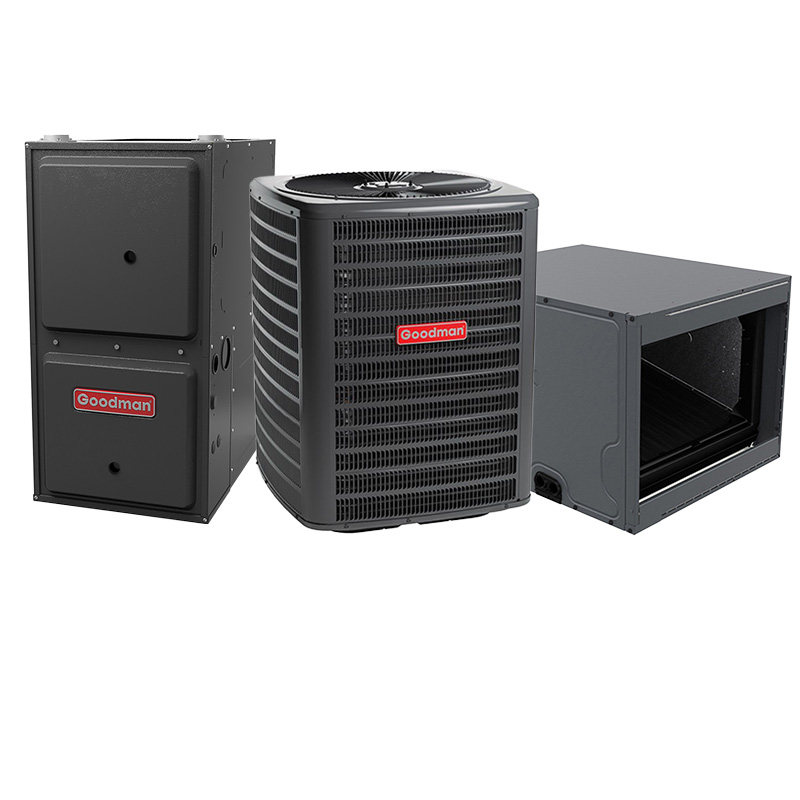
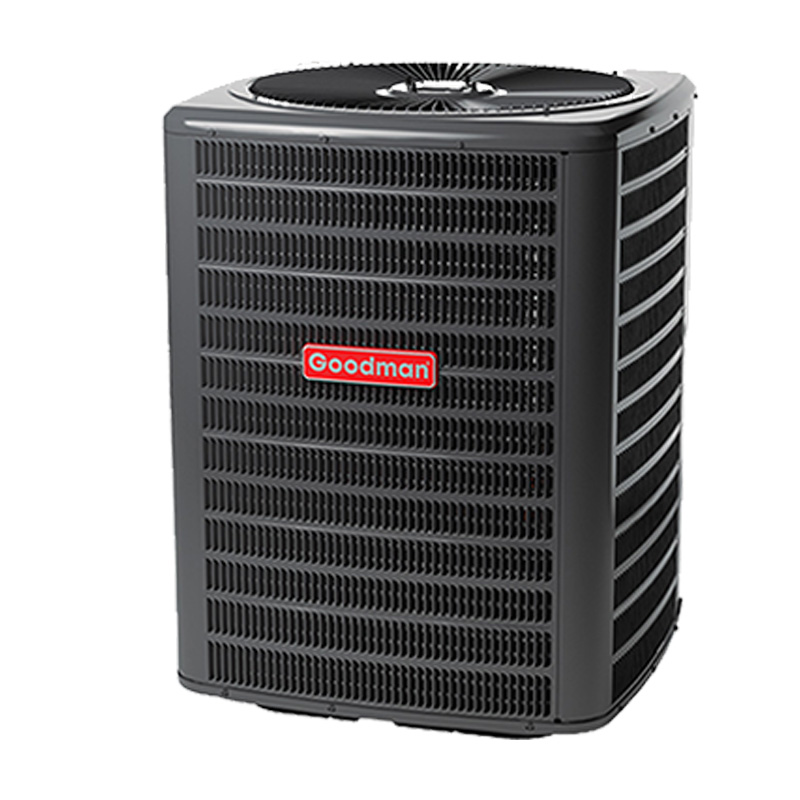
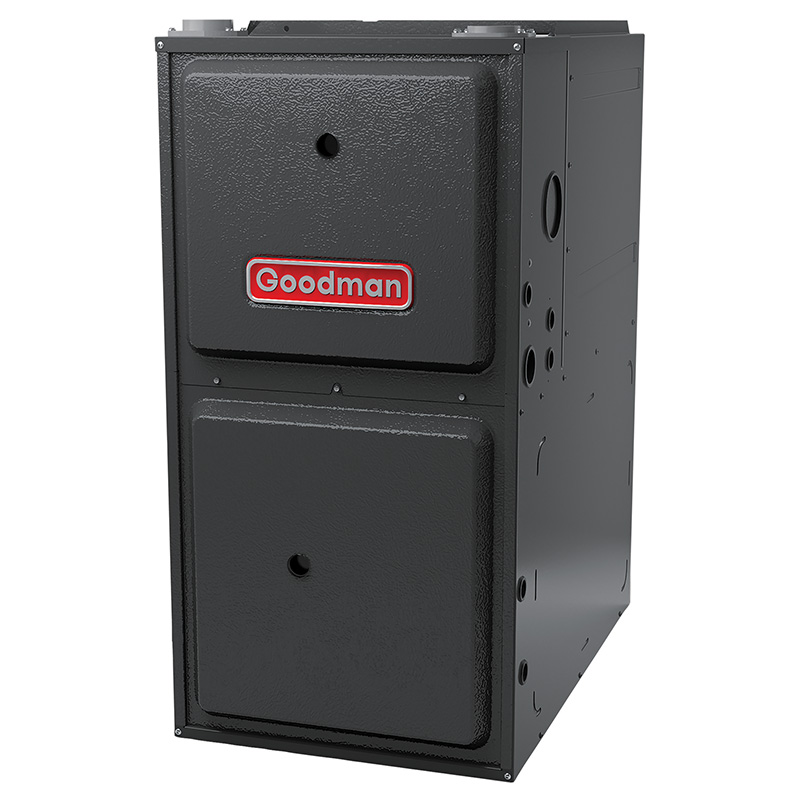
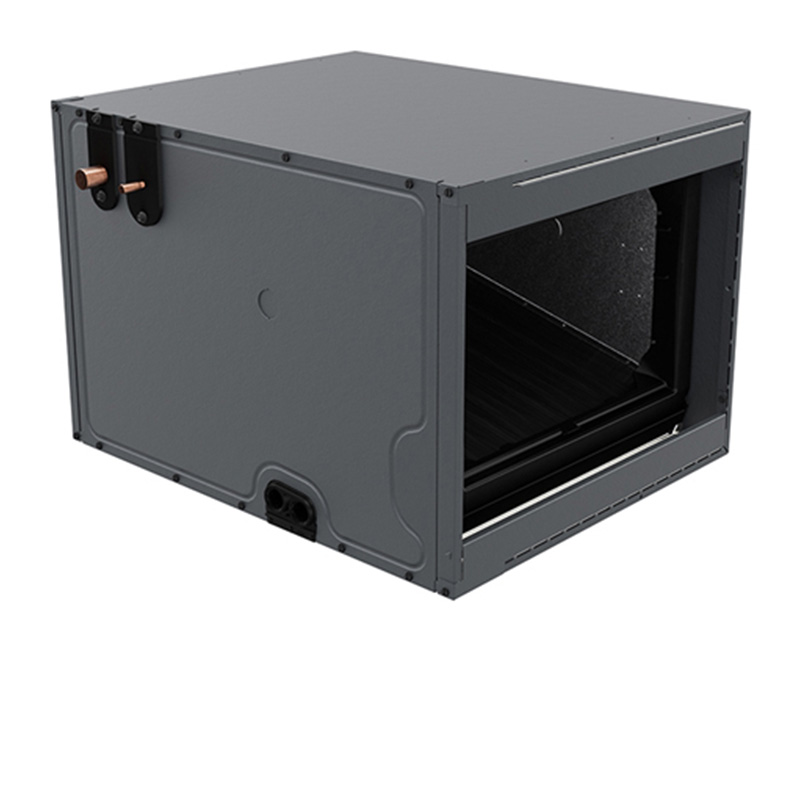
This Goodman horizontal package system pairs a 5-ton, 13.4 SEER2 air conditioner running on R-32 refrigerant with a 120,000 BTU, 80% AFUE two-stage gas furnace in a single cabinet designed to lie on its side. That horizontal configuration is the defining feature here: it is built specifically for attic installations, crawl-space setups, and tight mechanical rooms where a vertical unit simply will not fit. If your home’s ductwork exits through the floor of an attic or the ceiling of a crawl space, this is the configuration you need, and finding a quality two-stage system in a true horizontal package is genuinely harder than sourcing a standard upflow unit.
The two-stage gas valve means the furnace runs at a lower capacity on mild days and steps up to full output only when temperatures demand it, which reduces short-cycling, improves humidity control in heating mode, and tends to lower gas bills compared to a single-stage equivalent. The 9-speed ECM blower motor ramps airflow gradually rather than blasting on at full speed, which also helps with comfort and keeps electricity draw low during fan operation. At 13.4 SEER2 the cooling efficiency sits right at the federal minimum threshold for most northern climate zones and just above it for southern ones, so this is a code-compliant but not high-efficiency choice on the cooling side. Buyers who prioritize lower upfront cost over long-term energy savings will find that trade-off acceptable; buyers in extreme cooling climates or with high electric rates may want to price a 16 SEER2 or higher system before committing.
R-32 refrigerant is a meaningful upgrade over the R-410A it replaces: it has a lower global-warming potential and is increasingly the industry standard in new equipment. Servicing costs in the near term should be comparable to R-410A systems, and refrigerant availability is improving as the industry transitions. The 5-ton, 120,000 BTU sizing targets larger homes, typically in the 2,500 to 3,500 square foot range depending on climate and insulation, and a proper Manual J load calculation is essential before purchase to confirm the sizing is correct for your space.
This Goodman horizontal package system delivers genuine two-stage comfort and a modern refrigerant at a price point that undercuts Carrier, Trane, and Lennox by a meaningful margin. The trade-off is a brand track record that shows higher rates of capacitor failures, evaporator coil leaks, and shorter average compressor lifespan than premium competitors, making installation quality and ongoing maintenance more consequential than they would be with a top-tier brand. For cost-conscious buyers who vet their installer carefully and budget for eventual minor repairs, it represents solid value; for buyers who want to minimize long-term service calls and maximize equipment lifespan, the premium brands are worth pricing out.
Overall score is the average of the five ratings above.
What we like
- Two-stage operation improves comfort and reduces short-cycling compared to single-stage alternatives at this price tier
- 9-speed ECM blower lowers fan electricity consumption and softens startup noise
- R-32 refrigerant is a forward-looking choice with lower environmental impact
- Horizontal-specific design solves a real installation challenge that limits options at this capacity
- Priced 15 to 25 percent below comparable Trane, Lennox, and Carrier package systems
Trade-offs
- Dual-run capacitors are the most frequently reported failure point and should be treated as a near-certain eventual repair
- Evaporator coil leaks appear in a meaningful share of owner reports, a more serious and costly repair than a capacitor swap
- Compressor lifespan averages 10 to 14 years versus 15 to 20 years for premium brands, shortening the equipment's economic life
- 13.4 SEER2 efficiency is the lowest compliant tier; buyers in hot climates or with high utility rates may find running costs noticeably higher than with a higher-SEER2 system
What homeowners and pros say about Goodman
Owners and technicians who have spent time with Goodman equipment tend to land in the same place: the price is real, and so are the limitations. On Google dealer reviews, Goodman-equipped jobs score around 3.8 out of 5 across hundreds of reviews per location, with affordability showing up repeatedly as the reason people chose the brand. ConsumerAffairs tells a different story, with a score of about 2.5 out of 5, though that platform draws heavily from frustrated owners motivated to write after something goes wrong. The honest picture sits somewhere between those two data points. On a horizontal package system like this 5-ton two-stage unit, installers point out that attic work adds complexity and that any future service call on a horizontal cabinet is more labor-intensive than on a standard ground-level unit, which makes the no-labor warranty coverage a real cost consideration over the life of the equipment.
The documented failure patterns on Goodman equipment are worth knowing before you buy. Dual-run capacitors are the most commonly cited breakdown, typically caught during a tune-up or when the system stops cooling suddenly on a hot day, and the repair usually lands in the 300 to 600 dollar range. More concerning are evaporator coil leaks, which show up in a meaningful share of long-term owner accounts and represent a substantially larger repair. Compressor lifespan on Goodman units tends to average 10 to 14 years, noticeably shorter than the 15 to 20 years that premium brands like Trane and Carrier more consistently achieve. A small number of owners have also reported refrigerant leaks within the first year, a problem that experienced technicians almost always trace back to installation or initial charging rather than a factory issue, which reinforces why installer selection matters at least as much as equipment brand with this product line.
Sources: ConsumerAffairs Goodman owner reviews, AHRI Directory of Certified Product Performance, U.S. DOE appliance and equipment efficiency standards, Goodman product specification sheets.
What it costs to run
At 13.4 SEER2, cooling this 5-ton system for a typical 1200-hour cooling season at the U.S. average electricity rate of $0.17/kWh works out to roughly $913 per year in cooling, about $0 less per year than a minimum-efficiency 13.4 SEER2 unit of the same size. Your real cost depends on your climate and local rate.
Method: (60,000 BTU/hr ÷ 13.4 SEER2) × 1200 hours ÷ 1000 × $0.17/kWh. Rate source: U.S. EIA average; cooling hours: moderate-climate estimate.
How it compares
| Brand | Comparable model | SEER2 | Stage | Price position |
|---|---|---|---|---|
| Goodman | R32 5-Ton Horizontal Two-Stage 9-Speed ECM Package System | 13.4 | two-stage | Value pick |
| Carrier | WeatherMaster 50XC Series | 13.4-14.0 | single-stage | Typically 15 to 25 percent more than the Goodman |
| Trane | Precedent XR13 Series | 13.4-14.0 | single-stage | Typically 15 to 25 percent more than the Goodman |
| Lennox | LRP16HP / LGP Series | 13.4-14.0 | single-stage | Typically 15 to 25 percent more than the Goodman |
Competitor rows are comparable single-stage units at similar efficiency; price is relative position, not a quote.
Questions about this system
Why does this system have to be installed horizontally, and can it be flipped to vertical?
This cabinet is factory-configured for horizontal airflow only, meaning the heat exchanger, coil, and drain pan are oriented for side-lying installation. Installing it vertically would cause condensate drainage to fail and could compromise heat exchanger performance. If you need an upflow or downflow configuration, you need a different product entirely.
Is R-32 refrigerant harder to find or more expensive to service than R-410A?
R-32 is flammable at high concentrations, which means EPA Section 608 certification and some additional handling precautions are required, but most licensed HVAC technicians are already trained on it as the industry transitions away from R-410A. Availability is improving steadily, and service costs are currently comparable to R-410A. It is not a fringe refrigerant choice at this point.
What size home does a 5-ton system actually fit, and how do I know if it is right for mine?
A rough rule of thumb puts 5 tons at 2,500 to 3,500 square feet, but climate zone, ceiling height, insulation level, window area, and local solar exposure all affect the real answer by hundreds of square feet in either direction. A licensed contractor should perform a Manual J load calculation before you purchase; an oversized system short-cycles, hurts humidity control, and accelerates wear, while an undersized one runs constantly.
What are the most common repairs owners report on Goodman systems like this one, and what do they cost?
Dual-run capacitor failure is the most frequently cited issue and is generally a straightforward repair in the 300 to 600 dollar range. Evaporator coil leaks are a more serious problem that can run into the thousands depending on whether the coil needs replacement. A minority of owners have also reported refrigerant leaks in the first year, which typically point to an installation or initial charge problem rather than a factory defect.
Does Goodman's warranty require professional registration, and what does it actually cover on this system?
Goodman's standard limited warranty generally requires registration within a set window after installation to unlock the full parts warranty period, so confirm the registration deadline with your installer and complete it promptly. The warranty covers parts but not labor, which is a meaningful cost exposure for homeowners since labor on a horizontal attic unit is more involved than on a ground-level system. Review the current warranty certificate for this specific model before purchase, as terms can vary.
Specifications
| Cooling capacity | 5 Ton |
| Efficiency | 13.4 SEER2 |
| Furnace output | 120000 BTU |
| Configuration | Horizontal |
| Refrigerant | R-32 |