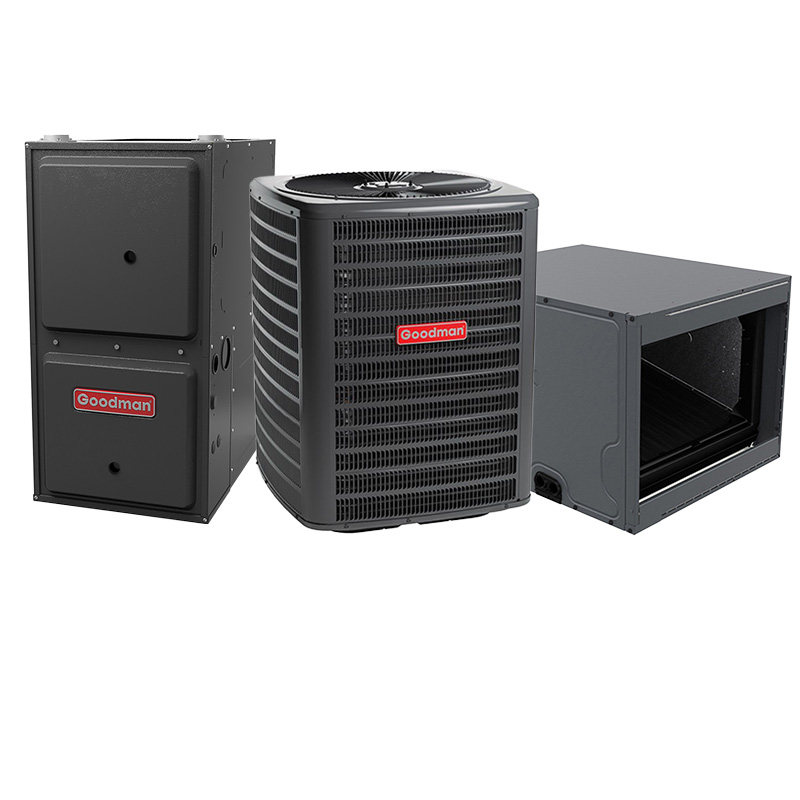
Goodman R32 5 Ton 13.4 SEER2 80000 BTU 80% Two Stage 9-Speed ECM Gas Furnace and Air Conditioner System – Horizontal
View on AC Direct see your lowest price →Check current price on AC Direct →
Key features
- 5-ton cooling capacity suited to homes roughly 2,400 to 3,000 sq ft depending on climate and insulation
- 13.4 SEER2 rating meets current federal minimums for most U.S. regions
- Two-stage compressor reduces short-cycling and improves dehumidification on part-load days
- Nine-speed ECM blower motor lowers electricity consumption compared to PSC motors
- R-32 refrigerant with lower global warming potential than legacy R-410A
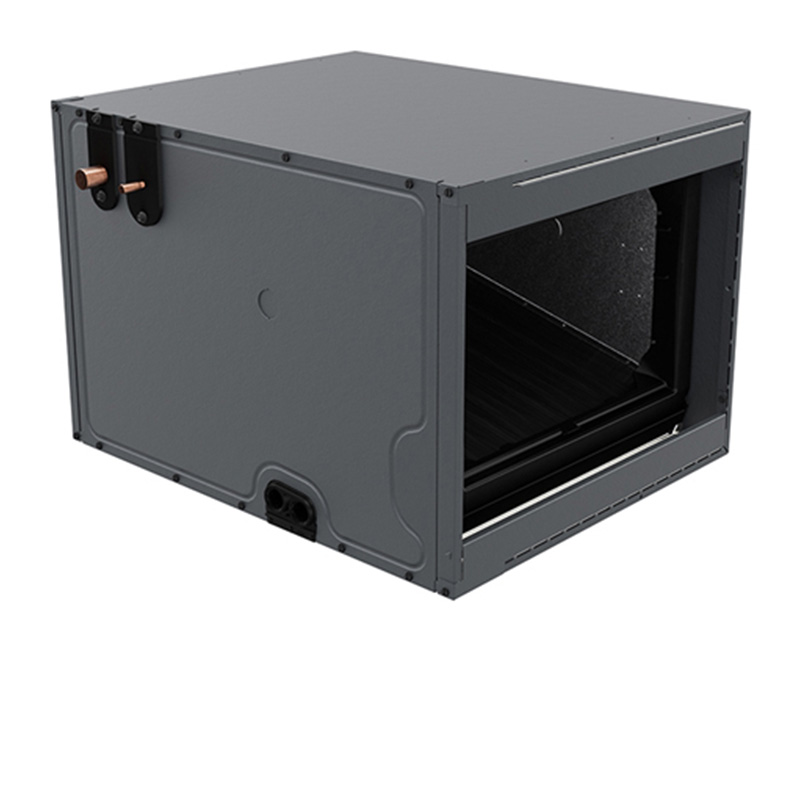
- Horizontal cabinet orientation designed for attic, crawl-space, or closet installations
About this system
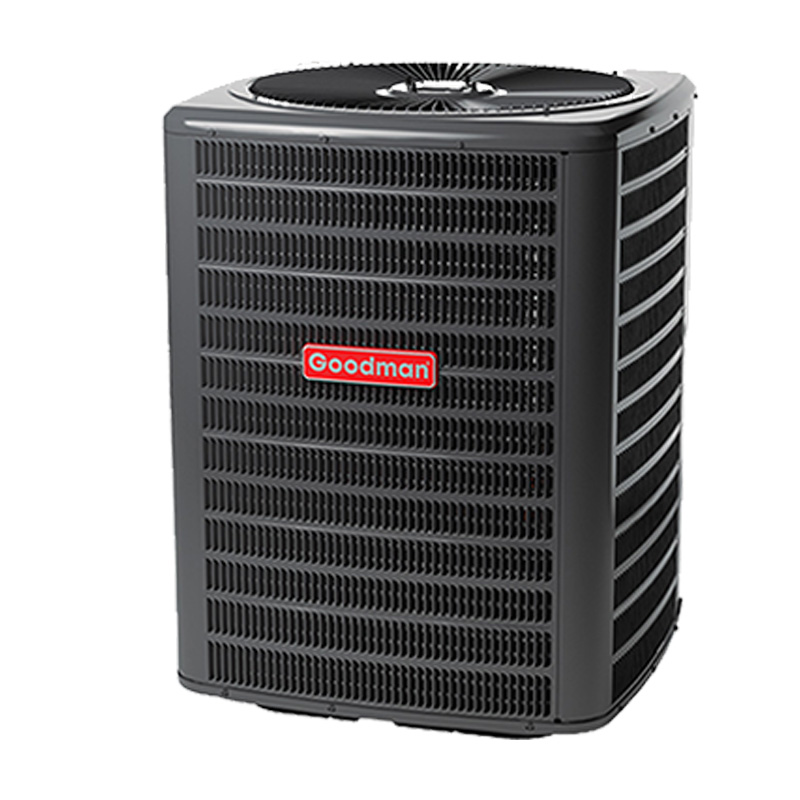
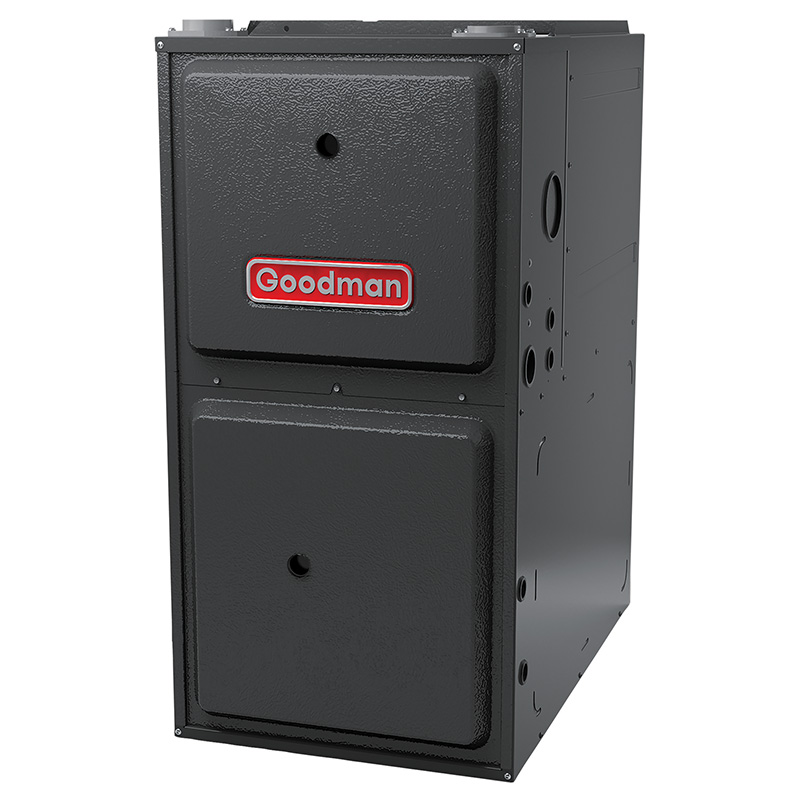
This Goodman bundle pairs a 5-ton, 13.4 SEER2 R-32 condensing unit with an 80,000 BTU, 80% AFUE two-stage gas furnace in a horizontal configuration, making it a practical choice for crawl-space installs, manufactured homes, and attic-mounted systems where a vertical cabinet simply will not fit. The two-stage compressor and nine-speed ECM blower work together to reduce short-cycling, moderate humidity on milder days, and keep operating noise lower than a single-stage setup would allow. R-32 refrigerant carries a lower global warming potential than the R-410A it replaces and is gradually becoming the new residential standard.
At 13.4 SEER2, efficiency sits right at the federal minimum for many U.S. climate zones, so monthly energy costs will be honest rather than impressive. Homeowners in hot, humid regions or those with high run-time months may find the payback on a higher-SEER2 unit worth exploring, but for buyers prioritizing upfront cost or replacing aging equipment on a set budget, this system covers the functional basics at a price point that is noticeably below comparable equipment from premium brands. The 80% AFUE furnace is similarly entry-level on efficiency; natural gas or propane customers in colder climates should at least price a 96% AFUE alternative before committing.
This Goodman system is a workable, budget-conscious solution for homeowners who need a horizontal-configuration bundle and want two-stage comfort without paying premium-brand prices. The trade-off is honest: efficiency is entry-level, compressor longevity trails premium competitors, and long-term costs depend heavily on installation quality and a proactive maintenance schedule. Buyers who can stretch the budget to 96% AFUE and a higher SEER2 tier will see better operating economics over a full system life.
Overall score is the average of the five ratings above.
What we like
- Priced roughly 15 to 25 percent below comparable Carrier, Trane, and Lennox bundles
- Two-stage operation delivers better humidity control and quieter part-load performance than single-stage alternatives at this price
- Nine-speed ECM blower reduces fan electricity use versus standard PSC motors
- R-32 refrigerant is the emerging residential standard and has a lower environmental impact than R-410A
- Horizontal configuration opens up install locations unavailable to vertical-only cabinets
Trade-offs
- 13.4 SEER2 and 80% AFUE are entry-level efficiency tiers; operating costs will be higher than mid- or high-efficiency alternatives over a 10-plus-year service life
- Compressor lifespan averages 10 to 14 years versus 15 to 20 years seen in premium-brand units, meaning replacement may arrive sooner than expected
- Dual-run capacitor failures are the most commonly reported repair on Goodman equipment, typically adding a 300 to 600 dollar service call within the first decade
- Evaporator coil leaks appear in a meaningful share of owner reports, and a small number of units have shown refrigerant issues within the first year, often tied to install or charge quality
What homeowners and pros say about Goodman
Owners who leave reviews on Google dealer pages give Goodman equipment scores around 3.8 out of 5, and the most repeated praise is straightforward: the price made a new system possible when a premium brand quote was not. Technicians tend to echo that sentiment while adding a consistent caveat: Goodman’s performance ceiling is largely set by whoever installs and commissions the equipment. A careful, experienced installer checking refrigerant charge, static pressure, and airflow at startup can get solid years out of this hardware. A rushed install on the same unit often produces the frustrations that show up in the brand’s ConsumerAffairs score, which sits around 2.5 out of 5 on a channel that skews toward complaints.
The documented failure modes are specific and worth knowing before you buy. Dual-run capacitors are the most commonly reported weak point, though a capacitor swap is one of the less expensive HVAC calls at roughly 300 to 600 dollars. More consequential are evaporator coil leaks, which appear in a notable share of longer-term owner reports, and compressor lifespans that tend to average 10 to 14 years rather than the 15 to 20 years owners of premium-brand equipment sometimes see. A small number of first-year refrigerant issues also appear in the record, almost always traced back to charge or install problems rather than a factory defect. None of these issues are unique to Goodman, but they show up at a higher rate than on premium equipment, which is a reasonable part of the trade-off when saving 15 to 25 percent upfront.
Sources: ConsumerAffairs Goodman owner reviews, AHRI Directory of Certified Product Performance, U.S. DOE appliance and equipment efficiency standards, Goodman product specification sheets.
What it costs to run
At 13.4 SEER2, cooling this 5-ton system for a typical 1200-hour cooling season at the U.S. average electricity rate of $0.17/kWh works out to roughly $913 per year in cooling, about $0 less per year than a minimum-efficiency 13.4 SEER2 unit of the same size. Your real cost depends on your climate and local rate.
Method: (60,000 BTU/hr ÷ 13.4 SEER2) × 1200 hours ÷ 1000 × $0.17/kWh. Rate source: U.S. EIA average; cooling hours: moderate-climate estimate.
How it compares
| Brand | Comparable model | SEER2 | Stage | Price position |
|---|---|---|---|---|
| Goodman | R-32 5 Ton 13.4 SEER2 / 80K BTU 80% Two-Stage + 9-Speed ECM Horizontal Bundle | 13.4 | Two-stage | Value pick |
| Carrier | Comfort 24ACC636 / 58CTA080 series bundle | 13.4-14.0 | Single-stage | Typically 15 to 25 percent more than this Goodman bundle |
| Trane | XR13 / S8X1 series bundle | 13.4-14.0 | Single-stage | Typically 15 to 25 percent more than this Goodman bundle |
| Lennox | Merit 14ACX / ML180 series bundle | 13.4-14.0 | Single-stage | Typically 15 to 25 percent more than this Goodman bundle |
Competitor rows are comparable single-stage units at similar efficiency; price is relative position, not a quote.
Questions about this system
Will this system work in my attic or under my house if the air handler has to lie on its side?
Yes, the horizontal configuration is specifically designed for that. Confirm with your installer that the drain pan and condensate trap are set up correctly for horizontal orientation, as improper condensate drainage is a leading cause of early coil and cabinet corrosion in these installs.
R-32 is new to me. Is it safe, and can any technician service it?
R-32 is mildly flammable (A2L classification), so technicians need EPA 608 certification and ideally R-32-specific handling training. It is not yet universal in every market, but availability is growing quickly as it becomes the new residential standard. Ask your service contractor before scheduling work.
The 80% AFUE furnace seems low. Should I upgrade?
For mild-winter climates, the efficiency gap between 80% and 96% AFUE may not justify the added cost. In colder regions where the furnace runs heavily from November through March, a 96% AFUE unit can cut heating fuel use by roughly 16 to 20 percent, and the payback period is often under five years at current gas prices. It is worth running the numbers for your specific location.
What is the most likely repair I should budget for in the first ten years?
Based on Goodman's documented failure patterns, dual-run capacitor replacement is the most common call, usually a straightforward fix in the 300 to 600 dollar range. Evaporator coil leaks and refrigerant issues are less frequent but more expensive when they do occur, so annual maintenance checks and verifying proper refrigerant charge at install are worthwhile investments.
Does the warranty cover both the condensing unit and the furnace, and what are the conditions?
Goodman's standard warranty requires product registration within a set window (typically 60 days of install) to qualify for the full term on parts; failing to register usually drops coverage to a shorter base period. The compressor, heat exchanger, and other major components carry different coverage lengths, so review the warranty documentation for this specific bundle and confirm your installer provides a dated proof-of-install record.
Specifications
| Cooling capacity | 5 Ton |
| Efficiency | 13.4 SEER2 |
| Furnace output | 80000 BTU |
| Configuration | Horizontal |
| Refrigerant | R-32 |