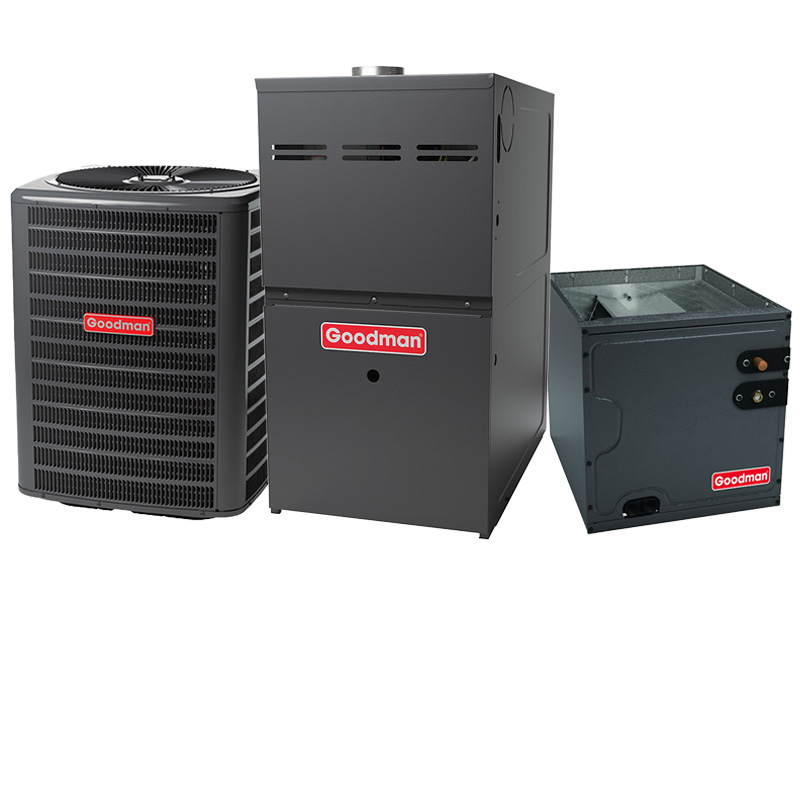
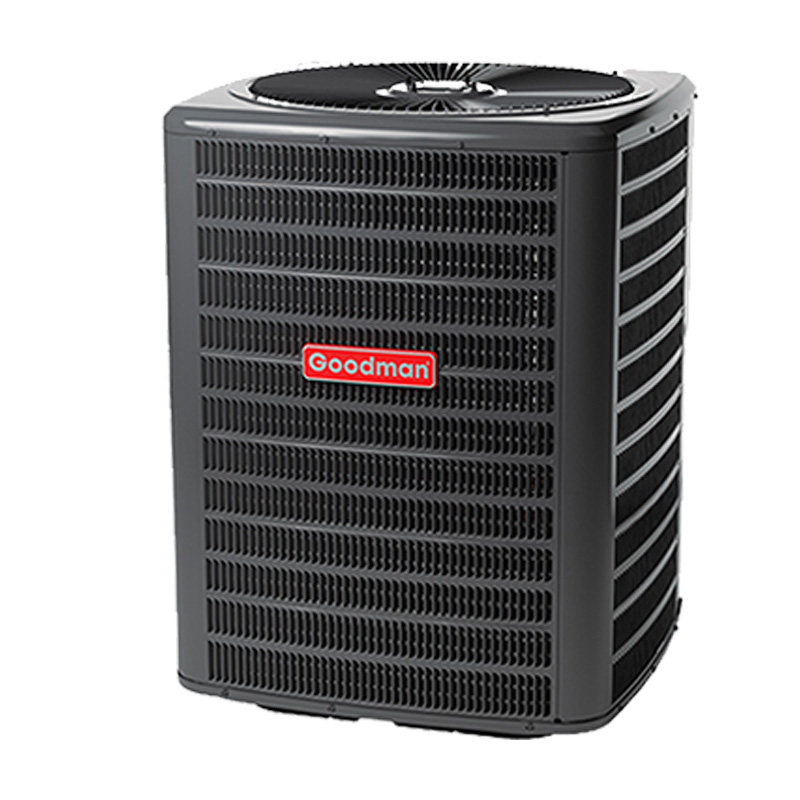
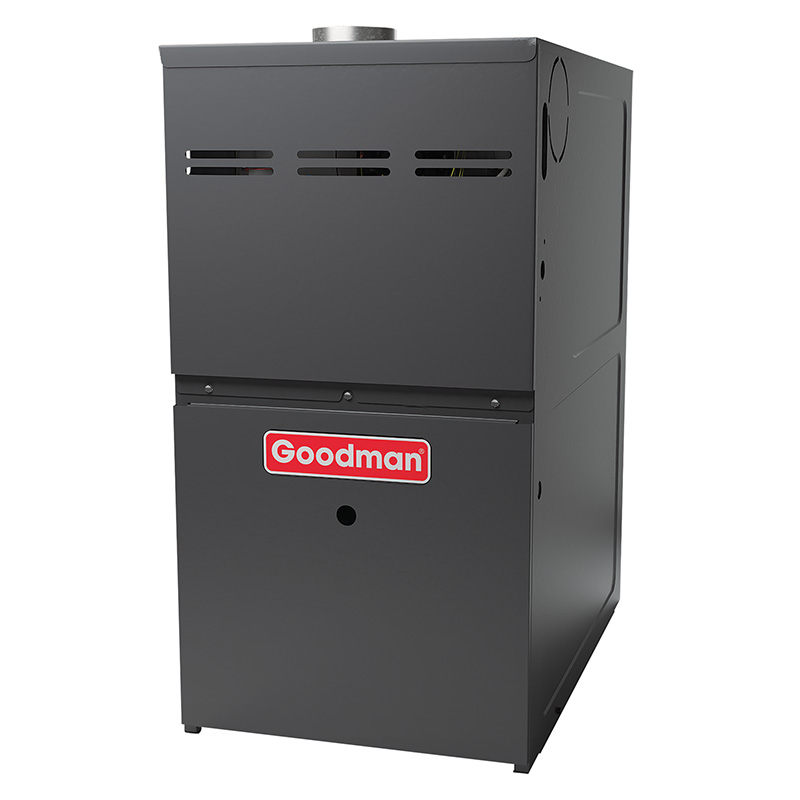
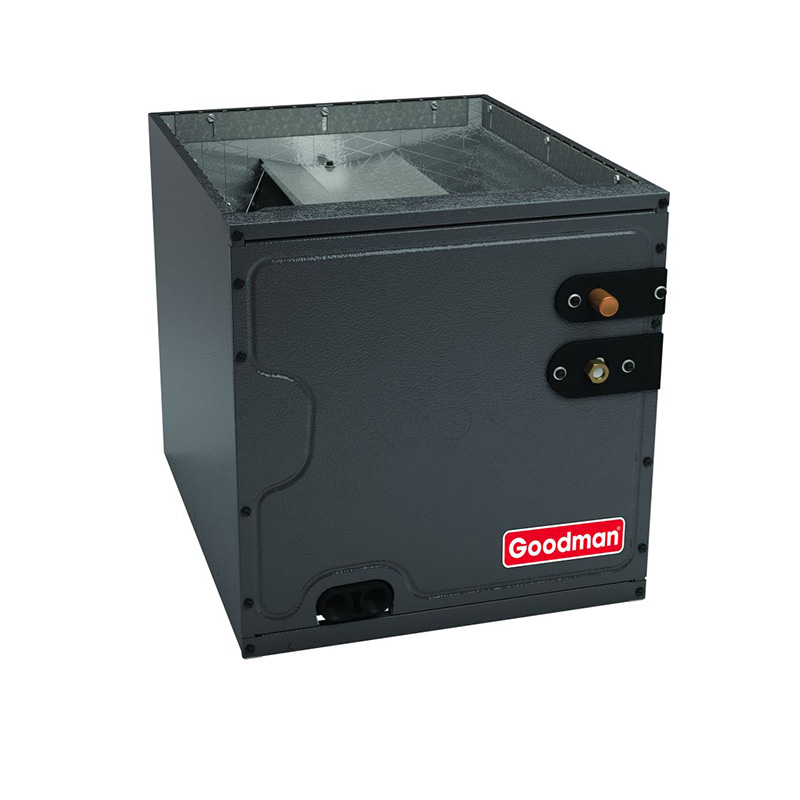
Goodman R32 5 Ton 13.6 SEER2 100000 BTU 80% Multi-Speed ECM Gas Furnace and Air Conditioner System – Upflow
View on AC Direct see your lowest price →Check current price on AC Direct →
Key features
- 5-ton cooling capacity with 13.6 SEER2 efficiency rating
- 100,000 BTU output gas furnace at 80% AFUE
- R-32 refrigerant with lower global warming potential than R-410A
- Multi-speed ECM blower motor for quieter operation and improved dehumidification
- Upflow configuration for basement or ground-level utility closet installs
- Goodman 10-year parts limited warranty with registration
About this system
This Goodman bundle pairs a 5-ton, 13.6 SEER2 R-32 air conditioner with a 100,000 BTU, 80% AFUE multi-speed ECM gas furnace in an upflow configuration, making it a practical choice for larger homes typically in the 2,500 to 3,500 square foot range, depending on climate and insulation. The 13.6 SEER2 rating sits at the lower end of current federal minimum standards for many regions, meaning operating costs will be higher than two-stage or variable-capacity systems, but the entry price is considerably lower. The ECM blower motor on the furnace does add a measure of efficiency and quieter airflow compared to a standard PSC motor, and it helps with humidity management during cooling season.
R-32 refrigerant is a meaningful step forward from the older R-410A that Goodman and most competitors used for years. It has a lower global warming potential, and its single-component nature makes recharging more straightforward for technicians. The upflow configuration suits homes where the air handler sits in a basement or utility closet with ductwork above, which covers the majority of residential installs in colder climates. At 80% AFUE the furnace converts eight out of ten units of gas into heat, which is adequate but leaves real money on the table compared to a 96% or 97% condensing unit, especially in regions with long heating seasons. Buyers in the northern tier of the country should weigh that trade-off before committing.
This Goodman system delivers a functional, no-frills heating and cooling solution at a price point 15 to 25 percent below comparable Carrier, Trane, and Lennox packages. The efficiency specs are baseline rather than impressive, and long-term ownership costs depend heavily on install quality and willingness to absorb potential repair bills after year seven. It is a reasonable buy for budget-conscious homeowners who are working with a skilled installer and keeping realistic expectations.
Overall score is the average of the five ratings above.
What we like
- Purchase price typically 15 to 25 percent lower than Carrier, Trane, or Lennox at similar efficiency
- ECM blower motor improves comfort and reduces blower energy use compared to PSC alternatives
- R-32 refrigerant is easier to recharge than blended refrigerants and has lower environmental impact
- 10-year parts limited warranty with registration provides solid mid-tier coverage
- Wide installer availability since Goodman has broad distribution across the U.S.
Trade-offs
- 13.6 SEER2 is near the federal minimum, meaning higher monthly cooling costs versus higher-efficiency alternatives
- 80% AFUE furnace wastes roughly one in five units of gas, a real cost penalty in cold climates
- Compressor lifespan averages 10 to 14 years versus 15 to 20 years for premium brands, raising long-term replacement risk
- Documented failure modes including dual-run capacitor failures, evaporator coil leaks, and a minority of early refrigerant leaks tied to install issues add potential repair costs over time
What homeowners and pros say about Goodman
Homeowners who review Goodman equipment on ConsumerAffairs give the brand roughly 2.5 out of 5, and it is worth understanding what that number reflects. ConsumerAffairs skews toward people writing after a frustrating experience, and the pattern in Goodman reviews is consistent: owners are often satisfied for the first several years, then report climbing repair costs beginning around year seven. Recurring complaints point to dual-run capacitor failures, evaporator coil leaks, and compressor replacements happening earlier than owners expected. On Google, where reviews across dealer locations average closer to 3.8 out of 5, the tone is more balanced, and affordability is the single most common reason buyers say they chose Goodman in the first place. That split between the two scores is informative rather than contradictory: the system tends to deliver on its value promise early in its life and show its compromises later.
HVAC technicians who work on Goodman equipment regularly tend to hold a pragmatic view of this 5-ton package. They note that the capacitor is an inexpensive consumable that fails on all brands but shows up in Goodman warranty calls more often than they would like. Coil leaks draw more concern because an evaporator coil replacement on a 5-ton system is a significant repair bill. Techs also point out that compressor longevity averaging 10 to 14 years versus 15 to 20 for premium brands is a real statistical difference on a unit this large, where a compressor replacement can rival the cost of a new budget system. The consistent advice from the trade is that install quality matters more for Goodman than it does for premium brands. A careful charge, proper airflow verification, and a thorough startup check can meaningfully extend how long this system runs without incident.
Sources: ConsumerAffairs Goodman owner reviews, AHRI Directory of Certified Product Performance, U.S. DOE appliance and equipment efficiency standards, Goodman product specification sheets.
What it costs to run
At 13.6 SEER2, cooling this 5-ton system for a typical 1200-hour cooling season at the U.S. average electricity rate of $0.17/kWh works out to roughly $900 per year in cooling, about $13 less per year than a minimum-efficiency 13.4 SEER2 unit of the same size. Your real cost depends on your climate and local rate.
Method: (60,000 BTU/hr ÷ 13.6 SEER2) × 1200 hours ÷ 1000 × $0.17/kWh. Rate source: U.S. EIA average; cooling hours: moderate-climate estimate.
How it compares
| Brand | Comparable model | SEER2 | Stage | Price position |
|---|---|---|---|---|
| Goodman | GLXS6BN60 / GMVC8 Series (this system) | 13.6 | Single-stage | Value pick |
| Carrier | Performance 13 / 24ACC6 Series | 13.4 to 14.3 | Single-stage | Typically 15 to 25 percent more than this Goodman bundle |
| Trane | XR13 / XR Series | 13.4 to 14.3 | Single-stage | Typically 15 to 25 percent more than this Goodman bundle |
| Lennox | Merit ML14XC1 Series | 14.3 | Single-stage | Typically 15 to 25 percent more than this Goodman bundle |
Competitor rows are comparable single-stage units at similar efficiency; price is relative position, not a quote.
Questions about this system
Is 13.6 SEER2 going to cost me significantly more to run than a higher-efficiency system?
Yes, noticeably so over a full cooling season. A 16 or 18 SEER2 system can cut cooling energy use by 15 to 25 percent compared to 13.6 SEER2, and on a 5-ton system running in a warm climate that gap adds up quickly. The lower upfront price of this unit may or may not offset higher operating costs depending on how many years you keep it and what electricity costs in your area.
Why would I choose an 80% AFUE furnace over a 96% model in this same system?
The main reasons are upfront cost and venting simplicity. An 80% furnace vents with standard metal flue pipe, which is cheaper to install and works in homes where running a PVC condensate drain for a high-efficiency furnace is difficult. In milder climates or if your heating season is short, the efficiency gap matters less, but in the northern U.S. the annual gas savings from a 96% unit usually justify the extra cost within a few years.
What are the most common repairs I should budget for on this Goodman system?
The dual-run capacitor is the most frequently cited failure on Goodman AC equipment and typically costs between 300 and 600 dollars to fix, including labor. Evaporator coil leaks appear in a meaningful share of owner reports and are more expensive to address. A minority of owners have reported refrigerant leaks in the first year, which usually points to an installation or charging issue rather than a defective component.
Does the 10-year parts warranty cover the compressor and heat exchanger?
Yes, provided you register the equipment within a set window after installation. The 10-year limited parts warranty covers the compressor, functional parts, and heat exchanger on registered units. Labor is not included, so a repair in year eight, for example, would still carry a technician bill even if the part itself is covered.
Will any HVAC contractor be able to work on this system now that it uses R-32?
Most established contractors are already working with R-32, but it is worth confirming your installer has the correct recovery equipment rated for R-32 before booking. R-32 is mildly flammable, which requires specific handling procedures, and not every older shop has updated its equipment yet. This is a one-time verification question rather than an ongoing concern.
Specifications
| Cooling capacity | 5 Ton |
| Efficiency | 13.6 SEER2 |
| Furnace output | 100000 BTU |
| Configuration | Upflow |
| Refrigerant | R-32 |