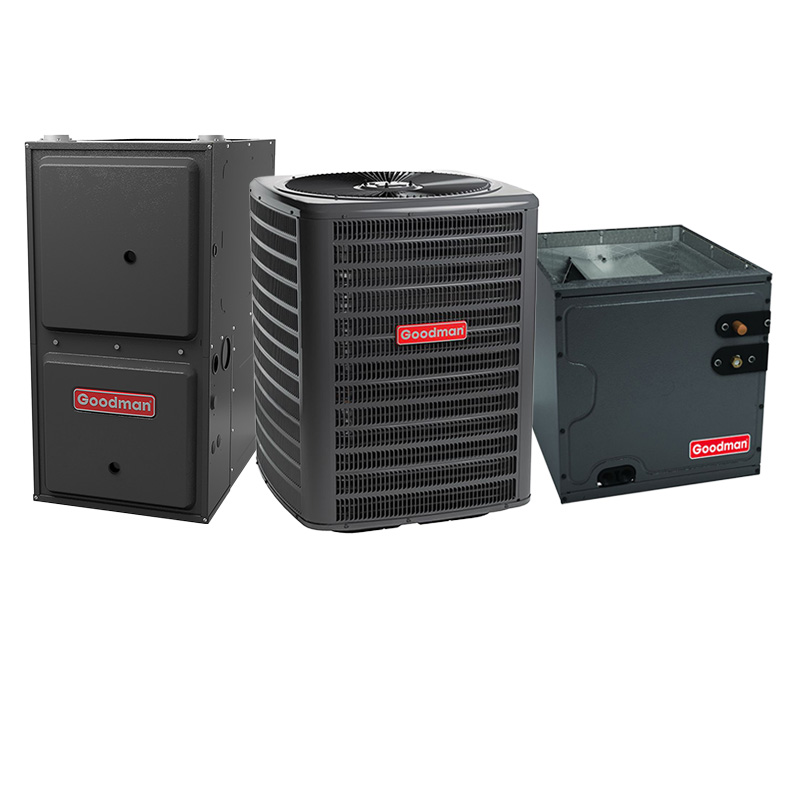
Goodman R32 5 Ton 13.6 SEER2 120000 BTU 80% Two Stage 9-Speed ECM Gas Furnace and Air Conditioner System – Upflow
View on AC Direct see your lowest price →Check current price on AC Direct →
Key features
- 5-ton cooling capacity rated at 13.6 SEER2 using R-32 refrigerant
- 120,000 BTU two-stage gas furnace with 80% AFUE efficiency
- 9-speed ECM variable-speed blower motor for quieter, steadier airflow
- Upflow configuration for basement or closet installations with floor-register supply
- R-32 refrigerant with lower global-warming potential than R-410A
- Two-stage heating reduces short-cycling and improves temperature consistency
About this system
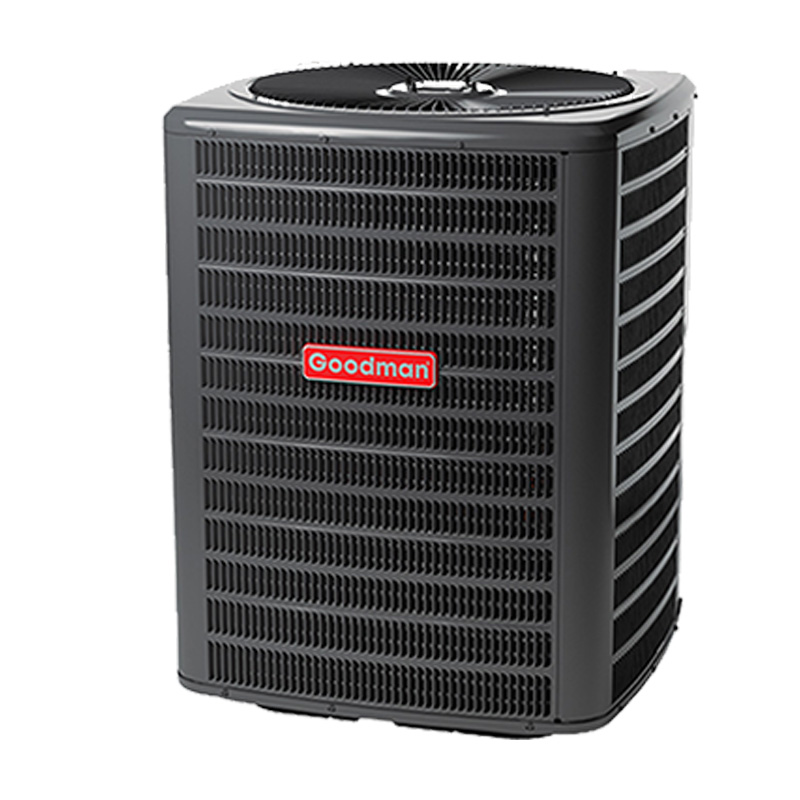
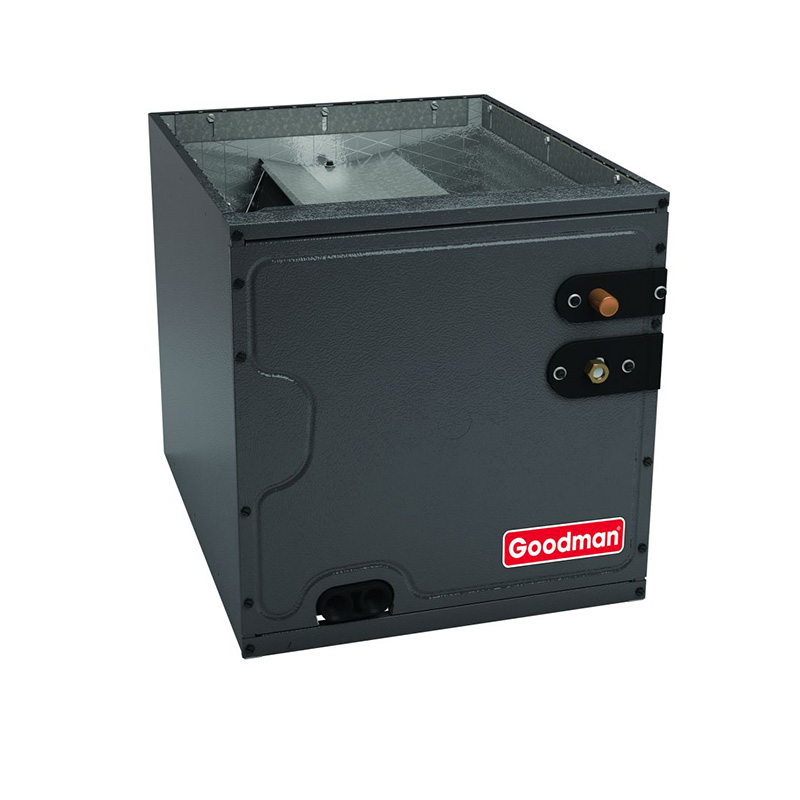
This Goodman bundle pairs a 5-ton R-32 split-system air conditioner rated at 13.6 SEER2 with a 120,000 BTU upflow gas furnace running at 80% AFUE. The combination is sized for larger homes, typically in the 2,400 to 3,000 square foot range depending on climate zone and insulation, and the upflow configuration suits basement or ground-level air handler installations where supply air rises through floor registers. R-32 refrigerant carries a lower global-warming potential than the R-410A it replaces, and Goodman’s adoption of it here keeps the system aligned with current EPA phasedown timelines.
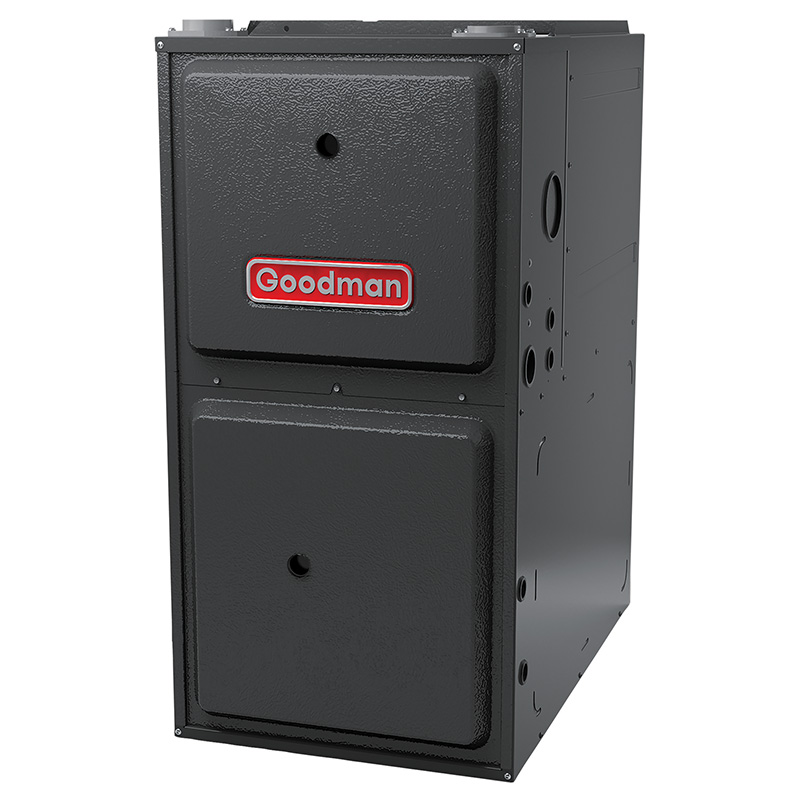
The furnace brings meaningful comfort upgrades in the form of two-stage heating and a 9-speed ECM blower motor. Two-stage operation means the unit runs at a reduced capacity on milder days, cycling less aggressively and holding steadier indoor temperatures. The ECM motor is significantly more efficient than a standard PSC motor, draws less electricity during fan-only and continuous-fan modes, and contributes to quieter airflow. These features matter most in climates with long heating seasons or wide temperature swings. At 13.6 SEER2, the cooling side sits at the lower end of the mid-efficiency range, above federal minimum thresholds but well below the premium 18 to 22 SEER2 territory, which means operating costs will be moderate rather than low.
This Goodman bundle delivers a functional, code-compliant heating and cooling system at a price point that is hard to match from name-brand competitors. The two-stage furnace and ECM blower are genuine comfort upgrades, but efficiency on the cooling side is modest, and long-term reliability depends heavily on how well it is installed and maintained. Buyers who prioritize upfront savings over long-term peace of mind will find this system competitive; those who want premium compressor longevity or lower ongoing energy bills may want to budget up.
Overall score is the average of the five ratings above.
What we like
- Priced roughly 15 to 25 percent below comparable Trane, Lennox, and Carrier bundles
- Two-stage heating and 9-speed ECM blower improve comfort and reduce energy use versus single-stage systems
- R-32 refrigerant is future-ready as R-410A is phased out under EPA regulations
- 5-ton capacity and 120,000 BTU output covers large homes that single-zone smaller systems cannot serve
- Wide installer network means parts and service are generally accessible in most markets
Trade-offs
- 13.6 SEER2 is entry-level mid-efficiency; utility savings are modest compared to 18-plus SEER2 alternatives
- Compressor lifespan averages 10 to 14 years, shorter than the 15 to 20 years typical of premium brands
- Dual-run capacitor failures and evaporator coil leaks are the most commonly documented owner complaints
- 80% AFUE furnace leaves 20% of fuel unrecovered; 90-plus AFUE two-stage units exist at a moderate premium
What homeowners and pros say about Goodman
Homeowners who have lived with Goodman equipment tend to land in two camps. Those who had a careful installation, registered their warranty, and kept up with filter changes and annual tune-ups often report years of trouble-free service and point to the lower installed price as the right call. Those who run into problems often encounter them after year seven, which aligns with what shows up on ConsumerAffairs, where Goodman holds roughly 2.5 out of 5 stars and the recurring theme is repair costs that start to feel out of proportion to the original savings. On Google dealer review pages, where the audience skews toward customers who had a complete, professional install, the picture is more balanced at around 3.8 out of 5, with affordability cited most often as the reason buyers chose the brand.
HVAC technicians who work on Goodman equipment regularly point to two specific components as the most common service calls: dual-run capacitors, which are a relatively inexpensive fix in the $300 to $600 range and are not unique to Goodman, and evaporator coil leaks, which appear in enough owner accounts to be a known pattern rather than an isolated issue. Compressor longevity is also worth understanding honestly: Goodman compressors tend to average 10 to 14 years of service life, compared to 15 to 20 years seen more often with Trane, Carrier, and Lennox. On a 5-ton system like this one, a compressor replacement is a significant expense, which is why technicians consistently stress that installation quality, including correct refrigerant charge and proper airflow setup, is the single largest factor in how long any Goodman unit performs before requiring major work.
Sources: ConsumerAffairs Goodman owner reviews, AHRI Directory of Certified Product Performance, U.S. DOE appliance and equipment efficiency standards, Goodman product specification sheets.
What it costs to run
At 13.6 SEER2, cooling this 5-ton system for a typical 1200-hour cooling season at the U.S. average electricity rate of $0.17/kWh works out to roughly $900 per year in cooling, about $13 less per year than a minimum-efficiency 13.4 SEER2 unit of the same size. Your real cost depends on your climate and local rate.
Method: (60,000 BTU/hr ÷ 13.6 SEER2) × 1200 hours ÷ 1000 × $0.17/kWh. Rate source: U.S. EIA average; cooling hours: moderate-climate estimate.
How it compares
| Brand | Comparable model | SEER2 | Stage | Price position |
|---|---|---|---|---|
| Goodman | R-32 5-Ton 13.6 SEER2 Two-Stage with 80% AFUE ECM Furnace (Upflow) | 13.6 | Two-stage | Value pick |
| Carrier | Comfort Series (24ACC6 / 59SC2) | 13.4 to 14.0 | Single-stage | Typically 15 to 25 percent more than Goodman at comparable tonnage |
| Trane | XR14 / S8X1 series | 13.4 to 14.3 | Single-stage | Typically 15 to 25 percent more than Goodman at comparable tonnage |
| Lennox | Merit Series (ML14XC1 / SL280) | 13.4 to 14.0 | Single-stage | Typically 15 to 25 percent more than Goodman at comparable tonnage |
Competitor rows are comparable single-stage units at similar efficiency; price is relative position, not a quote.
Questions about this system
Is 5 tons the right size for my home, or should I get a Manual J load calculation first?
A Manual J load calculation is the only reliable way to confirm sizing for your specific home, and an oversized 5-ton system will short-cycle, reduce dehumidification, and wear components faster. Skipping the calculation is one of the most common installation errors that leads to early component failures and comfort complaints with any brand, including Goodman.
What is the typical cost to repair the most common Goodman failure points on this size system?
Dual-run capacitor replacement, the most frequently reported failure, usually runs between $300 and $600 including labor. Evaporator coil leaks are more involved, often $800 to $1,500 or more depending on labor rates and refrigerant quantity, and they are covered under warranty if the unit is registered and within the warranty period.
Why does this furnace only have 80% AFUE when 96% two-stage furnaces exist?
80% AFUE furnaces vent combustion gases through a standard flue and are less expensive to install, particularly in homes without existing PVC venting. If your home already has a conventional flue and you are replacing an older system, the 80% unit slots in with minimal additional cost. If energy savings are a priority and PVC venting is feasible, a 90-plus AFUE unit will recover the upfront difference over time in most climates.
Does R-32 refrigerant change anything about installation or servicing costs versus R-410A?
R-32 requires technicians to use equipment rated for mildly flammable (A2L) refrigerants, which most newer recovery machines and gauges already support. Some older tools are not compatible, so confirm your installer has updated equipment. Refrigerant cost differences between R-32 and R-410A are currently modest, but R-32's lower charge weight per ton can mean slightly less refrigerant is needed.
What does the Goodman warranty cover on this system, and what do I need to do to activate it?
Goodman typically offers a 10-year parts warranty when the equipment is registered with Goodman within a set window after installation, usually 60 days; unregistered units often receive a shorter base warranty. The warranty covers parts but not labor, which means a repair event like a coil leak or compressor failure can still carry significant out-of-pocket labor costs even within the warranty period. Confirm registration requirements at the time of purchase and keep all installation documentation.
Specifications
| Cooling capacity | 5 Ton |
| Efficiency | 13.6 SEER2 |
| Furnace output | 120000 BTU |
| Configuration | Upflow |
| Refrigerant | R-32 |