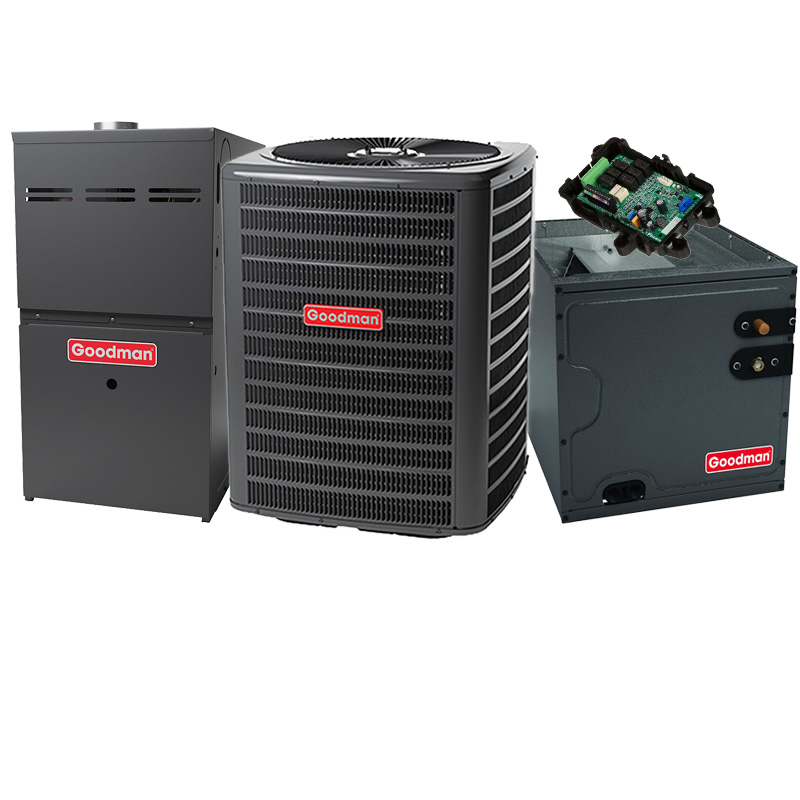
Goodman 5 Ton 13.6 SEER2 80000 BTU 80% Two-Stage Gas Furnace With R32 Air Conditioner Condenser And Coil System – Upflow
View on AC Direct see your lowest price →Check current price on AC Direct →
Key features
- 5-ton cooling capacity with 13.6 SEER2 efficiency rating
- Two-stage 80,000 BTU furnace at 80% AFUE for quieter, more even heating
- R-32 refrigerant with lower global warming potential than R-410A
- Upflow configuration for basement or ground-level utility room installs
- Matched evaporator coil included for a factory-engineered system
- Compatible with communicating and conventional thermostat wiring
About this system
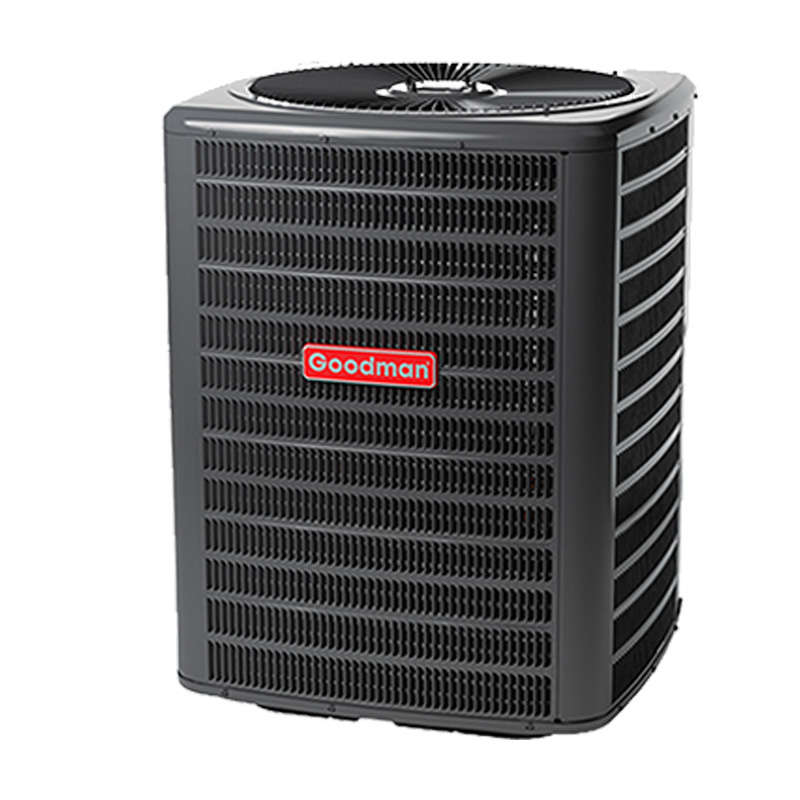
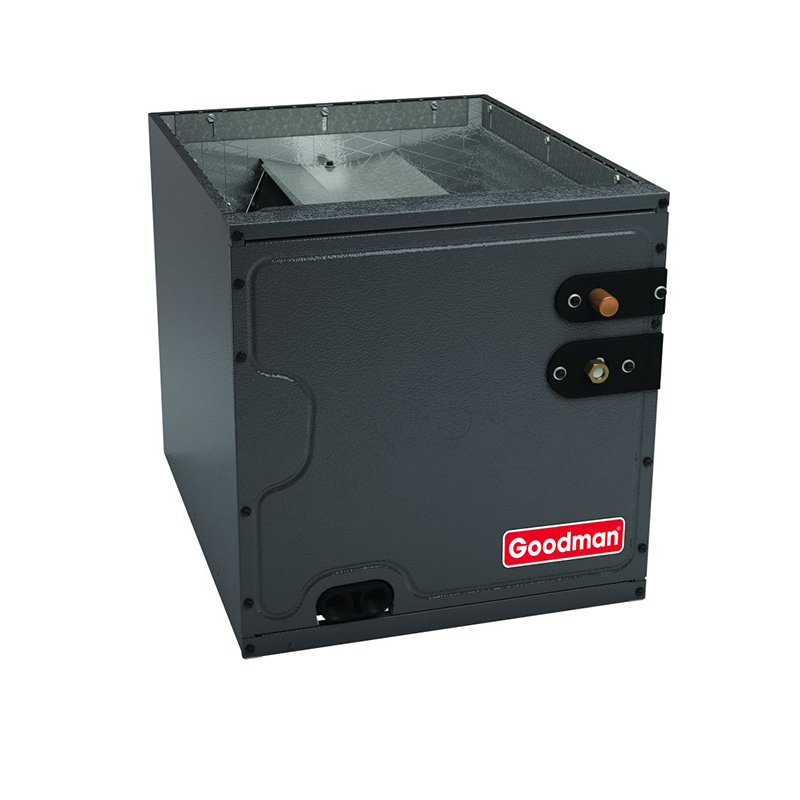
This Goodman package combines a 5-ton, 13.6 SEER2 R-32 air conditioner condenser and matched evaporator coil with an 80,000 BTU, 80% AFUE two-stage gas furnace in an upflow configuration. The system is sized for larger homes, typically in the 2,400 to 3,200 square foot range depending on climate zone and insulation, and the upflow setup means the air handler sits in a basement or ground-level utility room and pushes conditioned air upward through the duct system. R-32 refrigerant carries a lower global warming potential than the R-410A it replaces, and Goodman has been shipping R-32 equipment ahead of the broader industry phase-over, which matters if you plan to own this system for a decade or more.
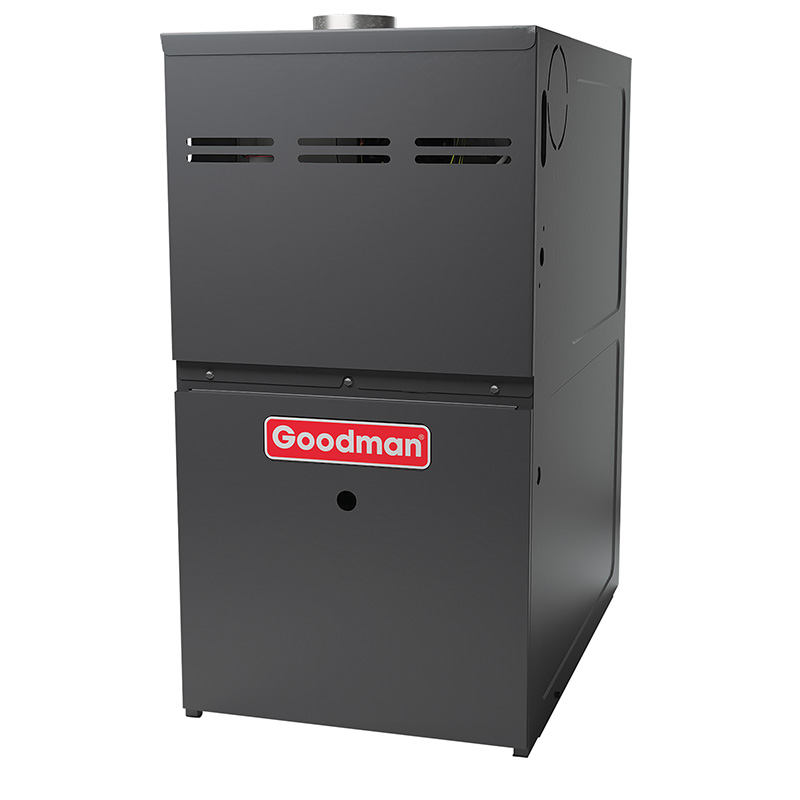
The two-stage furnace is a meaningful upgrade over single-stage equipment. On most winter days the furnace runs on its lower stage, which means quieter operation, more even temperatures, and longer run cycles that do a better job of pulling humidity out of the air. The 80% AFUE rating is the federal minimum for non-condensing furnaces in northern climates and is a step below the 90%-plus condensing tier, so homeowners in very cold regions who pay high gas rates may want to compare long-term fuel costs against a 96% or 97% AFUE option before committing. For moderate climates or where gas is cheap, the lower purchase price of an 80% unit often makes more financial sense.
This Goodman bundle delivers a functional two-stage heating and cooling system at a price that lands noticeably below Carrier, Trane, and Lennox alternatives of similar capacity. The 13.6 SEER2 and 80% AFUE specs meet code minimums and suit moderate climates well, though buyers who prioritize long-term efficiency or top-tier reliability should weigh the brand's documented repair history before deciding. Install quality will determine more than any spec on this sheet.
Overall score is the average of the five ratings above.
What we like
- Purchase price runs roughly 15 to 25 percent below comparable Carrier, Trane, and Lennox systems
- Two-stage furnace operation improves comfort and humidity control versus single-stage
- R-32 refrigerant is future-compatible as R-410A is phased out industry-wide
- Matched coil-and-condenser bundle simplifies permitting and efficiency certification
- Capacitor failures, the most common reported issue, are typically a low-cost repair in the $300 to $600 range
Trade-offs
- 80% AFUE is the minimum non-condensing threshold; high-gas-rate climates will see higher operating costs versus 96%-plus alternatives
- Compressor lifespan averages 10 to 14 years per owner reports, shorter than the 15 to 20 years seen with premium brands
- Evaporator coil leaks appear in a notable share of owner reviews and can be a costly mid-life repair
- A minority of owners have reported refrigerant leaks in the first year, most often traced to installation or initial charge errors
What homeowners and pros say about Goodman
Homeowners who have installed Goodman equipment tend to echo what the brand’s ratings reflect. On ConsumerAffairs, where Goodman sits at roughly 2.5 out of 5, the most consistent thread in negative reviews is unexpected repair bills that surface after year 7 or so, with evaporator coil leaks and compressor failures cited most often. On Google dealer pages, where the brand averages around 3.8 out of 5 across hundreds of reviews per location, the tone shifts: buyers who got a solid install at a fair price frequently report years of trouble-free operation and point to affordability as the reason they chose Goodman over a premium brand. The gap between those two scores is real, and it reflects the role that installation quality plays in how long these systems last.
HVAC technicians generally agree that Goodman equipment is serviceable and well-understood in the field, but they are candid about a few recurring issues with this product line. Dual-run capacitors are the most commonly replaced component, though that repair typically runs $300 to $600 and is straightforward. Coil leaks are a more serious mid-life concern and have appeared with enough frequency in owner reports to be worth factoring into a long-term cost comparison. Compressor longevity, averaging 10 to 14 years versus 15 to 20 for premium brands, is a real trade-off for buyers who want to keep a system running for 20 years. Pros consistently say that a quality install, a good labor warranty, and a trusted service relationship are the best insurance policy for a Goodman system.
Sources: ConsumerAffairs Goodman owner reviews, AHRI Directory of Certified Product Performance, U.S. DOE appliance and equipment efficiency standards, Goodman product specification sheets.
What it costs to run
At 13.6 SEER2, cooling this 5-ton system for a typical 1200-hour cooling season at the U.S. average electricity rate of $0.17/kWh works out to roughly $900 per year in cooling, about $13 less per year than a minimum-efficiency 13.4 SEER2 unit of the same size. Your real cost depends on your climate and local rate.
Method: (60,000 BTU/hr ÷ 13.6 SEER2) × 1200 hours ÷ 1000 × $0.17/kWh. Rate source: U.S. EIA average; cooling hours: moderate-climate estimate.
How it compares
| Brand | Comparable model | SEER2 | Stage | Price position |
|---|---|---|---|---|
| Goodman | 5 Ton 13.6 SEER2 80% Two-Stage with R-32 Coil System (this unit) | 13.6 | Two-stage | Value pick |
| Carrier | Comfort 14 Series (CA14NA / 58TP series bundle) | ~14 | Single-stage | Typically 15 to 25 percent more than this Goodman |
| Trane | XR14 / S8X1 series bundle | ~14 | Single-stage | Typically 15 to 25 percent more than this Goodman |
| Lennox | Merit 14ACX / ML180 series bundle | ~14 | Single-stage | Typically 15 to 25 percent more than this Goodman |
Competitor rows are comparable single-stage units at similar efficiency; price is relative position, not a quote.
Questions about this system
Will this 5-ton system actually fit my house, or is it oversized?
A 5-ton unit is typically appropriate for homes in the 2,400 to 3,200 square foot range, but the right size depends on your climate zone, insulation, window area, and ceiling height. Oversizing causes short-cycling, which hurts humidity control and accelerates wear. Ask your installer to perform a Manual J load calculation before committing to this size.
Is an 80% AFUE furnace still worth buying, or should I upgrade to a 96% model?
An 80% AFUE furnace vents through a conventional flue and is the lower-cost option upfront. A 96% or higher condensing furnace saves more on gas each winter, but the payback period depends on your local gas rate and how cold your climate is. In mild climates with low gas rates, the 80% unit often makes economic sense; in cold climates with high gas bills, a condensing furnace can pay back the price difference within several years.
What does switching to R-32 refrigerant mean for maintenance or future repairs?
R-32 has a lower global warming potential than R-410A and is widely expected to remain serviceable as R-410A is phased out under EPA regulations. Your technician will need R-32 certification to service the system, which most current-generation HVAC techs are obtaining. Recovery and charging procedures differ slightly from R-410A, so confirm your service contractor has the proper equipment.
Goodman has mixed reviews online. How worried should I be about reliability?
Goodman scores around 2.5 out of 5 on ConsumerAffairs, a platform that skews toward dissatisfied customers, and roughly 3.8 out of 5 on Google dealer reviews. The most frequently reported issues are dual-run capacitor failures (usually a quick, inexpensive fix), evaporator coil leaks in mid-life, and compressor lifespans that average 10 to 14 years rather than the 15 to 20 years seen with premium brands. A solid extended labor warranty and a quality install go a long way toward managing these risks.
Does a refrigerant leak in the first year mean the unit is defective?
Not necessarily. Goodman's documented cases of early refrigerant leaks are most often attributed to installation errors, loose fittings, or an improper initial charge rather than a factory defect in the equipment itself. This is one reason installer reputation matters so much with this brand. If a leak occurs within the first year, your contractor's workmanship warranty and Goodman's parts warranty should both be in play.
Specifications
| Cooling capacity | 5 Ton |
| Efficiency | 13.6 SEER2 |
| Furnace output | 80000 BTU |
| Configuration | Upflow |
| Refrigerant | R-32 |