Goodman R32 60000 BTU 96% Two-Stage Multi-Speed ECM Gas Furnace Downflow ( GD9T960603BN)
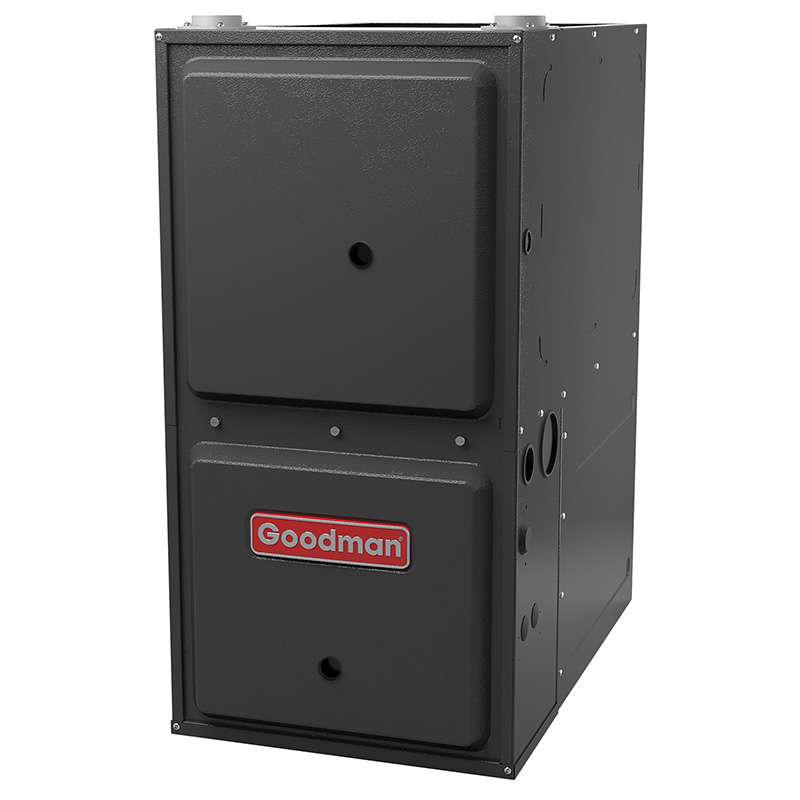
View on AC Direct see your lowest price →Check current price on AC Direct →
Key features
- 96% AFUE two-stage gas burner reduces fuel consumption versus single-stage designs
- Downflow air discharge suits closet, alcove, or above-crawl-space installations
- Multi-speed ECM blower motor cuts electrical draw and lowers operating noise at partial capacity
- 60,000 BTU output sized for small to medium homes in moderate climates
- Two-stage operation reduces temperature swings and short-cycling on mild days
- Compatible with matched Goodman R-32 evaporator coils for a complete split system
About this system
The Goodman GD9T960603BN is a 60,000 BTU, 96% AFUE two-stage gas furnace built in a downflow configuration, meaning warm air is discharged downward through the floor rather than upward through the top. That orientation makes it the right fit for installations in a closet or utility room positioned above a crawl space or basement, or in any application where ductwork runs beneath the living space. The two-stage burner runs at a reduced capacity on most mild days and ramps up to full output only when temperatures drop sharply, which smooths out temperature swings and cuts fuel waste compared to a single-stage unit firing at 100 percent every cycle.
The multi-speed ECM blower motor is a meaningful upgrade over a standard PSC motor. ECM motors draw considerably less electricity during the long stretches when the blower is running at partial speed, and they tend to move air more quietly at lower settings. At 96% AFUE this furnace sits in the high-efficiency tier, keeping only 4 cents of every fuel dollar from doing useful heating work. The R-32 refrigerant designation in the model name refers to the refrigerant compatibility of a matched coil in a split system, not the furnace itself; natural gas is the fuel source here. This unit suits a homeowner in a small to medium home who needs a downflow configuration, wants meaningfully lower gas bills than an 80% unit would deliver, and is working with a tighter equipment budget than premium brands require.
The GD9T960603BN delivers genuine high-efficiency performance and a quieter two-stage operation at a price point well below comparable Carrier, Trane, or Lennox units, making it a solid choice when budget matters and install quality can be guaranteed. The trade-off is a brand track record that shows more out-of-pocket repair costs after the first several years than premium competitors, and long-term compressor and coil reliability that lags the top tier. It earns its place when the savings on equipment cost are directed toward a skilled installer and a service agreement.
Overall score is the average of the five ratings above.
What we like
- 96% AFUE substantially lowers monthly gas bills versus standard 80% furnaces
- Two-stage burner improves comfort by reducing temperature swings throughout the day
- ECM blower motor is noticeably quieter and more energy-efficient than a PSC motor
- Priced roughly 15 to 25 percent below equivalent Trane, Lennox, and Carrier models
- Downflow cabinet design serves installations where ductwork runs beneath the unit
Trade-offs
- Brand reliability ratings are below premium competitors, with repair costs climbing after roughly year 7 per ConsumerAffairs feedback
- Dual-run capacitors are the most commonly reported failure point, typically requiring service within the first decade
- Evaporator coil leaks appear in a meaningful share of owner reports, a risk to budget over time
- Downflow configuration limits this unit to specific installation layouts and is not a drop-in replacement for most upflow setups
What homeowners and pros say about Goodman
Homeowners who have purchased Goodman equipment reflect the split picture that the brand’s ratings reveal. On Google dealer reviews, which average around 3.8 out of 5 across locations, the most consistent praise is for affordability and the fact that the equipment delivers on its efficiency claims when properly installed. The ConsumerAffairs score tells a harder story, sitting at roughly 2.5 out of 5 on a channel that draws people motivated to leave a complaint, where the recurring theme is repair costs that start accumulating after about the seventh year of ownership. For a furnace like the GD9T960603BN, those numbers suggest the unit can perform well in its early years but may demand more maintenance investment in its second decade than a Trane or Carrier equivalent would.
HVAC technicians who service Goodman equipment are consistent on a few specific points. Dual-run capacitors are the most commonly reported failure component, and while that repair usually runs in the 300 to 600 dollar range and is not catastrophic, it is frequent enough to plan for. Evaporator coil leaks appear in a meaningful share of owner reports and carry a higher repair cost. Compressors on Goodman systems tend to average 10 to 14 years in the field, compared to 15 to 20 years for premium brands, which matters for long-term cost calculations. Pros also note that a minority of owners report refrigerant or system issues within the first year, almost always traced back to installation errors rather than factory defects, which underscores why the installer’s skill matters as much as the equipment itself when choosing this brand.
Sources: ConsumerAffairs Goodman owner reviews, AHRI Directory of Certified Product Performance, U.S. DOE appliance and equipment efficiency standards, Goodman product specification sheets.
How it compares
| Brand | Comparable model | SEER2 | Stage | Price position |
|---|---|---|---|---|
| Goodman | GD9T960603BN | N/A (gas furnace) | Two-stage | Value pick |
| Carrier | Performance 96 (59TP6) | N/A (gas furnace) | Two-stage | Moderately higher than Goodman |
| Trane | S9X2 (XR96) | N/A (gas furnace) | Two-stage | Higher than Goodman, mid-tier premium |
| Lennox | EL296V | N/A (gas furnace) | Two-stage | Notably higher than Goodman |
Competitor rows are comparable single-stage units at similar efficiency; price is relative position, not a quote.
Questions about this system
Can this furnace be installed in an upflow or horizontal position, or is it strictly downflow?
The GD9T960603BN is factory-configured for downflow only. The cabinet, heat exchanger orientation, and flue connections are specific to that airflow direction. Using it in an upflow or horizontal application would require a different model in the GD9T96 series designed for that configuration.
What does two-stage operation actually mean for my heating bills and comfort?
Two-stage means the burner fires at a lower capacity, often around 65 percent, on most days and only kicks up to full 60,000 BTU output when outdoor temperatures drop significantly. This prevents the rapid on-off cycling that wastes fuel and creates hot and cold spots, and it typically reduces gas consumption compared to a single-stage furnace of the same BTU rating.
How does the ECM blower motor compare to what most older furnaces use?
Older furnaces typically use PSC motors that run at fixed speeds and draw the same electricity regardless of demand. The ECM motor in this unit adjusts its speed to match system requirements, using substantially less power at lower speeds and running more quietly during the long periods when full airflow is not needed.
What warranty does this Goodman furnace carry, and are there conditions I need to meet?
Goodman furnaces in this class typically carry a limited lifetime heat exchanger warranty and a 10-year parts warranty when registered within a specified window after installation, often 60 days. Warranty coverage usually requires installation by a licensed HVAC contractor and may be voided by improper installation or unauthorized modifications, so verifying current terms on Goodman's site at the time of purchase is important.
Given Goodman's mixed reliability reputation, is there anything I can do to protect myself after purchase?
The single most important step is hiring an experienced, licensed installer, since technicians consistently cite install quality as the biggest driver of how long a Goodman unit lasts. Beyond that, budgeting for an annual maintenance visit to catch capacitor and coil issues early, and considering an extended service contract, can significantly reduce the risk of large out-of-pocket costs in years 7 through 12.
Specifications
| Furnace output | 60000 BTU |
| Configuration | Downflow |
| Refrigerant | R-32 |
| Model | GD9T960603BN |