Goodman R32 60000 BTU 96% Two-Stage Multi-Speed ECM Gas Furnace Upflow / Horizontal ( GR9T960603AN)
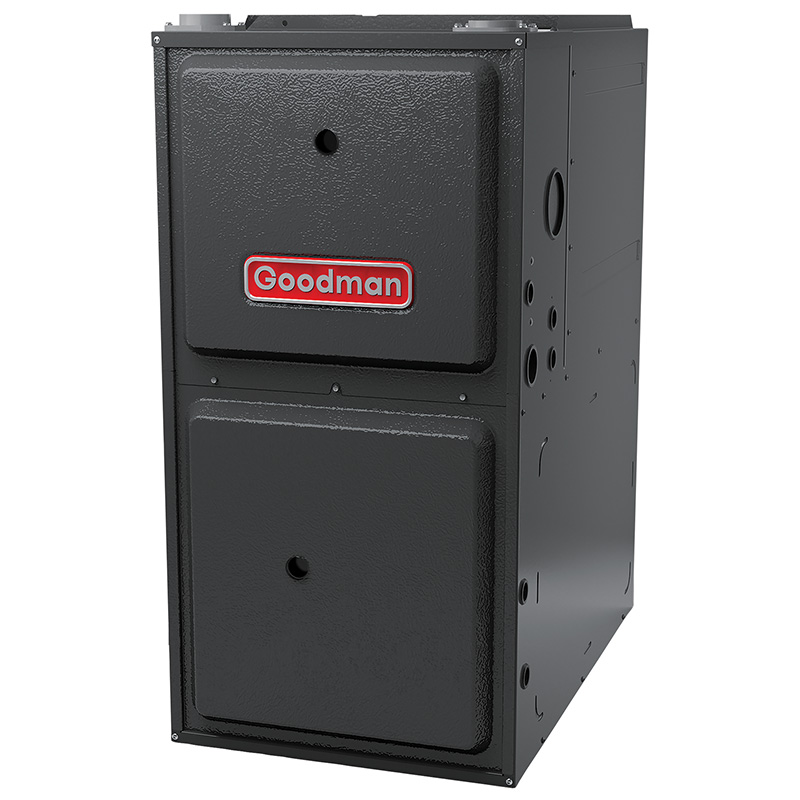
View on AC Direct see your lowest price →Check current price on AC Direct →
Key features
- 96% AFUE two-stage gas combustion for high-efficiency heating
- Multi-speed ECM blower motor reduces electrical draw during extended fan runs
- Upflow and horizontal configurations supported in one unit
- Two-stage gas valve delivers lower-capacity operation on mild days
- 60,000 BTU output suited to mid-size homes in moderate to cold climates
- Compatible with Goodman communicating and non-communicating thermostat controls
About this system
The Goodman GR9T960603AN is a 60,000 BTU, 96% AFUE two-stage gas furnace designed for upflow or horizontal installation. The 96% AFUE rating means only 4 cents of every fuel dollar escapes as exhaust, putting this unit firmly in the high-efficiency tier for gas heating. Two-stage operation lets the furnace run at a lower capacity on mild days and step up to full output when temperatures drop sharply, which reduces temperature swings, keeps the blower running longer at quieter speeds, and trims fuel bills compared to single-stage models.
The multi-speed ECM (electronically commutated motor) blower is a meaningful upgrade over a standard PSC motor. ECM motors draw significantly less electricity during the long fan-only or low-stage runs, and they tend to ramp up and down more smoothly, which homeowners often notice as quieter, more even airflow. The R-32 refrigerant designation on a furnace is unusual to see called out directly, as R-32 is primarily an air-conditioning refrigerant; this label likely reflects Goodman’s broader system compatibility documentation rather than a refrigerant used inside the furnace itself. The upflow/horizontal configuration covers the two most common residential orientations, making it a workable fit for basements, closets, and attic or crawlspace installs where the unit lies on its side.
This furnace suits homeowners in cold climates who want genuine efficiency gains over an 80% AFUE unit without the price premium of a Carrier, Trane, or Lennox equivalent. It is a practical match for a 1,200 to 2,000 square foot home depending on local climate zone and insulation levels, though a proper Manual J load calculation by the installing contractor is the only reliable way to confirm sizing.
The GR9T960603AN delivers genuine high-efficiency heating with a two-stage gas valve and ECM blower at a price point typically 15 to 25 percent below comparable Carrier, Trane, or Lennox units. For buyers who prioritize upfront cost and pair it with a skilled installer, it is a competitive choice. Long-term ownership costs depend heavily on that install quality and on budgeting for component repairs after roughly year seven.
Overall score is the average of the five ratings above.
What we like
- 96% AFUE keeps heating costs low through cold seasons
- Two-stage operation reduces temperature swings and lowers noise during mild weather
- ECM blower motor cuts electrical consumption compared to standard PSC motors
- Priced 15 to 25 percent below comparable premium-brand furnaces
- Upflow and horizontal compatibility adds installation flexibility
Trade-offs
- Dual-run capacitors are the most frequently reported failure point, typically costing $300 to $600 to repair after several years
- Compressor and heat exchanger longevity tends to trail premium brands, with more reported repair costs after year seven
- Overall reliability scores lean on the lower end, with ConsumerAffairs averaging around 2.5 out of 5, driven by repair cost complaints in older units
- Performance is heavily dependent on install quality, meaning a poor installation can erase most of the efficiency and reliability advantages
What homeowners and pros say about Goodman
Homeowners who follow Goodman equipment online tend to split into two camps. Those who had a clean installation and kept up with maintenance often report years of reliable service and point to affordability as the main draw, sentiments that show up in Google dealer review scores that average around 3.8 out of 5 across hundreds of reviews per location. The criticism that surfaces on more complaint-oriented channels like ConsumerAffairs, where Goodman scores closer to 2.5 out of 5, is almost always tied to repair costs climbing after roughly year seven, not to immediate failures out of the box.
HVAC technicians who work on Goodman equipment regularly flag two specific failure patterns worth knowing before you buy. Dual-run capacitors are the most common service call, a relatively low-cost repair in the $300 to $600 range but one that comes up more frequently than on some competing brands. Beyond capacitors, a meaningful share of owner reports mention evaporator coil leaks over time, and compressors on Goodman systems tend to average 10 to 14 years of service life compared to 15 to 20 years seen more often with Trane, Carrier, or Lennox equipment. Technicians consistently emphasize that install quality is the single biggest variable in how a Goodman unit ages, far more so than with premium brands that are built to tolerate a wider range of field conditions.
Sources: ConsumerAffairs Goodman owner reviews, AHRI Directory of Certified Product Performance, U.S. DOE appliance and equipment efficiency standards, Goodman product specification sheets.
How it compares
| Brand | Comparable model | SEER2 | Stage | Price position |
|---|---|---|---|---|
| Goodman | GR9T960603AN | N/A (furnace only) | Two-stage | Value pick |
| Carrier | Performance 96 (59TP6) | N/A (furnace only) | Two-stage | Priced roughly 20 to 25 percent above this Goodman |
| Trane | S9V2 (variable-speed, comparable tier) | N/A (furnace only) | Two-stage/variable | Priced roughly 25 to 35 percent above this Goodman |
| Lennox | EL296V | N/A (furnace only) | Two-stage | Priced roughly 20 to 30 percent above this Goodman |
Competitor rows are comparable single-stage units at similar efficiency; price is relative position, not a quote.
Questions about this system
Is 60,000 BTU enough for my home, or should I size up to the 80,000 BTU model?
BTU sizing depends on your home's square footage, insulation quality, window area, and local climate zone. A proper Manual J heat load calculation is the only reliable way to answer this. Oversizing a two-stage furnace is a common mistake that leads to short cycling, uneven temperatures, and accelerated wear, so resist the urge to size up without running the numbers.
What does the two-stage operation actually do day to day?
The furnace runs at its lower stage, typically around 65 percent of full capacity, during mild cold snaps. It only steps up to 100 percent output when the thermostat calls for more heat than the lower stage can deliver. This means longer, quieter heating cycles, less temperature swing between calls for heat, and lower fuel consumption on average days.
Why does my contractor keep saying install quality matters so much with Goodman?
Goodman's documented track record shows its units perform best when refrigerant charge, airflow, flue venting, and electrical connections are done precisely. Technicians consistently note that a sloppy install on a Goodman magnifies reliability issues that a more robustly built premium unit might tolerate better. Choosing an experienced, licensed installer is arguably the single most important decision you make with this product.
What kind of repairs should I budget for after the warranty period ends?
Dual-run capacitors are the most commonly reported failure on Goodman equipment and typically run $300 to $600 to replace. Beyond that, repair costs tend to climb after roughly year seven according to owner feedback on ConsumerAffairs, so budgeting for a service agreement or a repair fund makes sense. The compressor and heat exchanger tend to have shorter average lifespans than those in premium-brand furnaces.
What does Goodman's warranty cover on this furnace, and are there conditions I need to meet?
Goodman typically offers a limited lifetime heat exchanger warranty and a ten-year parts warranty on registered units, but you must register the product within a specific window after installation to qualify for the full coverage. Failure to register usually drops the parts warranty to five years. Read the registration terms carefully before your install date and confirm your contractor files it correctly.
Specifications
| Furnace output | 60000 BTU |
| Configuration | Upflow |
| Refrigerant | R-32 |
| Model | GR9T960603AN |