Goodman R32 80000 BTU 80% Multi-Speed ECM Gas Furnace Low Nox Upflow / Horizontal (GR9S800804CX)
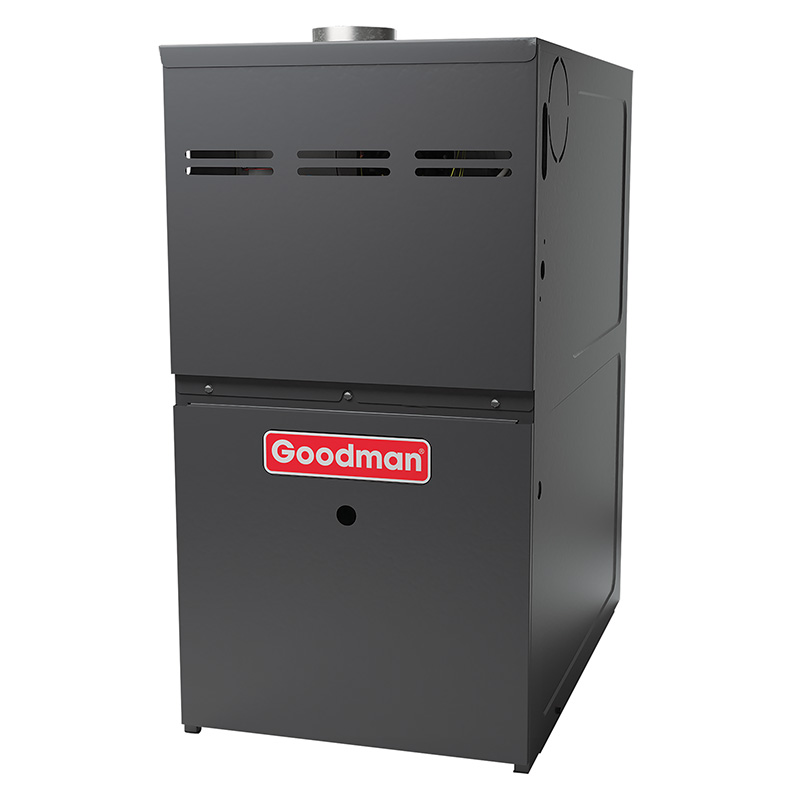
View on AC Direct see your lowest price →Check current price on AC Direct →
Key features
- 80,000 BTU output, 80% AFUE single-stage gas heat
- Multi-speed ECM blower motor for improved comfort and lower blower energy use
- Upflow and horizontal installation configurations supported
- Low NOx combustion design for areas with air-quality regulations
- Compatible with R-32 refrigerant system pairings
- Stainless steel primary heat exchanger for corrosion resistance
About this system
The Goodman GR9S800804CX is an 80,000 BTU, 80% AFUE upflow/horizontal gas furnace built around the R-32 refrigerant platform and equipped with a multi-speed ECM blower motor. The 80% AFUE rating means four out of every five dollars spent on natural gas goes toward heating your home, which is the baseline efficiency tier most utilities and building codes accept for new installations. This furnace is sized for homes roughly in the 2,000 to 2,800 square foot range depending on your climate zone, insulation quality, and ceiling height, though a proper Manual J load calculation is the only reliable way to confirm sizing for your specific house.
The multi-speed ECM (electronically commutated motor) blower is a meaningful step above basic single-speed PSC motors. It adjusts airflow in discrete steps rather than running full blast or nothing, which improves humidity control, reduces temperature swings between thermostat cycles, and cuts blower electricity consumption compared to older motor types. The upflow/horizontal configuration makes this furnace adaptable to installations in basements, utility closets, and attic spaces where the unit lies on its side. It is a straightforward single-stage gas valve design, which means it fires at full capacity every time rather than modulating output, a trade-off worth understanding before you buy.
The GR9S800804CX delivers solid entry-level furnace performance at a price point that undercuts most name-brand alternatives by 15 to 25 percent. The ECM blower adds real comfort value over basic PSC-motor furnaces in this tier, but the single-stage gas valve and 80% AFUE ceiling mean buyers who prioritize fuel economy or very quiet operation should look at <a href="https://hvac.best/glossary/two-stage/">two-stage</a> or modulating 96% AFUE alternatives. Long-term ownership costs depend heavily on installation quality and how proactive you are with annual maintenance.
Overall score is the average of the five ratings above.
What we like
- Upfront price is meaningfully lower than comparable Carrier, Trane, or Lennox 80% furnaces
- Multi-speed ECM blower improves temperature consistency and reduces blower electricity draw
- Upflow/horizontal flexibility covers a wide range of installation scenarios
- Low NOx burner design satisfies air-quality rules in California and other regulated markets
- Parts are widely stocked, so repair turnaround is rarely delayed by availability
Trade-offs
- Single-stage firing means full-capacity heat every cycle, which can cause temperature swings and is louder than two-stage or modulating alternatives
- 80% AFUE leaves roughly 20 cents of every gas dollar venting outside, a real cost gap versus 96%+ high-efficiency models over a 10 to 15 year lifespan
- Goodman's ConsumerAffairs score sits around 2.5 out of 5, with repair cost complaints rising noticeably after year 7
- Brand-wide documented failure modes include capacitor failures, evaporator coil leaks, and compressor lifespans shorter than premium competitors
What homeowners and pros say about Goodman
Homeowners who have lived with Goodman furnaces tend to land in two camps. Those who had a skilled installer set the unit up correctly and kept up with annual maintenance often report trouble-free operation for ten or more years, and affordability is the most common praise in Google dealer reviews, which average around 3.8 out of 5 across hundreds of locations. Those who ran into problems point to repair costs that start to accumulate after roughly year seven, a pattern that shows up consistently in Goodman’s ConsumerAffairs score of about 2.5 out of 5. That channel skews toward people motivated to write by a bad experience, so the truth likely sits between those two numbers, but the year-seven pattern is real enough to plan for.
HVAC technicians are candid about Goodman: the brand’s documented weak points across its product line include dual-run capacitor failures (a common but usually inexpensive fix in the 300 to 600 dollar range), evaporator coil leaks showing up in a meaningful share of owner histories, and compressor lifespans on the shorter end at roughly ten to fourteen years versus fifteen to twenty for premium brands. For a gas furnace like this one, the compressor concern is less directly relevant, but the broader pattern of parts reliability is worth noting when planning a long ownership horizon. Techs consistently say the most important variable is not the brand nameplate but who installs it and whether the homeowner does yearly maintenance. A well-installed, well-maintained Goodman furnace outperforms a poorly installed premium unit every time.
Sources: ConsumerAffairs Goodman owner reviews, AHRI Directory of Certified Product Performance, U.S. DOE appliance and equipment efficiency standards, Goodman product specification sheets.
How it compares
| Brand | Comparable model | SEER2 | Stage | Price position |
|---|---|---|---|---|
| Goodman | GR9S800804CX | N/A (furnace only) | Single-stage | Value pick |
| Carrier | Performance 80 (58TP0) | N/A (furnace only) | Two-stage | Moderately higher than Goodman, mid-tier positioning |
| Trane | S8X1 (80% Single-Stage) | N/A (furnace only) | Single-stage | Roughly 15 to 25 percent more than Goodman for comparable output |
| Lennox | Merit ML180 | N/A (furnace only) | Single-stage | Priced above Goodman, typically toward the upper end of the mid-tier range |
Competitor rows are comparable single-stage units at similar efficiency; price is relative position, not a quote.
Questions about this system
Is an 80% AFUE furnace still worth buying, or should I step up to 96%?
It depends on your climate and how long you plan to stay in the home. In mild climates or for homeowners replacing a furnace in a house they plan to sell within five years, 80% AFUE keeps upfront costs down and the payback on a high-efficiency upgrade may never materialize. In cold-climate regions where the furnace runs four to six months a year, the fuel savings from a 96% unit often justify the price difference over a ten-year ownership window.
What does single-stage mean for day-to-day comfort, and is it a problem?
Single-stage means the gas valve is either fully open or fully closed, so the furnace always fires at 80,000 BTU regardless of how much heat the house actually needs at that moment. On milder days this can cause the house to overshoot the set temperature, creating a cycle of too warm and too cool rather than a steady temperature. It is not a defect, just a design trade-off that two-stage and modulating furnaces address at higher cost.
What are the most common repairs I should budget for over the furnace's life?
Across Goodman gas furnaces, dual-run capacitors are the most frequently reported failure, typically a straightforward repair in the 300 to 600 dollar range. Igniter and flame sensor replacements are routine on any brand. Beyond year seven, Goodman owners on ConsumerAffairs report repair costs climbing, so setting aside a small annual maintenance budget and getting a yearly tune-up is practical advice rather than optional.
Can this furnace be installed horizontally in an attic or crawlspace?
Yes. The GR9S800804CX supports both upflow and horizontal configurations, which is why the model exists in one SKU rather than being split into separate upflow and horizontal versions. Your installer will need to confirm proper condensate drainage orientation and confirm the flue venting path is correct for the chosen orientation before startup.
Does the Low NOx designation affect performance or restrict where I can use this furnace?
Low NOx burner design does not reduce heating output or efficiency in any meaningful way for the homeowner. It is primarily relevant if you are in California's South Coast AQMD or another jurisdiction that mandates low-emission gas appliances. If you are outside a regulated area, it is simply a feature that causes no downside and may give you more installation flexibility if you move to a stricter market in the future.
Specifications
| Furnace output | 80000 BTU |
| Configuration | Upflow |
| Refrigerant | R-32 |
| Model | GR9S800804CX |