Goodman R32 80000 BTU 96% Two-Stage Multi-Speed ECM Gas Furnace Upflow / Horizontal ( GR9T960803BN)
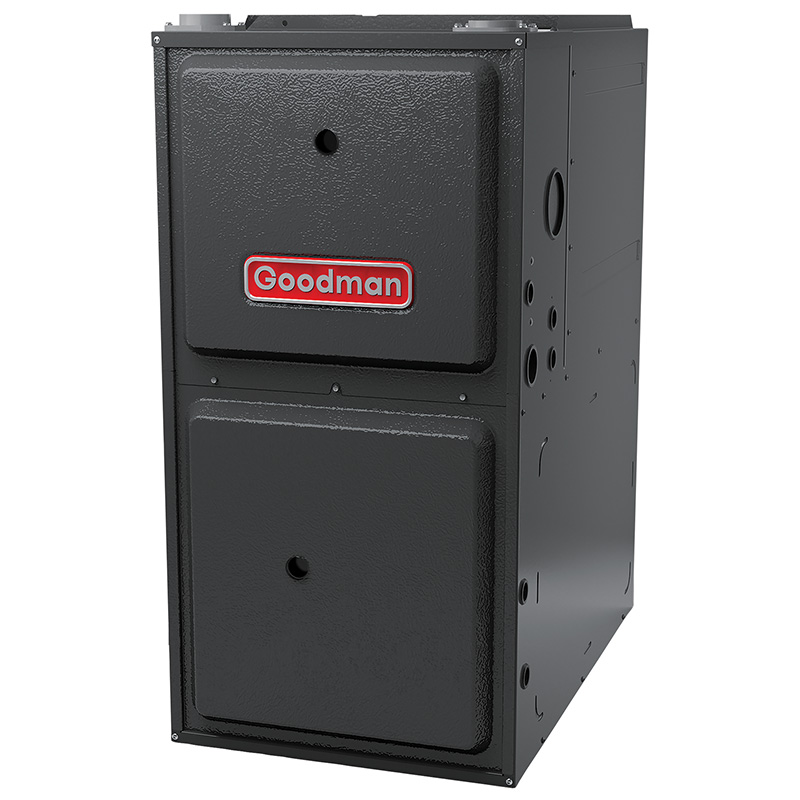
View on AC Direct see your lowest price →Check current price on AC Direct →
Key features
- 96% AFUE two-stage gas heat for high-efficiency, consistent comfort in cold climates
- Multi-speed ECM blower motor reduces electricity use and operates more quietly than PSC motors
- 80,000 BTU output suits mid-size homes in colder regions (rough sizing: 2,000 to 2,800 sq ft depending on climate and insulation)
- Upflow and horizontal configuration flexibility eases installation in basements, closets, and crawl-space air handlers
- Compatible with Goodman R-32 split-system cooling components for a matched-system efficiency rating
- Silicon nitride igniter and stainless steel secondary heat exchanger for durability in the high-condensate environment of a 96% unit
About this system
The Goodman GR9T960803BN is a 96% AFUE, 80,000 BTU two-stage gas furnace built for upflow or horizontal installation. That 96% efficiency rating means only four cents of every dollar spent on gas escapes as waste, which puts it squarely in the high-efficiency tier and well above the federal minimums that apply to most northern climates. Two-stage heating adds real comfort value: the furnace runs on a lower first stage most of the time, cycling less aggressively and keeping temperatures more consistent from room to room before stepping up to full capacity on the coldest days.
The multi-speed ECM blower motor is the other headline feature here. ECM motors use significantly less electricity than the PSC motors found in base-tier furnaces, and they ramp up and down gradually rather than snapping on at full speed. That translates to quieter operation, better dehumidification during shoulder seasons when paired with a central air system, and lower monthly electricity bills on the blower side. The R-32 refrigerant designation on the spec sheet refers to the broader product line; this unit is a gas furnace and does not itself handle refrigerant, but it is engineered to pair with Goodman air handlers and coils that use R-32 in the cooling side of a split system.
This furnace suits a mid-size home in a cold-weather climate where a high-efficiency two-stage unit makes financial sense but where budget constraints rule out premium brands like Trane or Lennox. It is also a reasonable choice for a straight replacement in an existing upflow installation where the ductwork and electrical are already sized, since Goodman’s cabinet dimensions are fairly standard. Buyers should understand going in that Goodman prices in below the major premium brands by design, and that installation quality will matter more than almost anything else in determining how long this unit performs well.
The GR9T960803BN delivers legitimate high-efficiency two-stage heating at a price point that makes competing brands difficult to justify on upfront cost alone. The trade-off is a documented history of component-level failures after roughly seven years and a compressor lifespan that runs shorter than premium alternatives, so total cost of ownership over 15 to 20 years is a real question mark. Buyers who prioritize lower first cost and accept that a repair or two is likely before the decade mark will find this a solid, workable choice.
Overall score is the average of the five ratings above.
What we like
- 96% AFUE is a genuine high-efficiency rating that reduces monthly gas costs versus 80% or single-stage units
- Two-stage operation improves comfort and reduces short-cycling compared to single-stage furnaces at this price
- ECM blower motor lowers electricity consumption and adds to overall system efficiency
- Priced 15 to 25 percent below comparable Trane, Lennox, and Carrier models, making high-efficiency heat more accessible
- Upflow/horizontal flexibility means it fits a wide range of existing duct configurations without a new casing
Trade-offs
- Dual-run capacitors are the most commonly reported failure point, typically showing up after several years of use and adding repair costs of $300 to $600 per event
- ConsumerAffairs reviews average around 2.5 out of 5, with recurring complaints about repair costs climbing after year seven
- Compressor and major component lifespan averages 10 to 14 years, noticeably shorter than the 15 to 20 years seen with premium brands
- Performance depends heavily on installation quality, so a cut-rate install can erase the efficiency and reliability advantages on paper
What homeowners and pros say about Goodman
Homeowners who have installed Goodman gas furnaces tend to split into two camps fairly predictably. Those who had a careful, experienced installer and matched the unit properly to their duct system often report years of trouble-free service and point to the lower purchase price as straightforward value. That sentiment tracks with Google dealer review scores, which sit around 3.8 out of 5 across hundreds of reviews, where affordability is the most consistent theme in positive feedback. The picture shifts on channels where dissatisfied owners are more likely to post: ConsumerAffairs scores land around 2.5 out of 5, with the recurring complaint being repair bills that start adding up somewhere after year seven, which lines up with the documented pattern of dual-run capacitor failures and the shorter average compressor lifespan of 10 to 14 years compared to 15 to 20 years seen with premium brands.
HVAC technicians who work on Goodman equipment regularly tend to have a pragmatic view: the units are not hard to service, parts are widely available, and a dual-run capacitor swap is a straightforward call. The more pointed concern they raise is about evaporator coil leaks and first-year refrigerant issues, which show up in a share of owner reviews and are almost always traced back to install or charge problems rather than a factory defect. That reinforces what experienced installers say consistently about this brand: the furnace itself is a workable product, but Goodman rewards a thorough, by-the-book installation more than most, and shortcuts that might not surface immediately on a premium unit tend to show up faster here.
Sources: ConsumerAffairs Goodman owner reviews, AHRI Directory of Certified Product Performance, U.S. DOE appliance and equipment efficiency standards, Goodman product specification sheets.
How it compares
| Brand | Comparable model | SEER2 | Stage | Price position |
|---|---|---|---|---|
| Goodman | GR9T960803BN | N/A (furnace only) | Two-stage | Value pick |
| Carrier | Performance 96 (58TP6) | N/A (furnace only) | Two-stage | Moderate premium over Goodman, typically 15 to 20 percent higher |
| Trane | S9V2 (XR95 series two-stage) | N/A (furnace only) | Two-stage | Premium over Goodman, typically 20 to 25 percent higher |
| Lennox | EL296V | N/A (furnace only) | Two-stage | Premium over Goodman, among the higher-priced options in the two-stage 96% tier |
Competitor rows are comparable single-stage units at similar efficiency; price is relative position, not a quote.
Questions about this system
What size home will an 80,000 BTU furnace actually heat?
A rough rule of thumb is 30 to 60 BTU per square foot depending on climate, insulation, and window area. In a cold northern climate with average insulation, 80,000 BTU covers roughly 1,600 to 2,500 square feet. A proper Manual J load calculation by your installer is the only way to confirm the right size for your specific home.
What does two-stage heating actually do differently from a single-stage furnace?
A two-stage furnace runs at a lower firing rate (typically around 65% of capacity) for most of the heating season and only steps up to full 80,000 BTU on the coldest days. This means longer, gentler heating cycles, more even temperatures throughout the house, and less stop-start cycling that puts wear on components.
What are the most common repairs I should expect on this furnace over time?
Based on documented owner experience with Goodman gas furnaces, dual-run capacitors are the most frequently replaced part, usually a straightforward repair in the $300 to $600 range. After year seven, repair frequency tends to increase, and the heat exchanger and inducer motor are the components worth watching in older units.
Does this furnace include a warranty, and what does it cover?
Goodman typically offers a limited lifetime heat exchanger warranty and a 10-year parts warranty on registered units, but warranty terms require registration within a set window after installation and can be voided by improper installation or unauthorized modifications. Confirm registration requirements with your installer at the time of purchase.
Why does the spec sheet mention R-32 if this is a gas furnace with no refrigerant?
The R-32 designation refers to Goodman's broader product line branding for equipment designed to pair with R-32 refrigerant split systems on the cooling side. The furnace itself handles only combustion air and heated airflow; refrigerant is only involved if you add a matched central air system using a Goodman R-32 coil and condenser.
Specifications
| Furnace output | 80000 BTU |
| Configuration | Upflow |
| Refrigerant | R-32 |
| Model | GR9T960803BN |