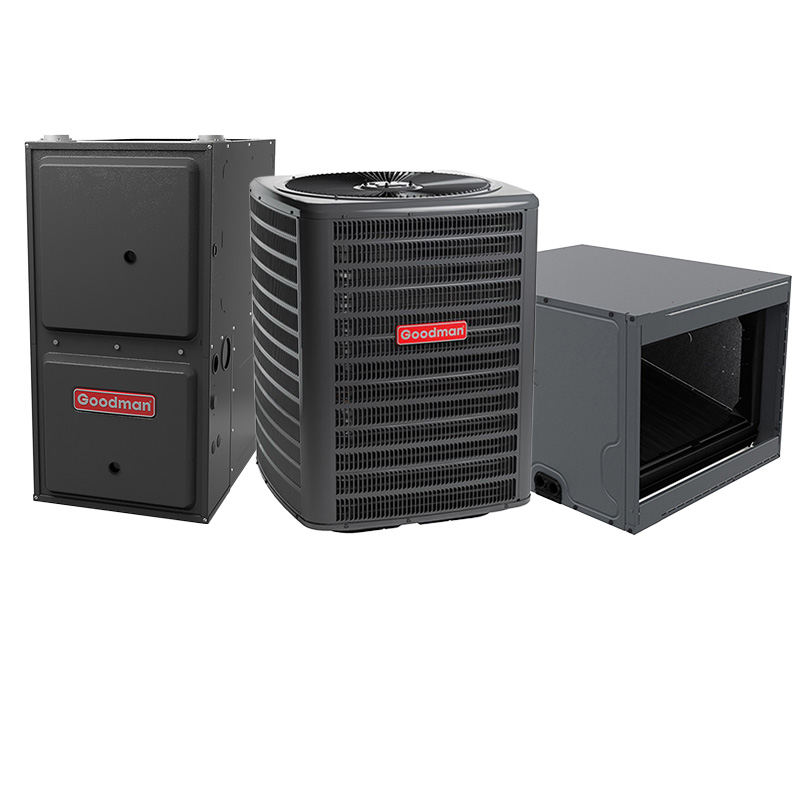
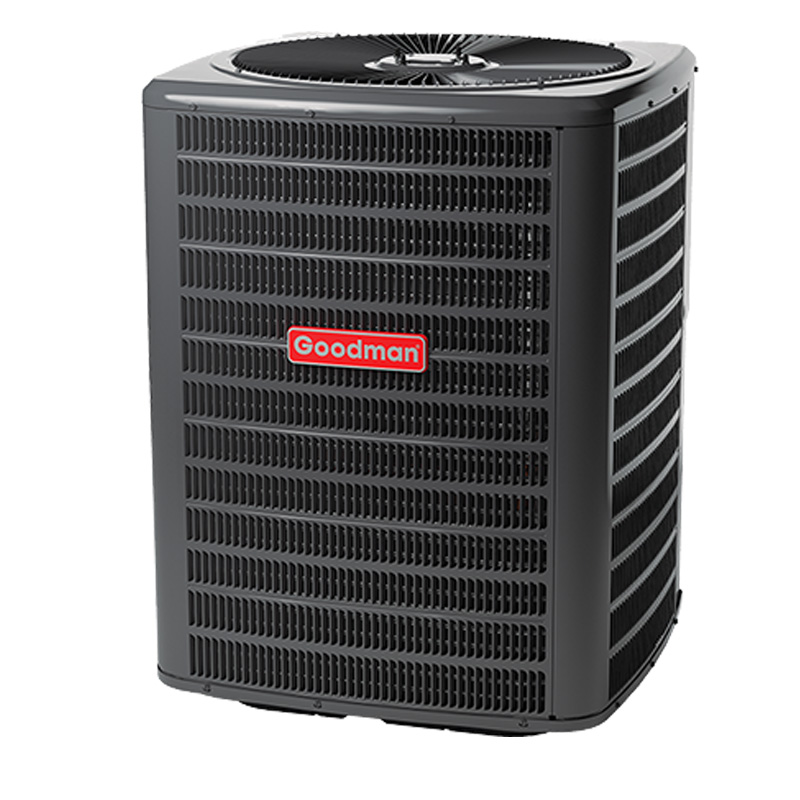
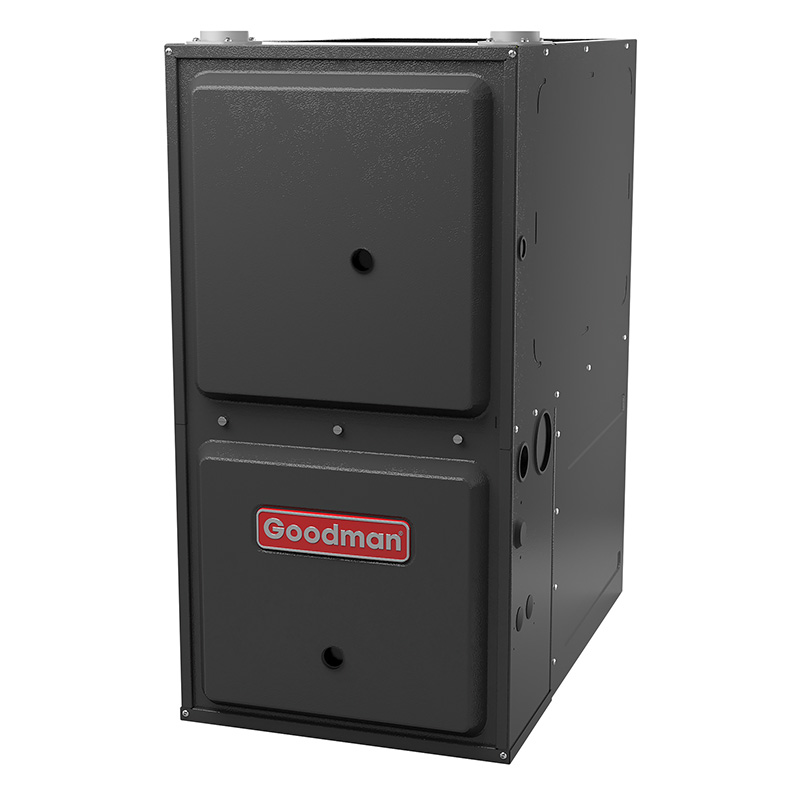
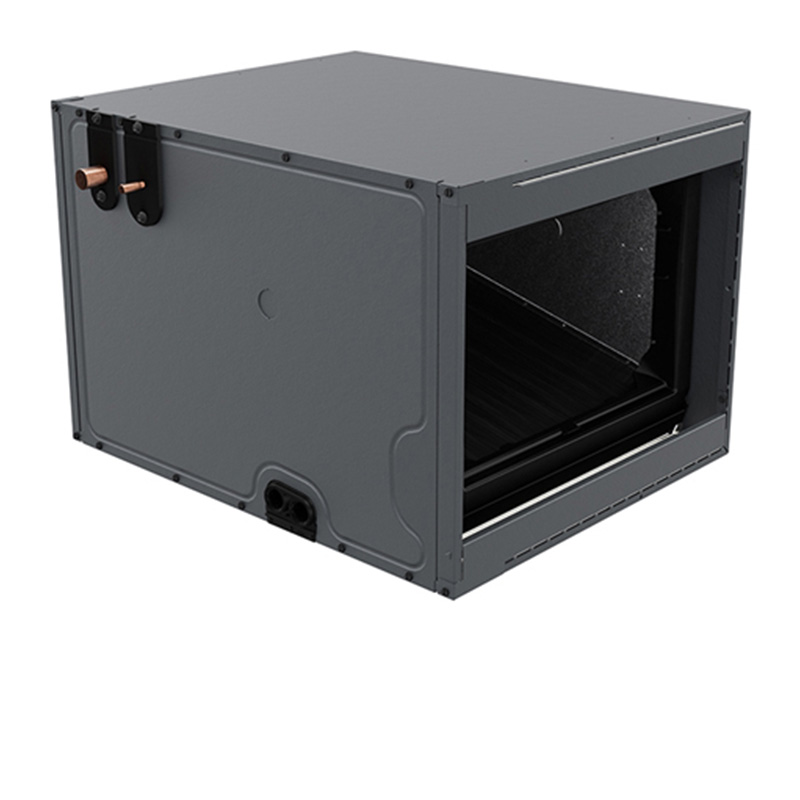
Goodman 2.5 Ton 15.2 SEER2 R32 AC System with 60,000 BTU 80% AFUE Gas Furnace – California & Colorado Ultra Low NOx, Horizontal, Multi-Speed ECM
View on AC Direct see your lowest price →Check current price on AC Direct →
Key features
- 15.2 SEER2 cooling efficiency meets current federal minimum standards for split systems
- 60,000 BTU 80% AFUE gas furnace with multi-speed ECM blower motor for quieter, more even airflow
- R-32 refrigerant with lower global warming potential than R-410A
- California and Colorado Ultra Low NOx certified for compliance in regulated markets
- Horizontal configuration designed for attic, crawl space, and side-discharge installations
- Goodman 10-year parts limited warranty with registration required within 60 days of install
About this system
The Goodman 2.5-ton 15.2 SEER2 R-32 air conditioning and 80% AFUE gas furnace system is built for homeowners in California and Colorado who need to meet strict Ultra Low NOx emissions requirements without stepping into premium-brand price territory. The horizontal configuration makes it a practical fit for attic installs, crawl spaces, and tight mechanical rooms where a vertical unit simply will not work. At 2.5 tons and 60,000 BTU of heating output, this system is sized for homes roughly in the 1,200 to 1,800 square foot range, though the right size always depends on a proper Manual J load calculation.
On the cooling side, 15.2 SEER2 sits at the low end of the current federal minimum efficiency tier, meaning it meets code but will not deliver the operating-cost savings of a 17 or 18 SEER2 system. The shift to R-32 refrigerant is a genuine environmental step forward compared to older R-410A equipment, and R-32 systems are increasingly well-supported by service technicians in California and Colorado markets. The multi-speed ECM blower motor on the furnace is a meaningful comfort upgrade over a single-speed PSC motor, providing quieter operation and more even temperature distribution than the base furnace tier. The 80% AFUE furnace rating means 20 cents of every fuel dollar goes up the flue, which is worth noting if your climate leans heavily on heating hours.
This system delivers a code-compliant, emissions-legal install in two of the most regulated states in the country at a price that is meaningfully below comparable Carrier, Trane, or Lennox equipment. The trade-off is a furnace efficiency ceiling at 80% AFUE and a cooling efficiency that leaves room for improvement, plus Goodman's real-world reliability record, which is solid in the early years but shows higher repair frequency after year seven. For buyers prioritizing upfront cost and regulatory compliance over long-run operating efficiency, it is a reasonable choice provided installation quality is not compromised.
Overall score is the average of the five ratings above.
What we like
- Priced 15 to 25 percent below comparable Trane, Carrier, and Lennox systems, lowering the barrier to a full system replacement
- Ultra Low NOx certification covers both California and Colorado regulatory requirements out of the box
- Multi-speed ECM blower motor provides quieter operation and better humidity control than single-speed alternatives
- R-32 refrigerant is forward-compatible with the regulatory direction both states are heading
- Horizontal layout addresses a genuine installation challenge that limits the available equipment options for many homes
Trade-offs
- 80% AFUE furnace efficiency lags behind 95 to 96% AFUE condensing alternatives, raising seasonal heating costs in colder Colorado climates
- 15.2 SEER2 is the minimum-tier efficiency rating, so cooling energy savings versus a 17 or 18 SEER2 system are real over the equipment's lifespan
- Goodman's documented failure modes include dual-run capacitor failures, evaporator coil leaks, and compressor lifespans that average 10 to 14 years versus 15 to 20 years for premium brands
- A minority of owners report refrigerant leaks within the first year, typically traced to install or charge issues rather than the equipment itself, making contractor selection critical
What homeowners and pros say about Goodman
Homeowners who have lived with Goodman equipment long enough to form a real opinion tend to split along a clear fault line. In the first five to seven years, satisfaction is generally reasonable, and affordability comes up repeatedly as the reason buyers chose the brand in the first place. Google dealer reviews across Goodman-authorized locations average around 3.8 out of 5, where praise typically centers on the price point and the accessibility of replacement parts. ConsumerAffairs tells a different story, averaging around 2.5 out of 5 on a channel that skews toward frustrated owners. The recurring theme there is repair costs that start accumulating after year seven, with dual-run capacitor failures being the most commonly cited issue. Capacitor replacements typically run 300 to 600 dollars including a service call, which is a manageable but annoying expense when it happens more than once in a decade.
HVAC technicians who service Goodman equipment frequently are generally pragmatic about it. The parts are widely available, the systems are not difficult to work on, and for homeowners who chose the brand because a higher-end option was financially out of reach, the equipment does what it is supposed to do when it is installed correctly. The installation caveat comes up consistently in professional commentary: Goodman’s performance and longevity lean more heavily on startup quality and refrigerant charge accuracy than premium brands do, and the minority of owners who report refrigerant leaks within the first year are almost always dealing with an install or charge issue rather than a factory defect. Evaporator coil leaks also appear in a meaningful portion of long-term owner reviews, and the documented compressor lifespan of 10 to 14 years falls below the 15 to 20 years technicians typically associate with Trane, Carrier, or Lennox compressors. None of these facts make Goodman a bad choice; they make it an honest trade-off between upfront cost and the longer-term picture.
Sources: ConsumerAffairs Goodman owner reviews, AHRI Directory of Certified Product Performance, U.S. DOE appliance and equipment efficiency standards, Goodman product specification sheets.
What it costs to run
At 15.2 SEER2, cooling this 2.5-ton system for a typical 1200-hour cooling season at the U.S. average electricity rate of $0.17/kWh works out to roughly $403 per year in cooling, about $54 less per year than a minimum-efficiency 13.4 SEER2 unit of the same size. Your real cost depends on your climate and local rate.
Method: (30,000 BTU/hr ÷ 15.2 SEER2) × 1200 hours ÷ 1000 × $0.17/kWh. Rate source: U.S. EIA average; cooling hours: moderate-climate estimate.
How it compares
| Brand | Comparable model | SEER2 | Stage | Price position |
|---|---|---|---|---|
| Goodman | GSXH5 / GCVM8 Series (this system) | 15.2 | Single-stage / Multi-speed | Value pick |
| Carrier | Comfort 24ACC636 with 58MCA Gas Furnace | 15.2 | Single-stage | Typically 15 to 20 percent higher than this system |
| Trane | XR15 with S9X1 Gas Furnace | 15.0 to 15.6 | Single-stage | Typically 20 to 25 percent higher than this system |
| Lennox | Merit ML15XC1 with ML196E Gas Furnace | 15.0 to 15.5 | Single-stage | Typically 20 to 30 percent higher than this system |
Competitor rows are comparable single-stage units at similar efficiency; price is relative position, not a quote.
Questions about this system
Will this system actually pass California or Colorado air quality inspections for NOx emissions?
Yes. The Ultra Low NOx designation on this furnace meets the stricter NOx limits enforced by California's air districts and Colorado's equivalent programs. That said, it is always worth confirming current local district requirements with your installer before the permit is pulled, as regulations can change and some local jurisdictions apply additional rules.
Why does the horizontal configuration matter, and can a different orientation be used instead?
Horizontal furnaces are designed to lie on their side, which is required in attic and crawl space applications where vertical clearance is limited. Most furnaces are not rated for horizontal use by default, so using a horizontal-rated unit in that position is a code and warranty issue. If your installation is a standard basement or closet upflow application, this configuration is not the right choice.
What does R-32 mean for me at service time, and will local technicians have experience with it?
R-32 is a single-component refrigerant, which makes recharging simpler than the older R-410A blend in some ways. In California and Colorado, R-32 service is increasingly routine because the regulatory push toward lower-GWP refrigerants has given technicians in those markets more exposure to it. You should confirm your servicing contractor carries R-32 and has the appropriate recovery equipment before signing a service agreement.
Goodman has a 10-year parts warranty, but what does that actually cover and what does it not cover?
The 10-year limited parts warranty covers the compressor, coil, and functional parts when the system is registered within 60 days of installation by a licensed contractor. It does not cover labor, refrigerant, diagnostic fees, or failures caused by improper installation. Given that labor is typically the largest cost in a repair, the warranty limits out-of-pocket exposure primarily to service call and labor charges, which can still run several hundred dollars depending on the failure.
How realistic is Goodman's documented compressor lifespan compared to Trane or Carrier at a similar efficiency tier?
Goodman compressors have averaged roughly 10 to 14 years in documented failure reporting, compared to 15 to 20 years seen in premium-brand equipment. In practical terms, you may face a compressor replacement or full system swap sooner than you would with a Trane or Carrier unit at a similar SEER2 level. That shorter horizon is part of the trade-off built into the lower upfront price, and it is worth factoring into a total cost of ownership estimate before purchase.
Specifications
| Cooling capacity | 2.5 Ton |
| Efficiency | 15.2 SEER2 |
| Furnace output | 60,000 BTU |
| Furnace efficiency | 80% AFUE |
| Configuration | Horizontal |
| Refrigerant | R-32 |