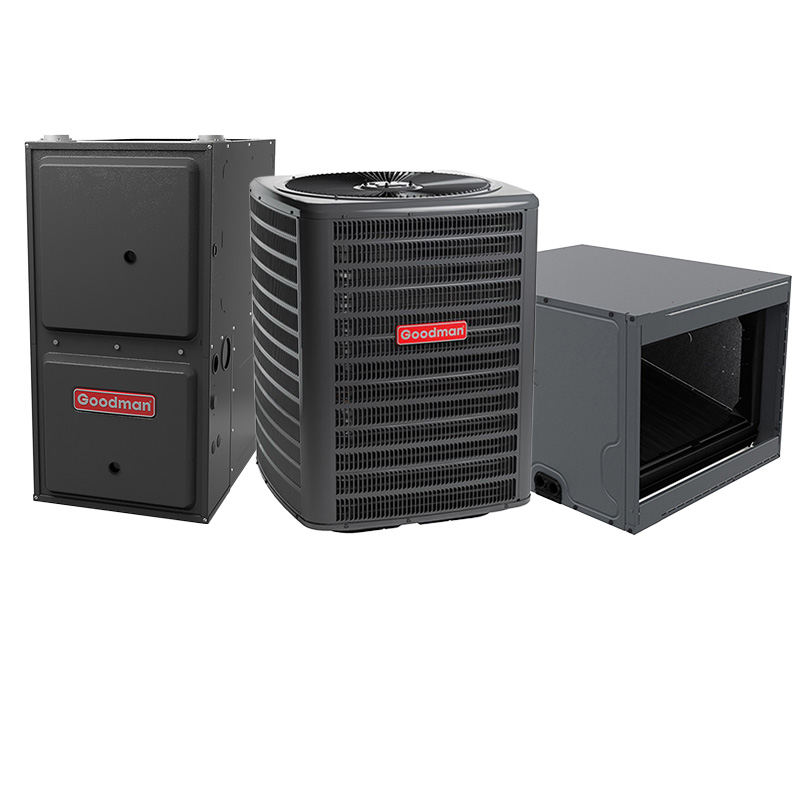
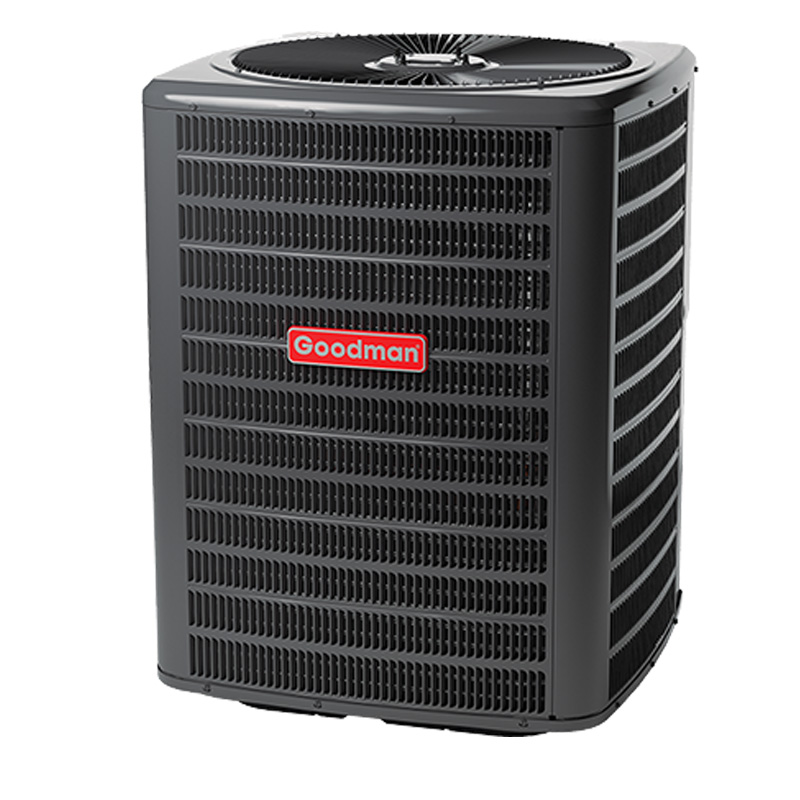
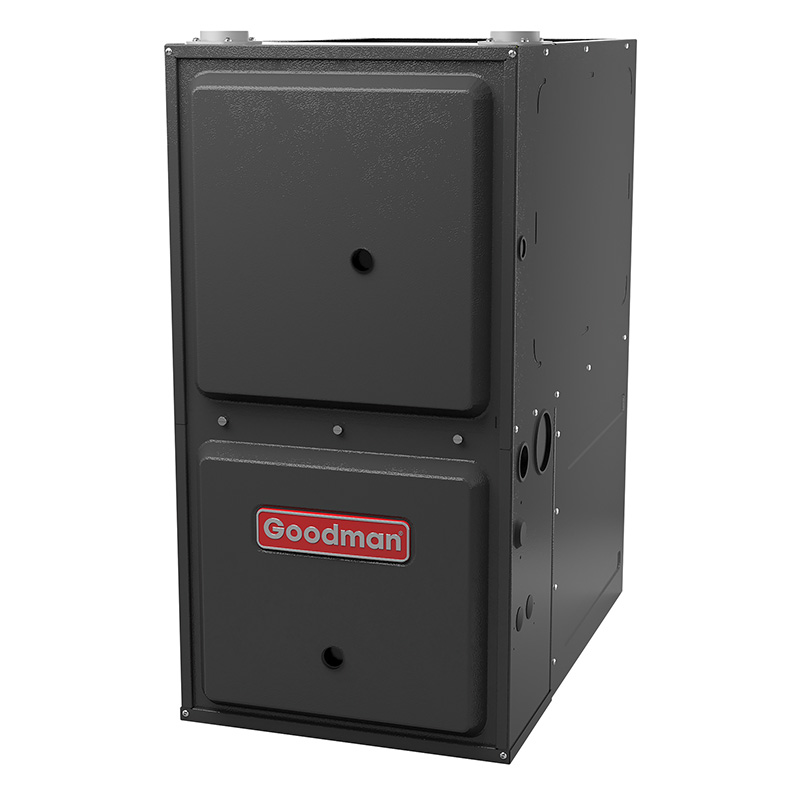
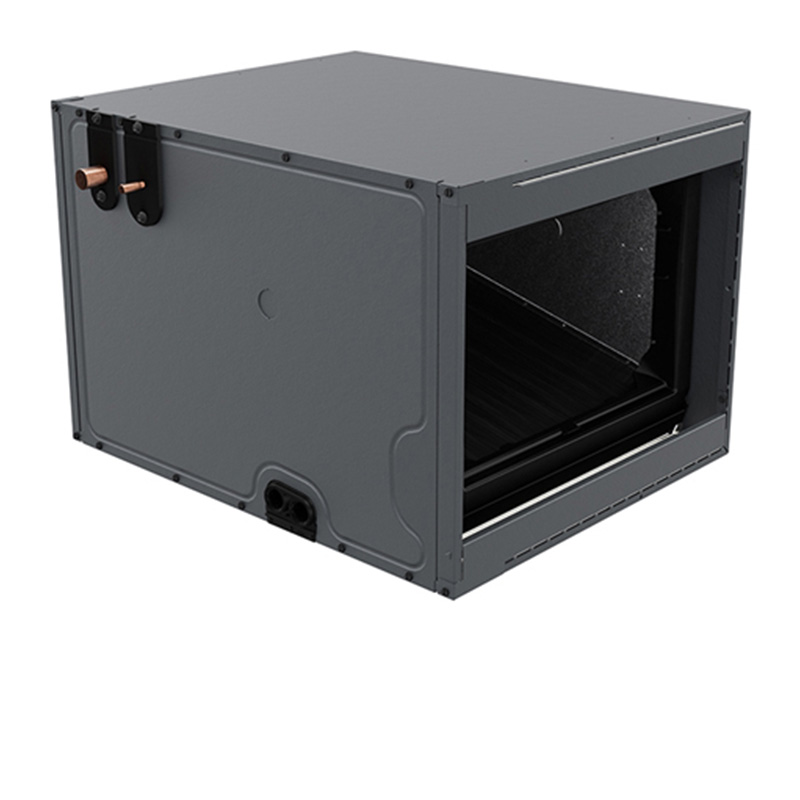
Goodman 3.5 Ton 15.2 SEER2 R32 AC System with 80,000 BTU 80% AFUE Gas Furnace – California & Colorado Ultra Low NOx, Horizontal, Multi-Speed ECM
View on AC Direct see your lowest price →Check current price on AC Direct →
Key features
- 3.5-ton cooling capacity suited to homes roughly 1,800 to 2,400 square feet depending on insulation and climate
- 15.2 SEER2 efficiency rating meets current federal minimums for most regions
- R-32 refrigerant complies with California and Colorado low-GWP environmental requirements
- Ultra Low NOx burner meets strict California Air Resources Board and Colorado emissions standards
- Horizontal cabinet orientation designed for attic or side-load crawlspace installations
- Multi-speed ECM blower motor improves airflow consistency and static pressure handling versus single-speed PSC motors
About this system
The Goodman 3.5-ton 15.2 SEER2 R-32 system paired with an 80,000 BTU 80% AFUE gas furnace is aimed at homeowners in California and Colorado who need to meet Ultra Low NOx emissions regulations without stretching their budget to a premium brand. The horizontal configuration means this equipment is designed for attic or crawlspace installations where vertical clearance is tight, and the multi-speed ECM blower motor gives the furnace better airflow control and humidity management than a standard PSC motor would provide. R-32 refrigerant carries a significantly lower global warming potential than the R-410A it replaces, which is why it is increasingly required in states with strict environmental standards.
At 15.2 SEER2, this system clears the federal minimum efficiency threshold for most U.S. regions but sits at the lower end of the efficiency spectrum rather than the top. Homeowners who run their systems heavily through long cooling seasons will find that mid-tier and high-efficiency units pay back their price premium in energy savings more quickly. For moderate climates or homes where the system runs part-time, the efficiency gap narrows and the Goodman’s lower purchase price becomes more compelling. The 80% AFUE furnace is a standard single-stage or similar configuration at the baseline of efficiency; in climates with cold winters, upgrading to a higher AFUE unit would reduce gas bills, but for mild Colorado foothills or the California Central Valley, 80% AFUE often meets the cost-benefit threshold for most buyers.
This Goodman package delivers solid compliance with California and Colorado environmental regulations at a price point meaningfully below comparable Carrier, Trane, or Lennox equipment, but buyers should go in knowing the 80% AFUE furnace and entry-level SEER2 rating leave real efficiency money on the table over time. The brand's reliability record is uneven after year seven, and the horizontal configuration narrows the installer pool, making professional selection and installation quality more important here than with a standard upflow unit.
Overall score is the average of the five ratings above.
What we like
- Purchase price typically runs 15 to 25 percent below Trane, Lennox, and Carrier equivalents
- R-32 refrigerant meets California and Colorado low-GWP rules, avoiding future retrofit costs
- Ultra Low NOx burner satisfies the strictest state air quality requirements without an aftermarket add-on
- Multi-speed ECM blower delivers quieter, more even airflow compared to basic single-speed motors
- Horizontal configuration purpose-built for attic installs common in California ranch-style and slab-foundation homes
Trade-offs
- 80% AFUE is the floor of furnace efficiency; homeowners with cold winters will pay noticeably higher gas bills versus a 96% AFUE unit
- 15.2 SEER2 is entry-level; meaningful energy savings from the cooling side require a higher-efficiency system
- Goodman compressors average 10 to 14 years in real-world reports, versus 15 to 20 years seen with premium brands
- Horizontal installs are less common and require a technician with specific experience in that orientation, raising the risk of installation errors
What homeowners and pros say about Goodman
Homeowners who post about Goodman equipment tend to cluster around two experiences: those who got a clean install from a skilled technician and ran the system for a decade without major trouble, and those who hit repair costs after year six or seven that made them question the initial savings. On ConsumerAffairs, Goodman scores around 2.5 out of 5, a rating pulled down by the platform’s complaint-heavy nature, where the recurring frustration is repair expenses climbing once the system moves past the seven-year mark. Google dealer reviews land higher, around 3.8 out of 5 across hundreds of reviews per location, where the most consistent praise is straightforwardly about price. Neither number tells the full story, but together they suggest a brand that performs acceptably when conditions are right and disappoints when they are not.
HVAC technicians who work on Goodman equipment frequently point to dual-run capacitors as a near-routine service call on older units, typically a low-cost fix but an indicator of how the brand leans on install quality and maintenance discipline to reach its expected lifespan. Evaporator coil leaks are a documented concern in owner reviews, and compressor longevity in real-world accounts tends to average 10 to 14 years rather than the 15 to 20 years more commonly seen with Trane or Carrier compressors. For this specific horizontal R-32 system, the installation complexity is higher than a standard upflow unit, which means the installer’s experience matters even more than it does with a simpler configuration. Buyers who invest in a qualified technician familiar with both horizontal setups and A2L refrigerant handling give themselves the best odds of getting the full value out of the lower purchase price.
Sources: ConsumerAffairs Goodman owner reviews, AHRI Directory of Certified Product Performance, U.S. DOE appliance and equipment efficiency standards, Goodman product specification sheets.
What it costs to run
At 15.2 SEER2, cooling this 3.5-ton system for a typical 1200-hour cooling season at the U.S. average electricity rate of $0.17/kWh works out to roughly $564 per year in cooling, about $75 less per year than a minimum-efficiency 13.4 SEER2 unit of the same size. Your real cost depends on your climate and local rate.
Method: (42,000 BTU/hr ÷ 15.2 SEER2) × 1200 hours ÷ 1000 × $0.17/kWh. Rate source: U.S. EIA average; cooling hours: moderate-climate estimate.
How it compares
| Brand | Comparable model | SEER2 | Stage | Price position |
|---|---|---|---|---|
| Goodman | GSXH5 / CHPF / GMVC8 Horizontal Series (this system) | 15.2 | Multi-speed | Value pick |
| Carrier | Performance 15 (24ACC6 series) with 58MXB furnace | 15.2 | Single-stage | Typically 15 to 22 percent more than this Goodman system |
| Trane | XR15 (4TTR5) with S8X1 furnace | 15.2 | Single-stage | Typically 18 to 25 percent more than this Goodman system |
| Lennox | Merit 16 (ML16XC1) with ML180 furnace | 15.2–16.0 | Single-stage | Typically 20 to 28 percent more than this Goodman system |
Competitor rows are comparable single-stage units at similar efficiency; price is relative position, not a quote.
Questions about this system
Why does this system specifically say California and Colorado Ultra Low NOx? Can I install it in other states?
The Ultra Low NOx burner is engineered to meet the stricter NOx emission limits enforced by the California Air Resources Board and certain Colorado air quality districts. You can install it in other states, and it will simply exceed those states' less restrictive standards, but the NOx-compliant version typically carries a slight price premium over a standard-NOx version of the same system.
What does the horizontal configuration mean, and how does it affect my installation?
Horizontal means the furnace cabinet is designed to lay on its side, directing airflow through the unit from one end and out through the other, which is necessary in attic spaces or low crawlspaces where a vertical upflow unit will not fit. Not every HVAC technician works regularly on horizontal furnaces, so it is worth confirming your installer has experience with horizontal attic setups before scheduling, since improper leveling or drain routing is a common source of problems in this orientation.
R-32 is new to me. Is it harder to find technicians who can work on it, and is it safe?
R-32 is a mildly flammable refrigerant classified as A2L, which requires technicians to use equipment and procedures rated for that refrigerant class. It is not new globally, but adoption in the U.S. is still growing, so confirming your service technician has A2L certification before a repair call is a reasonable step. R-32 has roughly one-third the global warming potential of R-410A, which is why states with environmental mandates are moving toward it.
What are the most common repair issues Goodman owners run into, and how expensive are they?
Dual-run capacitors are the most frequently reported failure on Goodman condensing units and are generally an inexpensive fix in the 300 to 600 dollar range when caught promptly. Evaporator coil leaks appear in a notable share of owner accounts and are more costly to address. Compressor replacements tend to become a real risk after year 10 to 14 based on real-world owner feedback, and a small number of owners have reported refrigerant leaks within the first year, which is usually tied to installation or initial charge quality rather than the equipment itself.
Is 80% AFUE good enough, or should I be looking at a higher-efficiency furnace for this climate?
For mild California climates or areas where winter heating hours are limited, 80% AFUE often makes financial sense because the fuel savings from a 96% AFUE unit take longer to offset the higher upfront cost. In colder Colorado locations with significant heating degree days, the 20 percent efficiency gap between 80% and 96% AFUE adds up quickly on gas bills, and a higher-efficiency furnace will typically pay for its price premium within several years. Your local heating degree day count and current gas rate are the key inputs for that calculation.
Specifications
| Cooling capacity | 3.5 Ton |
| Efficiency | 15.2 SEER2 |
| Furnace output | 80,000 BTU |
| Furnace efficiency | 80% AFUE |
| Configuration | Horizontal |
| Refrigerant | R-32 |