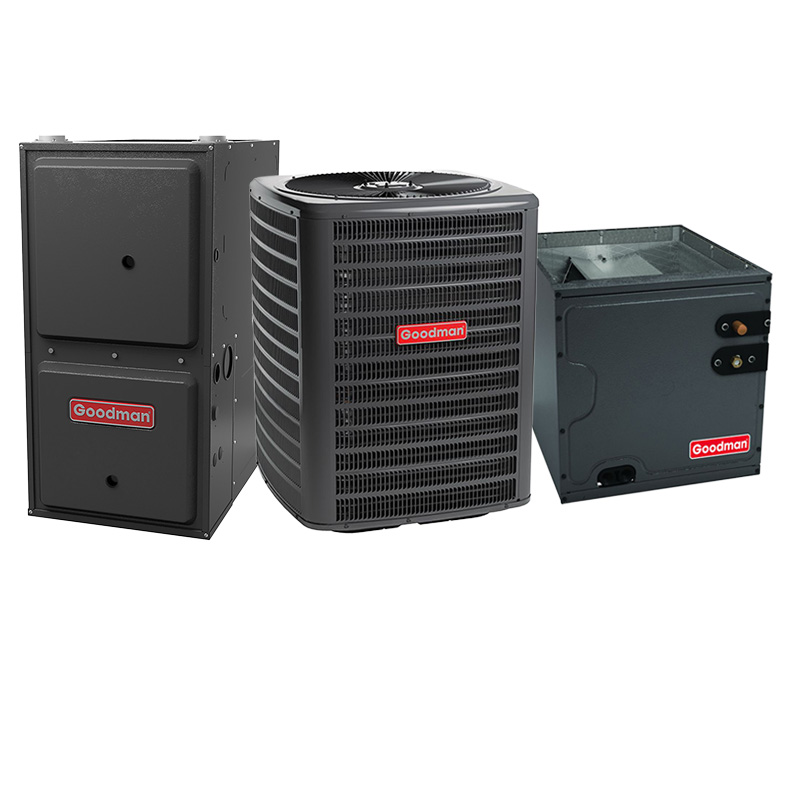
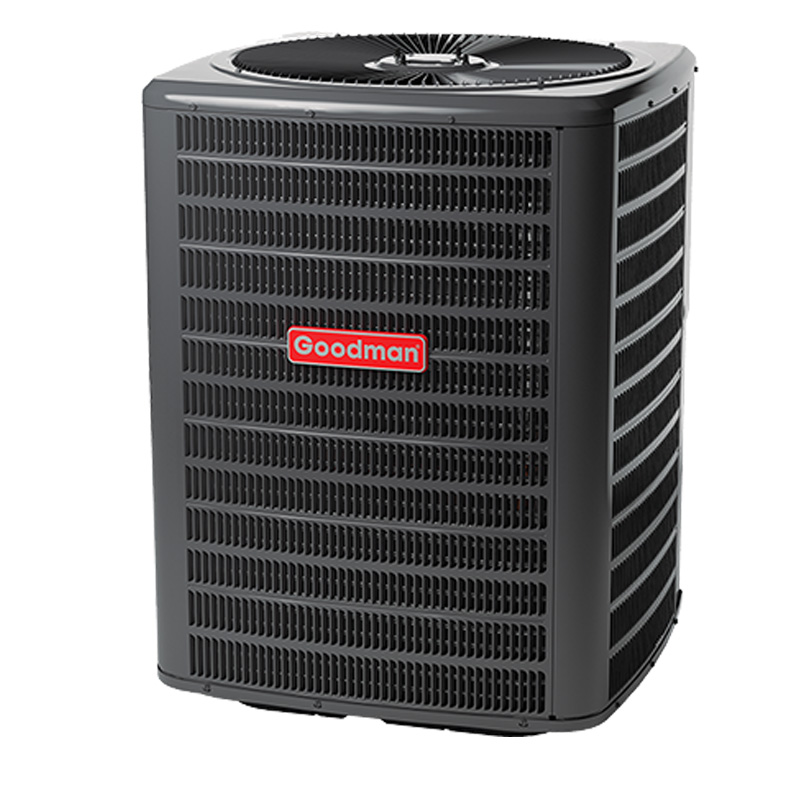
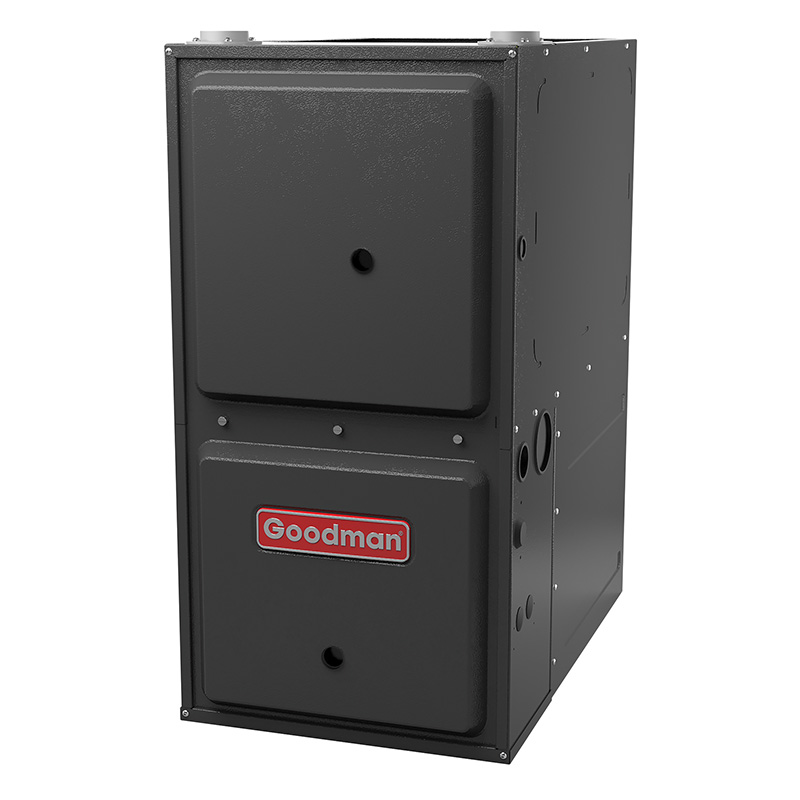
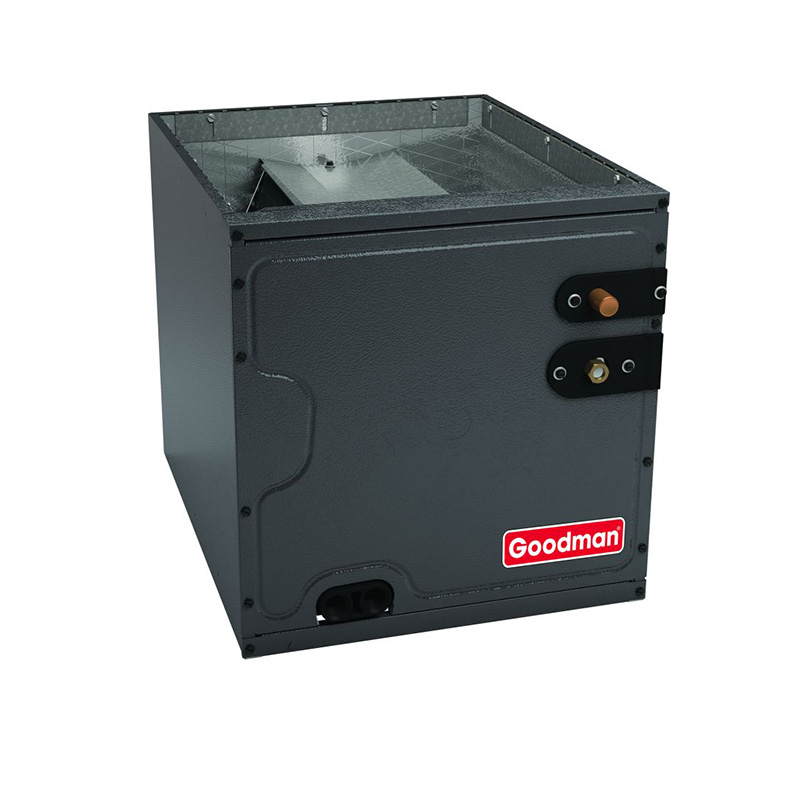
Goodman 1.5 Ton 14.5 SEER2 R32 AC System with 60,000 BTU 80% AFUE Gas Furnace – California & Colorado Ultra Low NOx, Upflow, Multi-Speed ECM
View on AC Direct see your lowest price →Check current price on AC Direct →
Key features
- 14.5 SEER2 cooling efficiency, above federal minimum thresholds for most U.S. regions
- 60,000 BTU 80% AFUE gas furnace with multi-speed ECM blower for quieter, more consistent airflow
- R-32 refrigerant with lower global warming potential than R-410A
- California and Colorado Ultra Low NOx certified for compliance in those states
- Upflow configuration compatible with the most common residential duct layouts
- Factory-matched system designed for straightforward coil and refrigerant line compatibility
About this system
The Goodman 1.5-ton 14.5 SEER2 R-32 system paired with a 60,000 BTU 80% AFUE upflow gas furnace is built for smaller homes and conditioned spaces, typically in the 600 to 900 square foot range depending on climate and insulation. The 14.5 SEER2 rating lands just above the federal minimum for most regions, which means operating costs are reasonable without the premium price tag of higher-efficiency equipment. The multi-speed ECM blower motor in the furnace is a genuine upgrade over single-speed PSC motors, offering quieter operation, better humidity control, and modest energy savings on the air-handling side.
This configuration is specifically certified for California and Colorado Ultra Low NOx requirements, making it one of the few budget-tier options that can be legally installed in those states without an upgrade. R-32 refrigerant replaces the older R-410A and carries a lower global warming potential, which is increasingly relevant as regulations tighten. The upflow orientation suits the most common residential duct layout, where the air handler sits at floor level and supplies conditioned air upward through overhead ducts. Homeowners replacing aging 10 SEER or early 13 SEER equipment will see a measurable drop in cooling-season electricity use with this system.
This Goodman system delivers a code-compliant, functional HVAC solution at a price point that undercuts major competitors by 15 to 25 percent, and the ECM blower motor adds real day-to-day value. The trade-off is a brand track record that shows more repair activity after year 7 and a compressor lifespan that typically runs shorter than premium alternatives. It is a reasonable choice when budget is the primary driver and installation quality can be controlled.
Overall score is the average of the five ratings above.
What we like
- Priced 15 to 25 percent below comparable Trane, Lennox, and Carrier systems
- Ultra Low NOx certification allows legal installation in California and Colorado without additional hardware
- Multi-speed ECM blower improves comfort and humidity control compared to standard single-speed motors
- R-32 refrigerant is forward-looking as regulations phase down higher-GWP refrigerants
- Factory-matched combination simplifies the permitting and startup process for installers
Trade-offs
- Compressor lifespan averages 10 to 14 years versus 15 to 20 years documented for premium brands
- Dual-run capacitor failures are the most frequently reported repair, typically occurring after the first few years of use
- Evaporator coil leaks appear in a meaningful share of long-term owner reports
- 80% AFUE is the lowest efficiency tier for gas furnaces, meaning roughly 20 cents of every dollar in gas is lost as exhaust
What homeowners and pros say about Goodman
Homeowners who have lived with Goodman equipment tend to split into two camps. Those with newer installations and attentive contractors are largely satisfied, pointing to the lower upfront cost as the main reason they chose the brand. On ConsumerAffairs, where the audience skews toward people motivated to leave reviews after a problem, Goodman sits at roughly 2.5 out of 5, and the recurring theme in that channel is repair costs that climb noticeably after around year 7. Google dealer reviews tell a softer story at around 3.8 out of 5 across multi-hundred-review dealer locations, where affordability is the praise that appears most often. The gap between those two scores reflects a real pattern: owners who experience problems are more likely to document them, and Goodman does generate more of those experiences than premium brands.
HVAC technicians are candid about where this system tends to fall short in the field. Dual-run capacitors are the most frequently cited failure point on Goodman cooling equipment and are a known consumable on the platform, though a fix in the 300 to 600 dollar range is not catastrophic. More consequential are evaporator coil leaks, which appear often enough in long-term owner reports to be worth noting, and compressor longevity that typically lands in the 10 to 14 year range rather than the 15 to 20 years more commonly seen on Trane, Carrier, and Lennox compressors. A minority of owners have reported refrigerant leaks within the first year, and technicians largely attribute those to charging or line-set errors rather than factory defects, which reinforces why install quality is not a side note with this brand but the central variable in how the system performs over its life.
Sources: ConsumerAffairs Goodman owner reviews, AHRI Directory of Certified Product Performance, U.S. DOE appliance and equipment efficiency standards, Goodman product specification sheets.
What it costs to run
At 14.5 SEER2, cooling this 1.5-ton system for a typical 1200-hour cooling season at the U.S. average electricity rate of $0.17/kWh works out to roughly $253 per year in cooling, about $21 less per year than a minimum-efficiency 13.4 SEER2 unit of the same size. Your real cost depends on your climate and local rate.
Method: (18,000 BTU/hr ÷ 14.5 SEER2) × 1200 hours ÷ 1000 × $0.17/kWh. Rate source: U.S. EIA average; cooling hours: moderate-climate estimate.
How it compares
| Brand | Comparable model | SEER2 | Stage | Price position |
|---|---|---|---|---|
| Goodman | GSX / GMVC / R-32 matched system (this unit) | 14.5 | Single-stage | Value pick |
| Carrier | Comfort Series 24ACC / 58TP | 14.5 to 15 | Single-stage | Typically 15 to 25 percent more than this Goodman system |
| Trane | XR14 / S8X1 series | 14.5 to 15 | Single-stage | Typically 15 to 25 percent more than this Goodman system |
| Lennox | Merit ML14XC1 / ML195 | 14.5 to 15 | Single-stage | Typically 15 to 25 percent more than this Goodman system |
Competitor rows are comparable single-stage units at similar efficiency; price is relative position, not a quote.
Questions about this system
Is 14.5 SEER2 efficient enough to qualify for a federal tax credit?
For split systems, the current federal Inflation Reduction Act efficiency threshold for the 30% tax credit is 16 SEER2 or higher in most U.S. climate zones. At 14.5 SEER2, this system does not meet that bar, so you should not count on a federal tax credit. Check with your state or utility for any separate rebates that may apply at this efficiency level.
Why does this system use R-32 instead of R-410A?
R-32 has a global warming potential roughly 68 percent lower than R-410A, and new EPA regulations are accelerating the phase-down of higher-GWP refrigerants in HVAC equipment. R-32 also requires a slightly smaller refrigerant charge by weight to achieve the same cooling capacity. Technicians servicing the system will need to be familiar with R-32 handling procedures, as it is mildly flammable, though this has not been a practical issue in residential installations.
What does 80% AFUE actually mean for my heating bills?
An 80% AFUE furnace converts 80 cents of every dollar spent on natural gas into usable heat; the remaining 20 cents exits through the flue. Compared to a 96% AFUE condensing furnace, you will spend roughly 17 percent more on gas to produce the same amount of heat. In mild heating climates, that gap is less significant financially, but in colder regions with high annual heating loads, the higher upfront cost of a 96% unit can pay back over time.
How important is installer quality with a Goodman system specifically?
Technicians consistently identify install quality as the single biggest factor in how long any Goodman system lasts. A meaningful share of first-year refrigerant leak reports traced back to improper charging or line-set connections rather than factory defects. Choosing a licensed contractor with verifiable Goodman experience and who performs a proper Manual J load calculation is particularly important with this brand.
What repairs should I budget for over the first 10 years?
Dual-run capacitor replacements are the most commonly reported repair and typically cost between 300 and 600 dollars including labor. Evaporator coil leaks have shown up in a notable share of long-term owner reviews and are a more expensive repair. Setting aside a modest annual maintenance budget and replacing the capacitor proactively during tune-ups can reduce the chance of a mid-summer breakdown.
Specifications
| Cooling capacity | 1.5 Ton |
| Efficiency | 14.5 SEER2 |
| Furnace output | 60,000 BTU |
| Furnace efficiency | 80% AFUE |
| Configuration | Upflow |
| Refrigerant | R-32 |