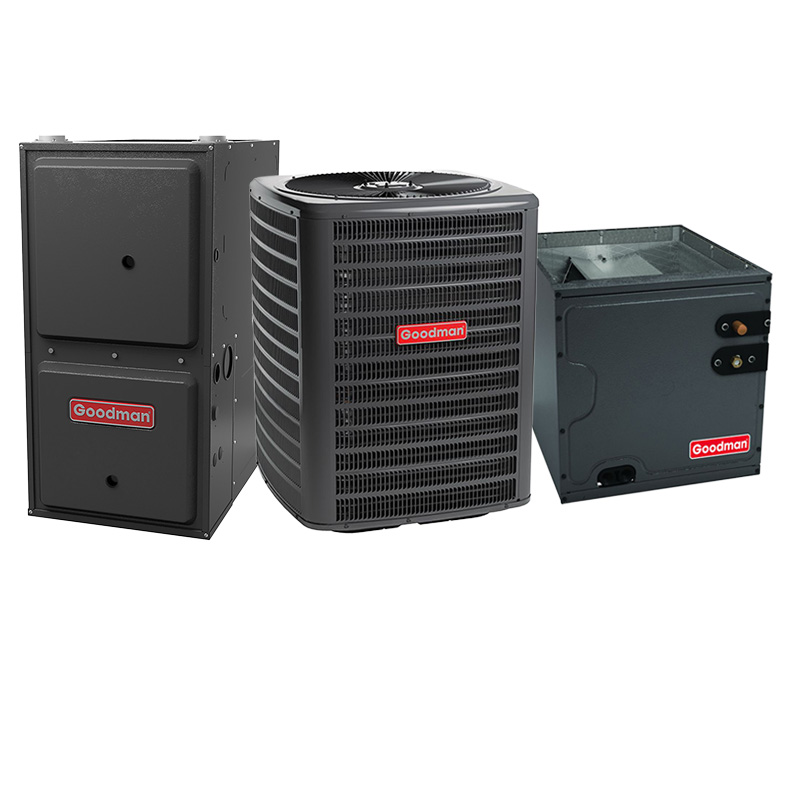
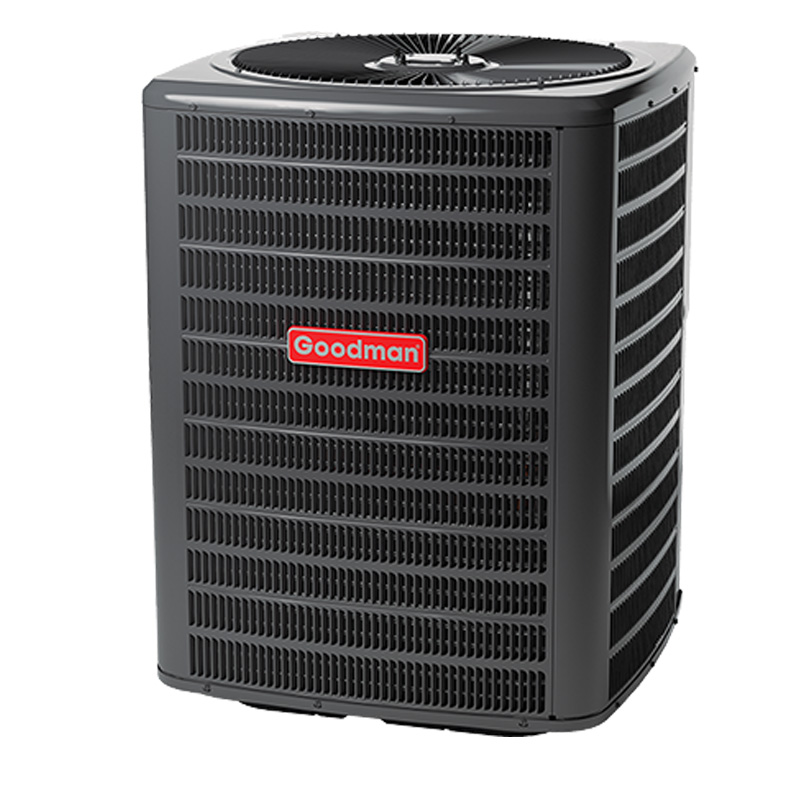
Goodman 2.5 Ton 15.2 SEER2 R32 AC System with 60,000 BTU 80% AFUE Gas Furnace – California & Colorado Ultra Low NOx, Upflow, Multi-Speed ECM
View on AC Direct see your lowest price →Check current price on AC Direct →
Key features
- 15.2 SEER2 cooling efficiency meets 2023 federal minimums and California Title 24 requirements
- R-32 refrigerant with lower global-warming potential than R-410A; requires certified technician handling
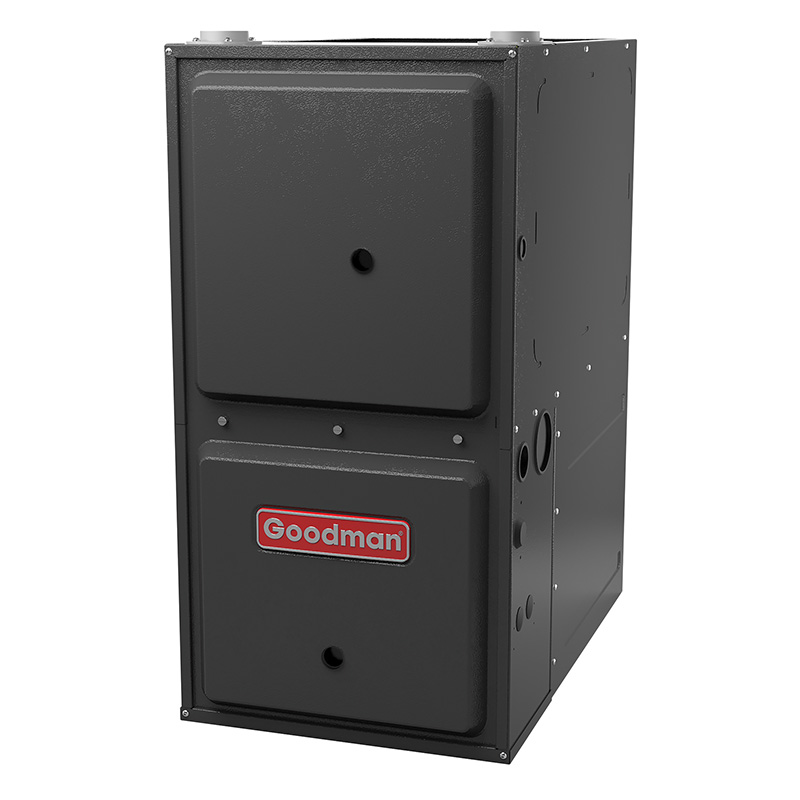
- 60,000 BTU 80% AFUE gas furnace with Ultra Low NOx burners approved for California and Colorado
- Upflow configuration designed for basement, closet, or utility-room installations
- Multi-speed ECM blower motor reduces energy use and improves airflow consistency versus single-speed
- Goodman 10-year parts limited warranty when registered within 60 days of installation
About this system
The Goodman 2.5 Ton 15.2 SEER2 R-32 AC and 80% AFUE gas furnace package is built for homeowners in California and Colorado who need equipment that clears strict Ultra Low NOx air-quality standards without paying a premium-brand price. The 2.5-ton cooling capacity suits homes roughly in the 1,200 to 1,600 square foot range, though a proper Manual J load calculation should always confirm sizing. At 15.2 SEER2, efficiency sits just above the federal minimums that took effect in 2023, meaning you get a code-compliant, reasonably efficient system without the price jump that comes with 17+ SEER2 variable-speed equipment.
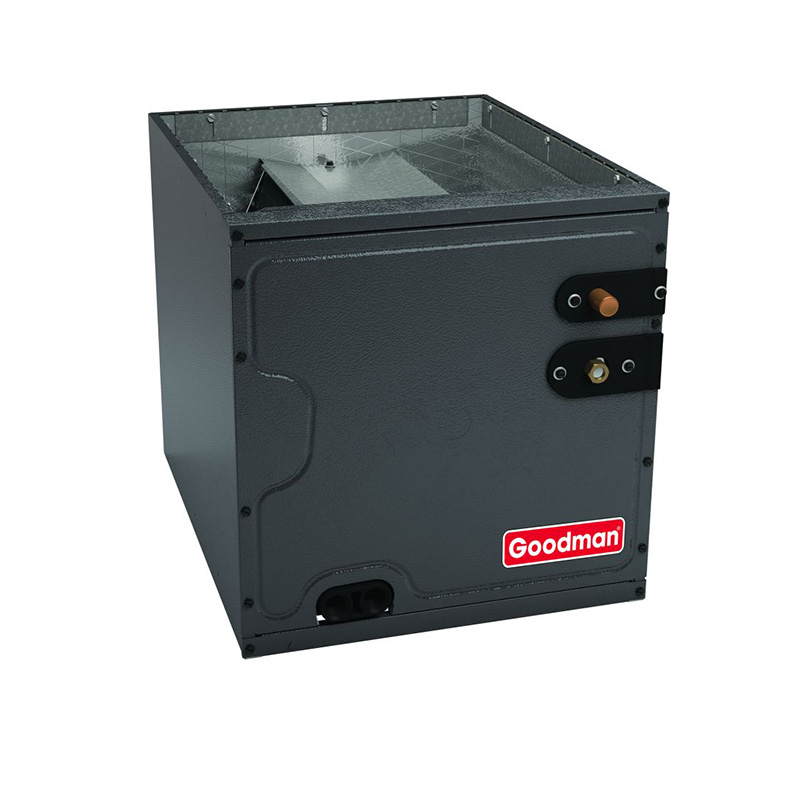
On the heating side, 80% AFUE means 80 cents of every dollar spent on gas becomes usable heat. That is an honest, workable number in mild-to-moderate climates, though homeowners in high-altitude Colorado or colder inland California valleys may want to weigh whether a 96% AFUE furnace would recover its cost premium through fuel savings. The upflow configuration requires the furnace to sit below the air handler or coil with supply air moving upward, which fits the most common basement, closet, or utility-room setups. The multi-speed ECM blower motor is a meaningful upgrade over single-speed models: it ramps airflow up and down to reduce hot and cold spots, lower electricity draw during partial-load operation, and run more quietly at lower speeds. R-32 refrigerant carries a lower global-warming potential than the R-410A it replaces, and it requires technicians to hold specific handling certification, so confirm your installer is qualified before booking.
This system delivers a functional, code-compliant package at a price point that is hard to match from major premium brands, making it a reasonable choice for budget-conscious buyers who prioritize upfront cost and can commit to regular maintenance. The trade-offs are real: Goodman's documented failure patterns, particularly capacitors and evaporator coil leaks, mean owners should budget for service calls after year five or six, and the 80% AFUE furnace is the minimum efficiency tier, not a standout performer. If you pair it with a skilled installer and keep up with annual tune-ups, it can serve reliably for a decade or more; skip either and the math gets less favorable quickly.
Overall score is the average of the five ratings above.
What we like
- Upfront price runs 15 to 25 percent below comparable Carrier, Trane, and Lennox systems
- Multi-speed ECM blower improves comfort and lowers blower electricity costs compared to single-speed furnaces
- Ultra Low NOx certification satisfies California SCAQMD and Colorado air-quality rules without an upgrade surcharge
- R-32 refrigerant reduces environmental impact relative to R-410A
- 10-year registered parts warranty provides meaningful coverage if activated promptly after install
Trade-offs
- Dual-run capacitors are the most commonly reported failure, typically surfacing within the first several years and costing $300 to $600 per repair
- Evaporator coil leaks appear in a meaningful share of long-term owner reviews, a potential mid-life repair cost
- Compressor lifespan averages 10 to 14 years versus 15 to 20 years typical of premium-brand compressors
- 80% AFUE is the lowest efficiency tier for gas furnaces; higher-altitude or colder locations will see noticeably higher fuel bills compared to a 96% AFUE unit
What homeowners and pros say about Goodman
Homeowners who share their experiences with Goodman equipment online tend to cluster at the extremes: those who got a solid install from an experienced technician and have run the system for years with only minor issues, and those who dealt with early failures they feel should not have happened on newer equipment. On Google dealer reviews, Goodman systems earn roughly 3.8 out of 5 stars across locations, with affordability cited most often as the reason buyers chose the brand. ConsumerAffairs tells a harsher story, sitting around 2.5 out of 5, though that platform disproportionately captures frustrated owners rather than satisfied ones. The recurring theme in negative reviews is repair costs climbing after roughly year seven, which aligns with documented failure patterns: dual-run capacitors are the most commonly reported breakdown, evaporator coil leaks show up in a meaningful share of longer-term accounts, and compressors tend to average 10 to 14 years rather than the 15 to 20 years owners of premium brands often report.
HVAC technicians who work on Goodman equipment regularly say the brand’s reputation is inseparable from install quality. A properly sized, correctly charged system with good airflow gets a fair run; one that was rushed through a low-bid installation often becomes a frequent service call. For this specific package, the R-32 refrigerant adds a layer of consideration: techs note that not every shop has completed R-32 certification yet, so owners should vet future service providers before they need one in a hurry. The multi-speed ECM blower is generally well-regarded among installers as a step up from single-speed furnaces in the same price tier, offering quieter operation and better humidity control when set up correctly. The bottom line from the field is that Goodman can be a responsible choice when the savings are real and the installer is experienced, but it rewards attentive ownership more than a set-it-and-forget-it approach.
Sources: ConsumerAffairs Goodman owner reviews, AHRI Directory of Certified Product Performance, U.S. DOE appliance and equipment efficiency standards, Goodman product specification sheets.
What it costs to run
At 15.2 SEER2, cooling this 2.5-ton system for a typical 1200-hour cooling season at the U.S. average electricity rate of $0.17/kWh works out to roughly $403 per year in cooling, about $54 less per year than a minimum-efficiency 13.4 SEER2 unit of the same size. Your real cost depends on your climate and local rate.
Method: (30,000 BTU/hr ÷ 15.2 SEER2) × 1200 hours ÷ 1000 × $0.17/kWh. Rate source: U.S. EIA average; cooling hours: moderate-climate estimate.
How it compares
| Brand | Comparable model | SEER2 | Stage | Price position |
|---|---|---|---|---|
| Goodman | GSXH5 / GMVC8 series (this system) | 15.2 | Single-stage | Value pick |
| Carrier | Comfort 14 / 15 series (24ACC6) | 15.2 | Single-stage | Typically 15 to 25 percent more than this Goodman package |
| Trane | XR15 series (4TTR5) | 15.2 | Single-stage | Typically 15 to 25 percent more than this Goodman package |
| Lennox | Merit 14ACX series | 15.2 | Single-stage | Typically 15 to 25 percent more than this Goodman package |
Competitor rows are comparable single-stage units at similar efficiency; price is relative position, not a quote.
Questions about this system
Does this system actually meet California SCAQMD Ultra Low NOx rules, and do I need any additional equipment to comply?
Yes, the furnace carries Ultra Low NOx certification that satisfies SCAQMD requirements in California and equivalent rules in Colorado. No additional burner or combustion hardware is required, but you should confirm your installer pulls the correct permits and performs combustion testing at startup, since improper installation can affect both emissions performance and warranty coverage.
My house is at elevation in Colorado. Will an 80% AFUE furnace be a problem?
Altitude itself does not disqualify an 80% AFUE furnace, but it does require proper high-altitude orifice de-rating, which your installer must perform. The bigger practical concern is operating cost: at elevations above 6,000 feet where winters are long, the gap in annual fuel bills between 80% and 96% AFUE can be meaningful enough to justify budgeting for the higher-efficiency option instead.
What does the R-32 refrigerant requirement mean for future service calls?
R-32 requires technicians to hold specific EPA and sometimes state-level handling certification, and not every local HVAC company is set up for it yet. Before you buy, verify that at least two or three service providers in your area are certified to work with R-32, so you are not stuck with a single-source service situation if a repair comes up.
How likely is it that I will have a capacitor failure, and what does that cost?
Dual-run capacitor failure is the most commonly reported problem across Goodman AC systems, and it tends to surface after several years of seasonal cycling. The repair is one of the more straightforward and affordable HVAC fixes, typically falling in the $300 to $600 range including a service call, but it is worth budgeting for at least one occurrence over a 10-year ownership period.
The warranty says 10 years, but what exactly is covered and what is not?
The 10-year limited parts warranty covers replacement components when registered within 60 days of installation; if you miss the registration window it drops to a shorter term. Labor is not covered at any point, which is where real-world repair costs accumulate. Refrigerant, maintenance items, and failures caused by improper installation or lack of upkeep are also excluded, so a service agreement with your installer is worth considering separately.
Specifications
| Cooling capacity | 2.5 Ton |
| Efficiency | 15.2 SEER2 |
| Furnace output | 60,000 BTU |
| Furnace efficiency | 80% AFUE |
| Configuration | Upflow |
| Refrigerant | R-32 |