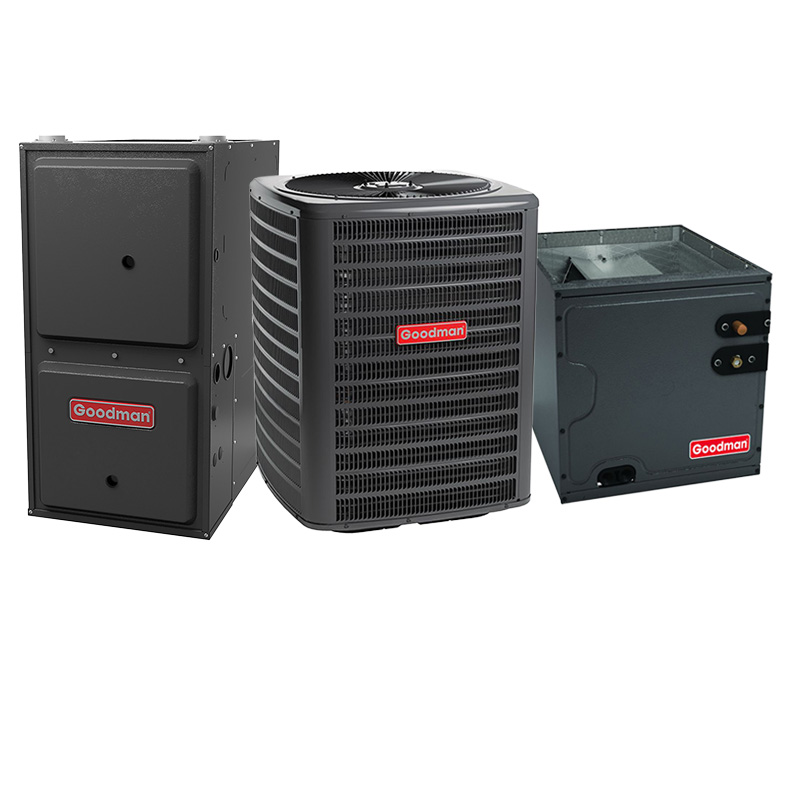
Goodman 5 Ton 14 SEER2 R32 AC System with 80,000 BTU 80% AFUE Gas Furnace – California & Colorado Ultra Low NOx, Upflow, Multi-Speed ECM
View on AC Direct see your lowest price →Check current price on AC Direct →
Key features
- 5-ton cooling capacity with 14 SEER2 efficiency rating
- 80,000 BTU gas furnace at 80% AFUE, upflow configuration
- R-32 refrigerant, compliant with California and Colorado Ultra Low NOx regulations
- Multi-speed ECM blower motor for improved airflow and humidity control
- Designed for residential split-system installation with matched coil required
- Qualifies for Goodman's standard limited parts warranty when registered by a licensed contractor
About this system
The Goodman 5-ton 14 SEER2 system pairs a central air conditioner with an 80,000 BTU, 80% AFUE upflow gas furnace, covering homes in the 2,400 to 3,200 square foot range depending on insulation and climate. The R-32 refrigerant charge meets California Air Resources Board and Colorado low-GWP requirements, making this one of a narrowing set of systems that clears the Ultra Low NOx combustion rules enforced in both states. If you are replacing aging equipment in a California or Colorado home and want a compliant system without moving to a higher-efficiency tier, this combination fits that gap directly.
The furnace runs at 80% AFUE, meaning roughly 20 cents of every heating dollar exits through the flue. That is the minimum efficiency tier many contractors still install, and it is a real trade-off worth acknowledging: upgrading to a 96% AFUE unit would cut that waste significantly, though the upfront cost is higher. On the cooling side, 14 SEER2 is the federal minimum for new split systems in most northern regions, placing this unit at the entry-level efficiency floor rather than mid-range. The multi-speed ECM blower motor does improve comfort and humidity control compared to a standard PSC motor, and it reduces blower electricity draw, which is a genuine operational benefit beyond simple cooling efficiency.
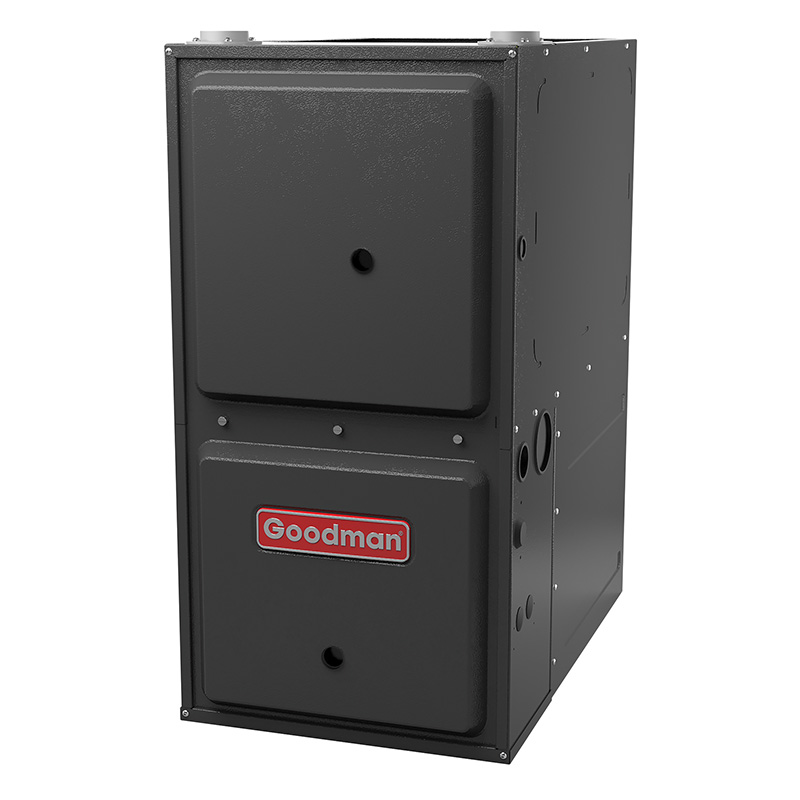
This is an upflow configuration, meaning the air flows up through the furnace and into the supply plenum above, which suits the majority of basement and closet installations where ductwork runs through the ceiling. Buyers should factor in that Goodman’s real-world performance is closely tied to installation quality, so choosing a licensed, experienced contractor matters more here than it might with some premium brands that have tighter factory tolerances.
This system is a workable, regulation-compliant choice for California and Colorado homeowners who need a large-tonnage replacement without moving up in efficiency tier. The entry-level 14 SEER2 and 80% AFUE specs mean lower upfront cost but higher ongoing energy bills compared to mid-efficiency alternatives, and Goodman's documented reliability history means buyers should budget for potential component repairs in years 7 through 14. It delivers on price but asks for attentive installation and realistic long-term maintenance expectations.
Overall score is the average of the five ratings above.
What we like
- Priced 15 to 25 percent below comparable Carrier, Trane, and Lennox systems, lowering the replacement barrier for budget-conscious buyers
- R-32 refrigerant meets California and Colorado Ultra Low NOx requirements, keeping the system legal in restrictive markets
- Multi-speed ECM blower motor reduces blower electricity consumption and improves comfort compared to single-speed alternatives
- 5-ton capacity covers large homes where smaller residential systems fall short
- Upflow configuration matches the most common existing ductwork layouts, simplifying drop-in replacements
Trade-offs
- 80% AFUE furnace is at the low end of efficiency, meaning higher heating costs than 90% or 96% AFUE alternatives over the system's life
- 14 SEER2 is the federal minimum cooling efficiency floor, offering no buffer above baseline operating costs
- Goodman compressors average 10 to 14 years versus 15 to 20 for premium brands, raising the likelihood of a major repair or replacement before the 15-year mark
- Evaporator coil leaks and dual-run capacitor failures are documented recurring issues, adding realistic service costs that offset some of the purchase price savings
What homeowners and pros say about Goodman
Goodman carries a split reputation among homeowners and the contractors who install its equipment. On Google dealer review aggregates, the brand scores around 3.8 out of 5 across locations where affordability is the most consistent praise. Homeowners who got a clean installation at a fair price and experienced no early failures tend to describe the system as doing exactly what they paid for. On ConsumerAffairs, the score drops to around 2.5 out of 5, which reflects the self-selection of that platform toward complaints. The recurring pattern there is not early catastrophic failure but rather repair costs that climb after roughly year 7, eroding the original savings from the lower purchase price.
HVAC technicians tend to frame Goodman as a system where their own work carries more weight than usual. The specific documented failure modes they flag are dual-run capacitor failures, which are common and relatively inexpensive to fix, evaporator coil leaks that appear more frequently than on premium equipment, and compressor lifespans that average 10 to 14 years rather than the 15 to 20 years technicians typically see from Carrier, Trane, or Lennox compressors. A minority of owners also report refrigerant leaks within the first year, which professionals generally attribute to installation or initial charge quality rather than the equipment itself. For a 5-ton R-32 system like this one, where the refrigerant type and California or Colorado regulatory compliance add complexity, having a contractor with specific experience on R-32 systems is not optional.
Sources: ConsumerAffairs Goodman owner reviews, AHRI Directory of Certified Product Performance, U.S. DOE appliance and equipment efficiency standards, Goodman product specification sheets.
What it costs to run
At 14 SEER2, cooling this 5-ton system for a typical 1200-hour cooling season at the U.S. average electricity rate of $0.17/kWh works out to roughly $874 per year in cooling, about $39 less per year than a minimum-efficiency 13.4 SEER2 unit of the same size. Your real cost depends on your climate and local rate.
Method: (60,000 BTU/hr ÷ 14 SEER2) × 1200 hours ÷ 1000 × $0.17/kWh. Rate source: U.S. EIA average; cooling hours: moderate-climate estimate.
How it compares
| Brand | Comparable model | SEER2 | Stage | Price position |
|---|---|---|---|---|
| Goodman | GSXN5-60 / GCVC8-80 Series (this system) | 14 | Single-stage | Value pick |
| Carrier | Comfort 24ACC636 Series | 14-15 | Single-stage | Typically 15 to 25 percent more than this Goodman system |
| Trane | XR14c Series | 14-15 | Single-stage | Typically 15 to 25 percent more than this Goodman system |
| Lennox | Merit ML14XC1 Series | 14-15 | Single-stage | Typically 15 to 25 percent more than this Goodman system |
Competitor rows are comparable single-stage units at similar efficiency; price is relative position, not a quote.
Questions about this system
Is this system actually legal to install in California and Colorado, and what does Ultra Low NOx mean for me?
Yes. California's South Coast AQMD and several Colorado air districts require gas furnaces to meet Ultra Low NOx combustion standards, and this unit is specifically certified for those markets. Practically, it means the burner produces fewer nitrogen oxide emissions during operation. If you are in one of those regulated regions, buying a non-compliant furnace risks a failed permit inspection, so this certification matters at the time of installation.
What matched components does this system require, and can I reuse my existing coil?
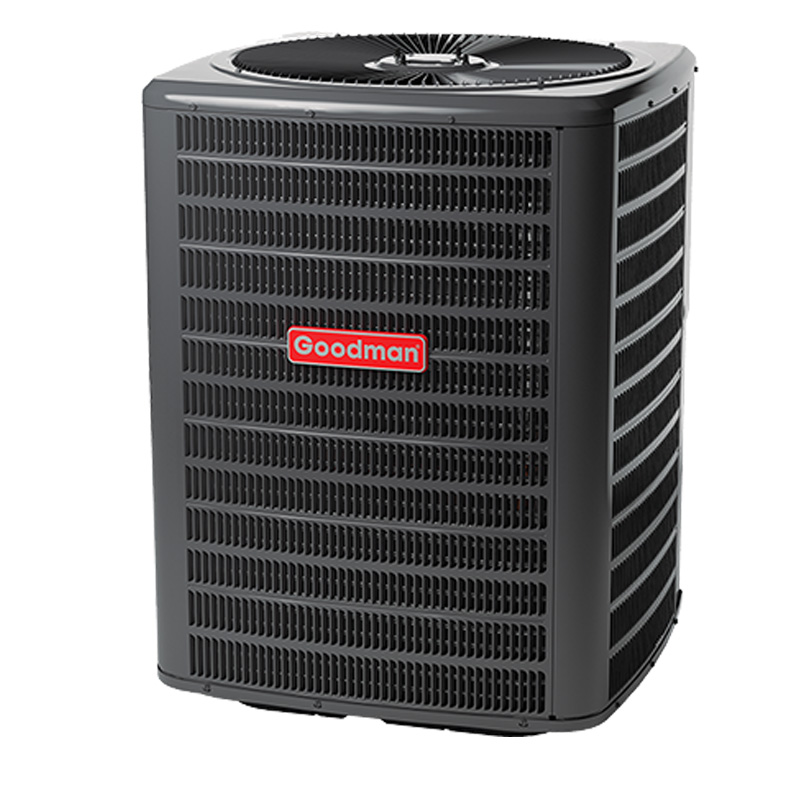
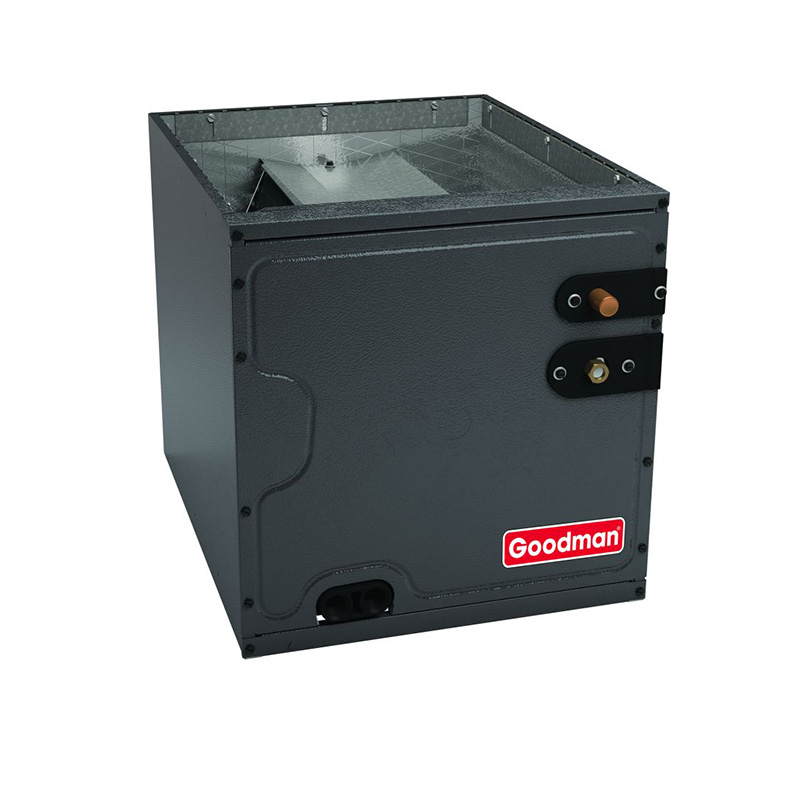
This outdoor condensing unit requires a matched evaporator coil rated for R-32 refrigerant to function properly and to maintain the SEER2 rating. Most older evaporator coils were designed for R-410A and cannot be used with R-32. Your contractor should verify coil compatibility before installation, and in most cases a new coil will be required alongside this system.
What are the most likely repair costs I should plan for over the life of this system?
The most commonly reported failure on Goodman equipment is the dual-run capacitor, which typically costs between 300 and 600 dollars to diagnose and replace and is considered a routine service item. Evaporator coil leaks appear in a meaningful share of owner accounts and carry a higher repair cost. Compressor longevity averages 10 to 14 years for Goodman versus 15 to 20 years for premium brands, so budgeting for a possible compressor repair or full replacement before year 15 is reasonable.
How does the 80% AFUE furnace compare to higher-efficiency options, and is the upgrade worth considering?
An 80% AFUE furnace converts 80 cents of every dollar of gas into usable heat. A 96% AFUE condensing furnace converts 96 cents, which in a cold climate or a high-usage household can represent meaningful annual savings on gas bills. The upgrade costs more upfront, but in California or Colorado climates with significant heating seasons, the payback period can be under ten years. If your existing ductwork and installation site allow for a condensing furnace, it is worth pricing the comparison before committing.
Does the multi-speed ECM blower actually make a noticeable difference compared to a standard motor?
In practical terms, yes. An ECM motor adjusts blower speed to match actual airflow demand rather than running at one fixed speed, which reduces the on-off temperature swings common with standard PSC motors and can improve humidity removal during cooling cycles. It also uses considerably less electricity during lower-speed operation. Homeowners with humidity sensitivity or rooms that were previously difficult to keep comfortable often notice a real improvement with ECM-equipped systems.
Specifications
| Cooling capacity | 5 Ton |
| Efficiency | 14 SEER2 |
| Furnace output | 80,000 BTU |
| Furnace efficiency | 80% AFUE |
| Configuration | Upflow |
| Refrigerant | R-32 |