MRCOOL Olympus 9,000 BTU Ductless Mini Split Heat Pump System, 230V – 4th Generation | Single Zone, 27.4 SEER2, R454B
View on AC Direct see your lowest price →Check current price on AC Direct →
Key features
- 27.4 SEER2 efficiency rating, well above federal minimums
- Pre-charged line set enables DIY installation without a vacuum pump
- R-454B refrigerant, a lower-GWP alternative to R-410A
- Operates as a heat pump for both heating and cooling
- Single-zone configuration suits one room or dedicated space
- 230V electrical requirement, standard for mini split outdoor units
About this system
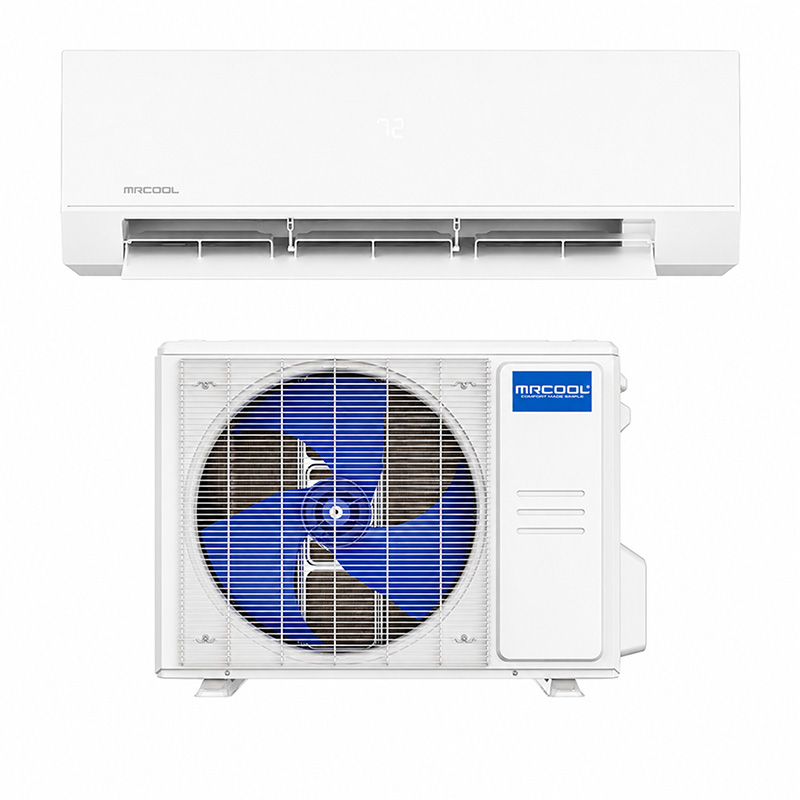
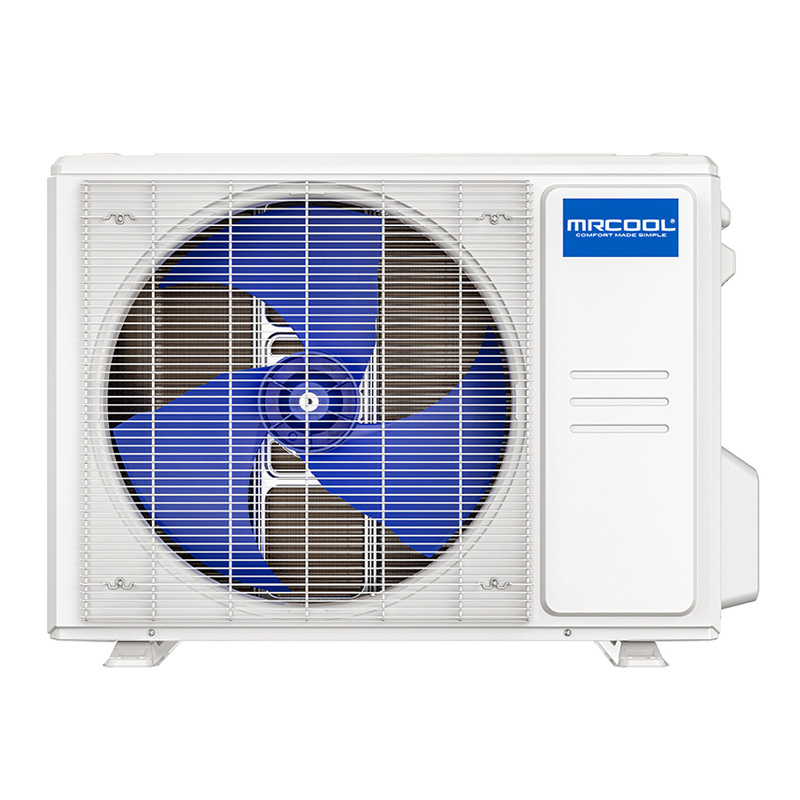
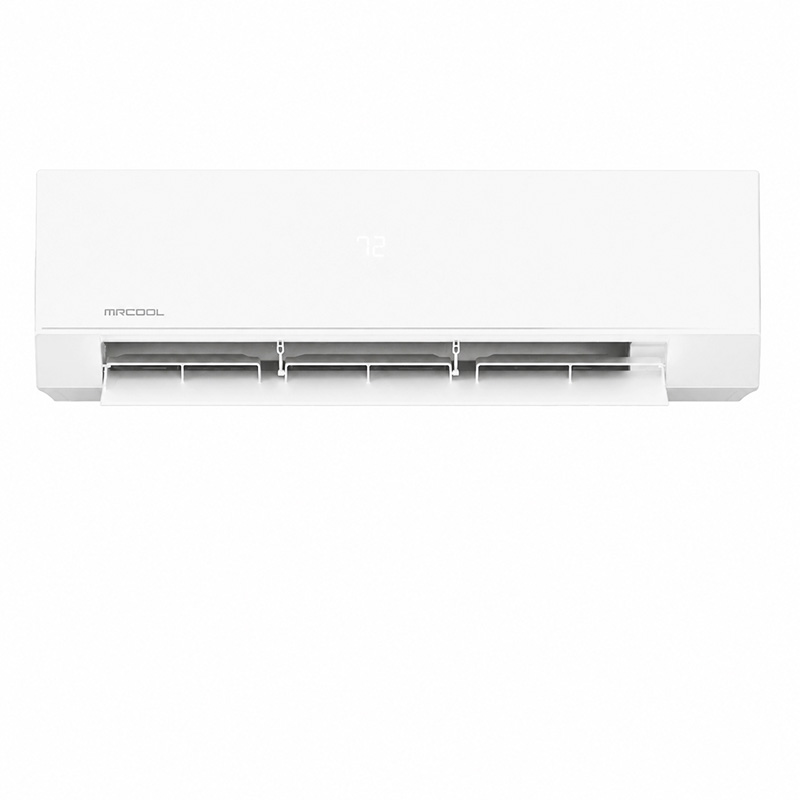
The MRCOOL Olympus 9,000 BTU 4th Generation single-zone ductless mini split is designed for smaller spaces, typically a bedroom, home office, sunroom, or garage up to roughly 350 to 450 square feet depending on insulation and climate. Running on 230V and using the newer R-454B refrigerant, it delivers both heating and cooling through a wall-mounted air handler paired with an outdoor condenser. At 27.4 SEER2, it sits well above federal minimum standards and firmly in premium efficiency territory, which means lower monthly operating costs compared to window units or electric resistance heat, especially in mild to moderate climates where the heat pump mode runs efficiently for most of the heating season.
Where the Olympus 4th Gen stands out on paper is its pre-charged line set, which is the signature MRCOOL feature that allows a mechanically confident homeowner to complete the installation without hiring an HVAC contractor or using a vacuum pump. That is the core value proposition. The trade-off is that this is a 4th generation unit, and documented reliability data shows the 4th gen platform had meaningfully higher first- and second-year failure rates than the newer 5th gen line. Buyers who prioritize long-term reliability over upfront savings may want to weigh that distinction carefully before choosing this model over the updated generation.
The MRCOOL Olympus 4th Gen 9,000 BTU delivers impressive efficiency numbers and a genuinely accessible DIY install path at a price point well below Japanese brand alternatives. However, the 4th generation platform carries a documented reliability concern, with failure rates in the first two years considerably higher than the brand's own 5th generation, which tempers the value argument. Buyers who can stretch to the 5th gen or who have limited tolerance for early-unit failures should think twice.
Overall score is the average of the five ratings above.
What we like
- 27.4 SEER2 efficiency is legitimately high for this price tier
- Pre-charged line set makes self-installation realistic for a capable DIYer
- R-454B refrigerant is more environmentally responsible than R-410A
- Single-zone setup is straightforward with no duct work required
- Lower upfront cost than comparable Mitsubishi, Daikin, or Fujitsu units
Trade-offs
- 4th generation reliability data is concerning, with roughly 25 percent of units experiencing failures in the first two years
- Warranty claims are documentation-heavy and owners report the company actively looking for reasons to deny coverage
- Very few local HVAC technicians will service MRCOOL, leaving owners largely on their own for repairs
- Customer service has a documented track record of long hold times and slow email-based troubleshooting
What homeowners and pros say about MRCOOL
Homeowner feedback on MRCOOL’s DIY-install ductless line, reflected in Home Depot owner reviews averaging around 4.5 out of 5 on popular models, is most consistently positive about one thing: the install experience. Buyers who successfully get a unit running on their own report strong satisfaction with the value delivered. The pre-charged line set concept earns genuine praise from mechanically inclined homeowners who would otherwise have paid a significant labor premium for a professional install. That satisfaction, however, is concentrated among owners whose units have not had problems.
Among HVAC professionals and owners who have encountered issues, the picture is more complicated for 4th generation units specifically. The documented first- and second-year failure rate on 3rd and 4th gen MRCOOL systems ran around 25 percent, a figure that stands in stark contrast to the improved 5th generation. Specific failure modes that show up in owner accounts include a loose coupling near the air handler that can cause refrigerant or condensate issues shortly after installation. Beyond the hardware, the service experience draws consistent criticism: warranty claims require thorough documentation and owners frequently report pushback from the company, customer support involves long hold times and email-based troubleshooting rather than fast resolution, and the limited network of technicians willing to service MRCOOL means that when something goes wrong, the repair burden often falls back on the homeowner who installed it.
Sources: Better Business Bureau MRCOOL reviews, PickHVAC MRCOOL review, AHRI Directory of Certified Product Performance, U.S. DOE appliance and equipment efficiency standards.
How it compares
| Brand | Comparable model | SEER2 | Stage | Price position |
|---|---|---|---|---|
| MRCOOL | Olympus 9,000 BTU 4th Gen | 27.4 | Variable | Value pick |
| Mitsubishi | M-Series MSZ-GL09NA | 23.1 | Variable | Significantly higher than MRCOOL, professional install adds cost |
| Daikin | Aurora RXL09QMVJU | 23.0 | Variable | Higher than MRCOOL, typically requires professional install |
| Fujitsu | Halcyon ASUG09LZAS | 25.0 | Variable | Higher than MRCOOL, professional install expected |
Competitor rows are comparable single-stage units at similar efficiency; price is relative position, not a quote.
Questions about this system
Is this a 4th gen or 5th gen MRCOOL, and does the generation actually matter?
This is a 4th generation Olympus unit. It matters quite a bit: MRCOOL's own 5th generation is a documented improvement, with roughly 85 percent of 5th gen units running reliably past year one compared to closer to 75 percent failure-free on 4th gen. If the 5th gen version is available for your zone and BTU size, it is worth the comparison.
Can I really install this myself, or do I still need an HVAC tech?
The pre-charged line set is the genuine differentiator here: you do not need a vacuum pump or EPA refrigerant certification to make the refrigerant connection. You will still need to run a 230V dedicated circuit, mount both units, and route the line set, so basic electrical and construction comfort is required. Many homeowners complete it in a day, but it is not a plug-and-play appliance.
What happens if something breaks? Who can fix it?
This is the most important trade-off to understand before buying. Very few independent HVAC technicians will work on MRCOOL systems, so if something fails, you are likely troubleshooting via email with MRCOOL support, which owners frequently describe as slow. A documented early failure mode on this generation is a loose coupling near the air handler, so verifying all connections immediately after install is important.
How does the warranty work, and is it easy to use?
MRCOOL offers a warranty on parts and the compressor, but the claims process is documentation-heavy and owners have widely reported the company looking for reasons to deny coverage, particularly if installation cannot be fully documented. Keep every photo, receipt, and installation record from day one.
How does this compare to a Mitsubishi or Daikin at similar BTU and efficiency?
Mitsubishi M-Series and Daikin 19 Series units at comparable SEER2 levels will cost significantly more upfront and require professional installation, but both brands have much stronger reliability track records, broad local service networks, and warranty processes that are generally less contentious. The MRCOOL is a value play, not a quality-per-dollar play once you factor in potential repair costs.
Specifications
| Efficiency | 27.4 SEER2 |
| Refrigerant | R-454B |