Revolv 2 Ton Package Unit Cooling Only AC For Mobile Homes | 13.4 SEER2 Horizontal Discharge | R454B (P95RD-024K)
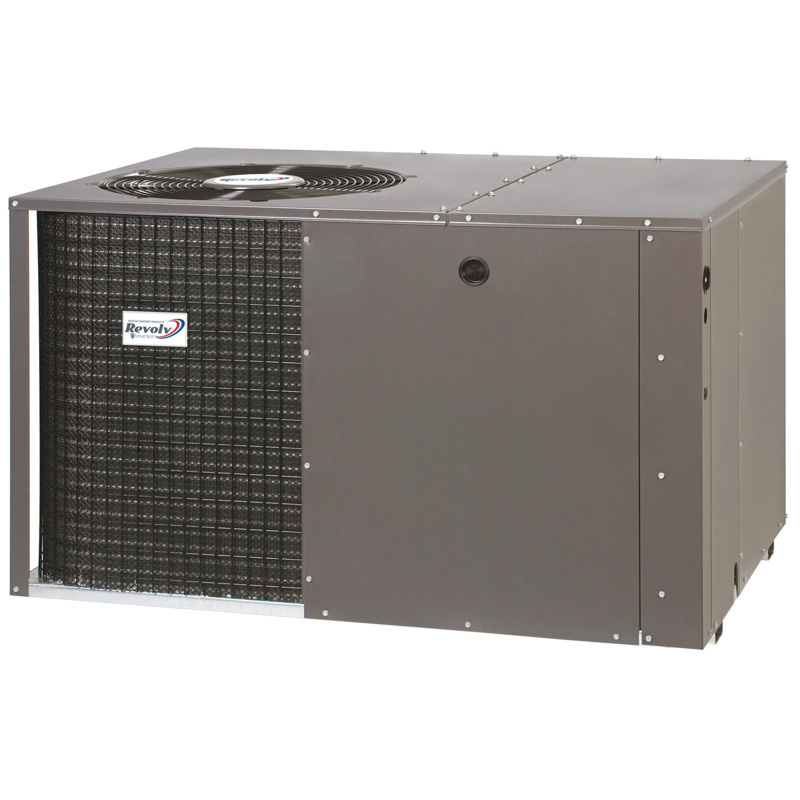
View on AC Direct see your lowest price →Check current price on AC Direct →
Key features
- 2-ton capacity, suited for manufactured homes roughly 800 to 1,100 sq ft depending on insulation and local climate
- 13.4 SEER2 efficiency, meets current federal minimum standards
- Horizontal discharge configuration designed for mobile and manufactured home installations
- R-454B refrigerant, a lower-GWP replacement for R-410A with stable near-term availability
- Single-cabinet package unit combines compressor, condenser, and air handler in one housing
- Cooling only, no heat pump or gas heat component included
About this system
The Revolv P95RD-024K is a 2-ton, cooling-only package unit built specifically for manufactured and mobile homes. Unlike split systems that place components in two locations, this unit houses the compressor, condenser coil, and air handler in a single cabinet that mounts horizontally along the exterior of a mobile home, connecting directly to existing ductwork through the floor or wall. That self-contained design makes it one of the more straightforward replacements available for homeowners in HUD-code manufactured housing, where space under or beside the home is limited and split-system installs are often impractical.
At 13.4 SEER2, this unit meets the current federal minimum efficiency standard for the Northern U.S. and sits just above the 13 SEER2 Southern minimum, so it is code-compliant across most regions but is not a high-efficiency product. For a 2-ton cooling load in a smaller manufactured home, typically 800 to 1,100 square feet depending on insulation and climate, it will handle the job without the premium cost of a higher-SEER2 unit. The switch to R-454B refrigerant positions it for the industry’s ongoing phase-down of R-410A, meaning refrigerant availability should be stable for the foreseeable future. This is a cooling-only system, so homeowners in climates requiring heat will need a separate furnace or electric heat strip.
The Revolv P95RD-024K is a practical, budget-conscious replacement for aging mobile home package units, and its horizontal discharge design and R-454B refrigerant keep it current for the near term. Efficiency sits at the minimum standard, not above it, and Goodman's track record suggests you should budget for a capacitor or coil service call somewhere in the mid-life years. For homeowners who need a straightforward cooling-only swap without overpaying, it competes well on price, but it is not the choice for buyers prioritizing long-term running costs or lowest-risk ownership.
Overall score is the average of the five ratings above.
What we like
- Purpose-built for manufactured and mobile homes with horizontal discharge that fits existing duct connections
- R-454B refrigerant is compliant with current and near-future regulations, avoiding the obsolescence risk of older R-22 or R-410A units
- Priced noticeably below comparable units from Carrier, Trane, and Lennox, typically 15 to 25 percent less
- Single-cabinet design simplifies installation compared to a split system in a space-constrained mobile home setup
- Meets federal minimum SEER2 requirements, so it passes inspection in all major U.S. climate zones
Trade-offs
- 13.4 SEER2 is the efficiency floor, not a selling point, and higher-SEER2 options exist if lower monthly utility bills are a priority
- Goodman compressors average 10 to 14 years versus 15 to 20 years on premium brands, meaning a shorter expected service life at the core component
- Dual-run capacitor failures and evaporator coil leaks are documented recurring issues, adding potential mid-life repair costs even within or just past warranty
- Cooling only with no heating capability, so owners in colder climates must budget separately for a heat source
What homeowners and pros say about Goodman
Homeowners who buy Goodman equipment tend to split into two camps: those who had a smooth install and ran the unit for a decade with only a capacitor swap, and those who faced coil leaks or compressor issues in the mid-life years and came away frustrated. On ConsumerAffairs, Goodman scores around 2.5 out of 5, but that platform draws heavily from people who have had problems, so the score skews negative. Google dealer reviews average closer to 3.8 out of 5 across hundreds of reviews per location, where affordability is the most repeated praise. For this mobile home package unit specifically, the real-world experience will hinge almost entirely on the quality of the initial installation and first-season refrigerant charge.
HVAC technicians who work on manufactured housing regularly note that dual-run capacitor failure is the most common service call on Goodman equipment, usually a quick repair in the 300 to 600 dollar range. Evaporator coil leaks appear in a meaningful share of owner accounts and are a more costly fix. Compressor lifespan on Goodman units tends to average 10 to 14 years, shorter than the 15 to 20 years typically seen on Carrier, Trane, or Lennox compressors. A minority of owners also report refrigerant leaks in the first year, which technicians generally attribute to installation errors or improper charge rather than a factory defect. None of these issues are unique to this model, but they are consistent enough across the Goodman lineup that buyers should budget for mid-life maintenance and choose an installer with demonstrated experience on package units.
Sources: ConsumerAffairs Goodman owner reviews, AHRI Directory of Certified Product Performance, U.S. DOE appliance and equipment efficiency standards, Goodman product specification sheets.
What it costs to run
At 13.4 SEER2, cooling this 2-ton system for a typical 1200-hour cooling season at the U.S. average electricity rate of $0.17/kWh works out to roughly $365 per year in cooling, about $0 less per year than a minimum-efficiency 13.4 SEER2 unit of the same size. Your real cost depends on your climate and local rate.
Method: (24,000 BTU/hr ÷ 13.4 SEER2) × 1200 hours ÷ 1000 × $0.17/kWh. Rate source: U.S. EIA average; cooling hours: moderate-climate estimate.
How it compares
| Brand | Comparable model | SEER2 | Stage | Price position |
|---|---|---|---|---|
| Revolv (Goodman) | P95RD-024K | 13.4 | Single-stage | Value pick |
| Carrier | WeatherMaker 48XC (2-ton package) | 14.0 | Single-stage | Moderately higher than this unit |
| Trane | YCD (2-ton cooling-only package) | 13.4 | Single-stage | Higher than this unit |
| Lennox | LRP14 (2-ton package unit) | 14.0 | Single-stage | Notably higher than this unit |
Competitor rows are comparable single-stage units at similar efficiency; price is relative position, not a quote.
Questions about this system
Will this unit connect directly to my existing mobile home ductwork without modifications?
In most cases, yes. The horizontal discharge design is built to interface with the standard under-floor or side-wall duct openings common in HUD-code manufactured homes. However, duct sizing, plenum dimensions, and the condition of existing connections vary, so have an HVAC technician confirm compatibility before purchase to avoid unexpected adapter or modification costs.
Does the R-454B refrigerant mean I will have trouble finding a technician who can service it?
R-454B is a relatively new refrigerant, but it falls under the same EPA Section 608 certification framework as R-410A. Most licensed HVAC technicians who already handle R-410A will need only minor additional training and the correct recovery equipment. Availability is expected to grow as more manufacturers ship R-454B equipment, so this should be a minor concern within the next year or two.
This is cooling only. What are my options for heating in winter?
You have two main paths: a separate electric furnace or gas furnace connected to the same duct system, or an electric heat strip installed in the unit's air handler section if the cabinet is compatible with one. Confirm with your installer whether a heat strip kit is available for this specific model before assuming it can be added later.
What maintenance steps can reduce the risk of the capacitor and coil issues Goodman is known for?
Annual preventive maintenance, which includes checking the dual-run capacitor's microfarad rating and replacing it proactively when it drifts more than five percent from spec, is the single most effective step. Keeping the condenser coil clean and confirming proper refrigerant charge at installation reduces the stress on the compressor and helps prevent early coil leaks. Many of Goodman's documented failures trace back to deferred maintenance or a poor initial charge.
How does the warranty work, and is it different for mobile home package units versus standard residential equipment?
Goodman typically offers a 10-year parts warranty when the unit is registered within a set window after installation, dropping to a shorter period if registration is missed. Warranty terms for mobile home package units can differ from standard residential split systems, so read the specific documentation included with the P95RD-024K and confirm registration requirements at install time. Labor is not covered, so factor in a service call cost if a covered part fails after the first year.
Specifications
| Cooling capacity | 2 Ton |
| Efficiency | 13.4 SEER2 |
| Configuration | Horizontal |
| Refrigerant | R-454B |