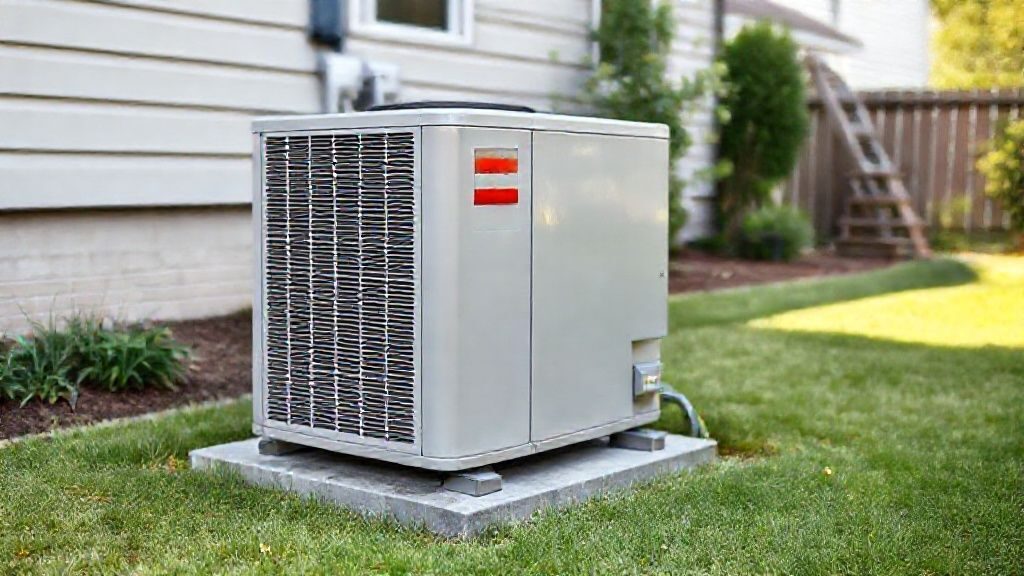
Folks, when we talk about your home’s air conditioning system, a lot of the focus often goes to the thermostat inside or the air blowing through your vents. But there’s a hardworking component sitting outside your house that truly does the heavy lifting: the HVAC condenser. I’ve been in this business for decades, seen countless systems in all sorts of climates – from the sweltering humidity of Tampa, Florida, to the dry heat of Arizona. I can tell you, without a doubt, a well-understood and well-maintained condenser is key to comfortable living.
The condenser isn’t just a metal box; it’s an integral part of how your home stays cool. It’s where your system gets rid of the heat it pulls from your indoor air. If this unit isn’t running right, you’ll feel it immediately, and your energy bills will definitely show it. My goal here is to give you a clear picture of what the condenser does, how to keep it in top shape, and what to look for when things aren’t quite right.
Key Highlights
- The HVAC condenser is the outdoor unit responsible for releasing heat from your home.
- It contains vital components like the compressor, condenser coil, and fan.
- Regular maintenance, including cleaning coils and clearing debris, is crucial for efficiency.
- Common issues include dirty coils, fan motor problems, and refrigerant leaks.
- Knowing when to repair or replace can save you money and improve system performance.
- Proper sizing and SEER rating are important factors when choosing a new condenser.
- Professional installation and repair are essential for safety and optimal operation.
Understanding the HVAC Condenser: What It Is & How It Works
Let’s get down to basics. Your HVAC system, when it’s in cooling mode, is essentially moving heat from inside your house to outside. It doesn’t “create” cool air; it just removes the heat. The condenser is the part of your air conditioner that stands guard outside, getting rid of that unwanted heat.
Here’s the process in a nutshell:
- Heat Absorption: Inside your home, the evaporator coil absorbs heat from the indoor air. This heat turns the liquid refrigerant into a low-pressure, cool gas.
- Compression: This low-pressure gas then travels to the outdoor unit – your condenser – where it first enters the compressor. The compressor is like the heart of the system; it takes that cool, low-pressure gas and squeezes it, turning it into a high-pressure, high-temperature gas. Think of it like pumping up a bicycle tire; the air gets hot.
- Heat Rejection: This hot, high-pressure gas then flows through the condenser coil, which is a series of tubes with fins designed to maximize surface area. A large fan in the condenser unit pulls outdoor air over these hot coils. As the cooler outdoor air passes over the hot coils, it absorbs the heat from the refrigerant. This causes the refrigerant to cool down and condense back into a high-pressure liquid. This is the critical step where the heat from your home is released into the outdoor environment.
- Expansion and Repetition: Finally, this high-pressure liquid refrigerant travels back inside, passes through an expansion valve (which drops its pressure and temperature), and returns to the evaporator coil to absorb more heat, starting the cycle all over again.
So, the condenser’s job is to be the heat exchanger on the outside, effectively dumping all the heat that was collected from your indoor air. If this unit can’t shed heat efficiently, your system struggles, your home doesn’t cool, and your compressor works overtime, which can lead to early failure and higher energy bills. It’s a precise dance of physics, and every component in that outdoor unit plays a crucial role.
Key Components of Your Condenser Unit
While the condenser looks like a single unit, it’s actually a collection of specialized parts working together. Understanding these components can help you grasp how the system functions and what might be going wrong when you have an issue.
- Compressor: As I mentioned, this is the engine of your AC system. It compresses the low-pressure refrigerant gas into a high-pressure, high-temperature gas. This process is essential for the refrigerant to be able to release its heat to the outside air. Compressors can be scroll or reciprocating types, and their efficiency greatly impacts your system’s overall performance.
- Condenser Coil: This is the large coil of tubing, often with aluminum fins, that wraps around the inside perimeter of the unit. The hot refrigerant gas flows through these tubes. The fins help to dissipate heat more effectively by increasing the surface area for heat transfer. Keeping these coils clean is paramount for efficient operation.
- Condenser Fan and Motor: Located at the top of the unit, the fan motor drives a large fan blade. This fan draws outdoor air in through the sides of the unit, pulls it across the hot condenser coil, and expels the heated air upwards. Without a working fan, the heat transfer process is severely hampered, and the system will quickly overheat and shut down or run very inefficiently.
- Contactor: This is an electrical switch that receives a low-voltage signal from your thermostat (via the indoor unit) and, in turn, allows high voltage electricity to flow to the compressor and the condenser fan motor, turning them on. If your outdoor unit isn’t getting power, a faulty contactor is a common culprit.
- Capacitor: Often looking like a metal cylinder, capacitors store electrical energy and provide a powerful burst of electricity to help start the compressor and fan motor. They also help keep the motors running efficiently. A bad capacitor is a very common reason for an AC unit to hum but not start, or for the fan to struggle to spin.
- Refrigerant Lines: These insulated copper tubes connect the indoor evaporator coil to the outdoor condenser unit. One line carries low-pressure gas to the condenser, and the other carries high-pressure liquid back to the indoor unit.
- Electrical Disconnect: This is a pull-out fuse or circuit breaker box usually mounted on the wall near your outdoor unit. It allows you to completely cut power to the condenser for maintenance or safety, which is always the first step before doing any work on the unit.
All these components must work in harmony for your condenser to perform its job effectively. A failure in any one of them can bring your cooling system to a halt.
Different Types of HVAC Condensers
While the basic function of a condenser remains the same – rejecting heat – there are a few different configurations and technologies you might encounter, especially depending on the type of HVAC system you have.
- Split System Condensers: This is the most common type you’ll see in residential homes. In a split system, the condenser is the outdoor unit, while the evaporator coil and air handler (or furnace) are located indoors. These systems are popular because they allow for quieter operation indoors, as the noisy compressor and fan are outside. They are typically air-cooled, meaning they use outdoor air to dissipate heat.
- Packaged Unit Condensers: Less common in standard homes, but often found in manufactured homes, some commercial buildings, or situations where indoor space for an air handler is limited. In a packaged unit, all the main components – the compressor, condenser coil, evaporator coil, and air handler – are housed together in a single large cabinet, usually located on a roof or a concrete slab next to the building. The condenser section in these units works identically to a split system condenser, just integrated differently.
- Heat Pump Condensers: A heat pump uses a very similar outdoor unit to a standard AC condenser, but with one crucial difference: it can reverse its operation. In cooling mode, it acts like a condenser, rejecting heat outdoors. In heating mode, it acts like an evaporator, absorbing heat from the outdoor air and transferring it inside. This dual functionality makes heat pumps very versatile, offering both heating and cooling from a single outdoor unit.
- Ductless Mini-Split Condensers: For homes or additions without existing ductwork, ductless mini-split systems are an excellent option. These systems have a compact outdoor condenser unit that connects directly to one or more indoor air handling units via small refrigerant lines. The outdoor unit for a mini-split is essentially a specialized condenser (or heat pump) designed for this type of application. If you’re looking into these systems, you might want to learn more about ductless heating options or specifically how a mini split heat and air conditioning system works with multiple indoor units.
- Water-Cooled Condensers: While less common in typical residential settings (where air-cooled is standard), some larger commercial or specialized residential systems might use water-cooled condensers. Instead of using outdoor air, these units use a water loop (often connected to a cooling tower or ground source) to dissipate heat. They can be more efficient in certain applications but are also more complex to install and maintain.
Each type has its own advantages and is suited for different applications. Knowing which type you have is the first step in understanding its specific maintenance needs and potential issues.
Common Condenser Problems & Troubleshooting Tips
Even the most robust condenser can run into trouble. Knowing some common problems and basic troubleshooting steps can help you identify issues early, and sometimes even fix minor ones yourself. Always remember safety first: turn off power at the disconnect switch before touching any internal components.
No Power to the Unit
- Issue: The outdoor unit is completely silent and not running.
- Troubleshooting: Check your home’s circuit breaker panel. A tripped breaker to the outdoor unit is a common reason for no power. Flip it completely off, then back on. Also, check the electrical disconnect switch near the unit. Ensure the pull-out block is fully seated.
Condenser Fan Not Spinning
- Issue: You hear the compressor humming, but the large fan on top isn’t turning.
- Troubleshooting: This often points to a faulty capacitor. With the power off at the disconnect, you can visually inspect the capacitor (a metal cylinder). If it’s bulging or leaking, it needs replacement. You might also check for obstructions around the fan blades, like sticks or debris. Sometimes, a faulty fan motor itself is the problem. This is usually a job for a professional.
Unit Running, But Not Cooling Properly
- Issue: The outdoor unit is running, but the air coming from your vents isn’t cold, or the house isn’t getting cool.
- Troubleshooting:
- Dirty Coils: This is incredibly common. If the condenser coils are caked with dirt, leaves, or grass clippings, they can’t effectively shed heat. Your unit will run and run, but accomplish little. I’ll cover cleaning in the next section, but this is a prime suspect.
- Low Refrigerant: If the system is low on refrigerant, it can’t absorb and release enough heat. This is almost always due to a leak. Refrigerant isn’t “used up”; if it’s low, there’s a leak that needs to be found and repaired by a professional, then recharged to the proper level.
- Compressor Problems: A compressor might be running but not compressing effectively, or it could be short cycling (turning on and off frequently). This often requires professional diagnosis.
Loud Noises from the Condenser
- Issue: Rattling, banging, grinding, or screeching sounds.
- Troubleshooting:
- Rattling: Could be loose panels, debris inside the unit, or a loose fan blade. Turn power off and inspect.
- Grinding/Screeching: Often indicates a failing fan motor bearing or compressor issues. This needs professional attention quickly to prevent further damage.
- Banging: A fan blade hitting something, or potentially a serious compressor issue. Again, turn power off and inspect the fan area.
Unit Freezing Up
- Issue: Ice forming on the refrigerant lines (usually the larger one) or on the outdoor coil.
- Troubleshooting: While this usually points to issues with the indoor evaporator coil (like dirty filters restricting airflow) or low refrigerant, sometimes a severely restricted outdoor coil or fan problem can contribute. If you see ice, turn off the AC and let it thaw completely before calling a professional. Running a frozen unit can cause significant damage.
Many condenser issues can be prevented with regular maintenance, but for anything beyond simple cleaning or checking a breaker, it’s best to call in a qualified technician. Tampering with refrigerant or high-voltage components can be dangerous and cause further damage.
Essential Maintenance for Your HVAC Condenser
Regular maintenance is not just a suggestion; it’s a necessity for keeping your condenser running efficiently and extending its lifespan. Think of it like changing the oil in your car. A little effort goes a long way. Here’s what you should be doing:
Seasonal Cleaning (DIY)
- Clear Debris: Before the cooling season starts (and periodically throughout), ensure the area around your condenser is free of leaves, grass clippings, weeds, and anything else that might block airflow. I recommend at least a two-foot clearance on all sides for optimal air circulation. Trim back any bushes or tree branches that are encroaching.
- Clean the Coils: This is one of the most important DIY tasks.
- Turn Off Power: Absolutely crucial. Locate the electrical disconnect box near the condenser and pull out the block or flip the breaker inside it. Also, turn off the AC at your thermostat.
- Remove Obstructions: Carefully remove any larger debris caught in the fins. You might need to remove the top grill of the unit for better access to the inside perimeter where the coil is.
- Hose Down the Coils: Using a garden hose with a gentle spray nozzle (don’t use a pressure washer, it can damage the delicate fins), spray water from the inside of the coil outward. This pushes dirt and debris out. If your coils are extremely dirty, you can use a specialized coil cleaner (available at most hardware stores). Follow the product instructions carefully, usually applying it, letting it sit, then rinsing thoroughly.
- Check Fins: While you’re there, look at the aluminum fins. If any are bent, you can carefully straighten them with a fin comb, which helps maintain proper airflow.
- Replace Panels and Restore Power: Once everything is clean and dry, reassemble the unit and restore power.
- Level the Unit: Over time, the concrete pad your condenser sits on can settle, causing the unit to become unlevel. A slightly unlevel unit can put extra strain on the compressor. If you notice it’s significantly off, you can carefully lift and shim the pad with rot-resistant shims or gravel to level it.
Annual Professional Tune-Up
While you can do a lot yourself, a professional HVAC technician provides a much more thorough inspection and cleaning. I strongly recommend an annual tune-up, ideally in the spring before you heavily rely on your AC. During a professional visit, a technician will:
- Check Refrigerant Levels: They’ll ensure your system has the correct amount of refrigerant for optimal performance. If it’s low, they’ll look for leaks.
- Inspect Electrical Components: They’ll check wiring, connections, contactors, and capacitors for wear, corrosion, or signs of failure. Replacing a failing capacitor proactively can save you from a complete breakdown on the hottest day of the year.
- Lubricate Motors: Some older fan motors might require lubrication.
- Clean and Calibrate: They’ll perform a deeper cleaning of coils and internal components than you can do, and check thermostat calibration.
- Assess Overall Performance: They’ll measure airflow, temperature differentials, and overall system operation to ensure everything is within manufacturer specifications.
This comprehensive check helps catch small problems before they become expensive repairs and ensures your system is running as efficiently as possible, saving you money on energy bills in the long run.
Repair vs. Replace: When to Upgrade Your Condenser
This is a question I get asked a lot. It’s tough to decide whether to pour more money into an aging unit or invest in a brand-new system. There’s no single right answer, but here are the factors I always consider when advising homeowners:
Age of the Unit
A typical air conditioning condenser unit lasts 10 to 15 years, sometimes a bit longer with excellent maintenance. If your unit is approaching or has passed its 10-year mark, and you’re facing a significant repair, replacement becomes a more attractive option.
Cost of Repair vs. Replacement
- Minor Repairs: A capacitor replacement, a fan motor, or a contactor are relatively inexpensive repairs. If your unit is still under 10 years old and these are the only issues, repair is usually the way to go.
- Major Repairs: If the compressor fails, or if there’s a significant refrigerant leak requiring extensive repairs, the cost can be substantial – often half the cost of a new unit or more. For units over 10 years old, putting thousands into a new compressor often doesn’t make financial sense, especially considering other components might be nearing the end of their life too.
- The “50% Rule”: A good rule of thumb is that if the cost of the repair is 50% or more of the cost of a new unit, it’s usually better to replace it.
Efficiency Gains
Older AC units are significantly less efficient than today’s models. A unit from 15 years ago might have a SEER (Seasonal Energy Efficiency Ratio) rating of 8 or 10. Modern units typically start at 14 SEER, and high-efficiency models can go much higher. Replacing an old unit, even one that’s technically “working,” can lead to substantial savings on your monthly energy bills. Over the lifespan of a new system, those energy savings can offset a good portion of the replacement cost.
Availability of Parts
As units age, especially beyond 15-20 years, finding replacement parts for older models can become challenging and expensive. Manufacturers stop producing parts for discontinued lines, leaving technicians scrambling or marking up the few available parts significantly.
Frequent Breakdowns
If your condenser requires repairs every year, or multiple times a season, it’s a clear sign that the system is worn out and unreliable. The cumulative cost of these repairs, combined with the inconvenience, quickly makes replacement the more sensible choice. Sometimes, it’s better to invest in a reliable new system than to constantly patch up an old one.
Future Plans
Are you planning to sell your home in the next few years? A brand-new, efficient HVAC system can be a major selling point. Are you planning to stay put for decades? Then the long-term energy savings and peace of mind from a new system are even more valuable. For those considering a full system overhaul, remember to check our resources on what makes for the best hvac systems available today.
Ultimately, the decision to repair or replace is a financial and comfort-based one. I always recommend getting a full breakdown of repair costs versus new installation quotes. Don’t let a technician pressure you; get the information you need to make an informed decision.
Choosing the Right Condenser for Optimal Cooling Efficiency
If you’ve decided a new condenser is the way to go, you’re faced with a market full of options. Choosing the right one isn’t just about picking the cheapest or most expensive unit. It’s about matching the system to your home, your climate, and your budget for optimal long-term comfort and efficiency.
Proper Sizing (BTU/Tonage)
This is arguably the most critical factor. An oversized unit will cool your home too quickly, leading to short cycling. This means it turns on and off frequently, which is inefficient, causes wear and tear, and more importantly, doesn’t run long enough to effectively remove humidity from the air. The result? A “cold and clammy” feeling. An undersized unit, on the other hand, will run constantly, struggle to cool your home, and never reach the set temperature, leading to high energy bills and discomfort.
Sizing is determined by a professional load calculation (Manual J calculation), which considers many factors:
- Square footage of your home.
- Ceiling height.
- Number and type of windows (and their orientation).
- Insulation levels in walls, attic, and floor.
- Climate zone.
- Number of occupants.
Don’t let a contractor simply size your new unit based on your old one. Technology and home improvements can change the required size. For reference, you might find calculators like how many btu to heat 200 sq ft useful, but always rely on a professional for a precise calculation for your specific home.
SEER (Seasonal Energy Efficiency Ratio) Rating
SEER is a measure of an air conditioner’s cooling efficiency. A higher SEER rating means a more efficient unit. In the U.S., the minimum SEER rating for new residential AC units varies by region, but generally starts at 14 or 15. High-efficiency units can go up to 20 or even 25 SEER. While higher SEER units typically have a higher upfront cost, they will save you more money on energy bills over their lifespan, especially in hotter climates where the AC runs frequently. Consider your local climate and how long you plan to stay in your home when deciding on SEER.
Single-Stage, Two-Stage, or Variable-Speed
- Single-Stage: These units operate at 100% capacity whenever they’re on. They’re the most affordable but can lead to temperature swings and less consistent humidity removal.
- Two-Stage: These units can operate at two levels: usually around 60-70% capacity for mild days and 100% for hotter days. This provides better comfort, more consistent temperatures, and improved humidity control, often with better efficiency than single-stage.
- Variable-Speed: These are the most advanced and efficient systems. They can modulate their cooling capacity anywhere from 25% to 100% in small increments, precisely matching the cooling needs of your home. This leads to exceptional comfort, very quiet operation, and the best humidity control, along with significant energy savings. They are a higher upfront investment but offer superior performance.
Brand Reputation and Warranty
Look for reputable brands known for their reliability and good customer service. A strong warranty (e.g., 10-year parts warranty, sometimes a 5-year unit replacement warranty for compressor failure) provides peace of mind. Make sure you understand the terms and conditions of the warranty, including registration requirements.
Matching Components
For a split system, it’s crucial that your new outdoor condenser unit is matched with your indoor evaporator coil and furnace/air handler. Mixing and matching components from different manufacturers or different efficiency ratings can severely reduce efficiency and void warranties. A complete system replacement often makes the most sense to ensure optimal performance.
Don’t rush this decision. Get multiple quotes from reputable contractors, ask questions, and make sure they perform a proper load calculation. This investment will impact your home’s comfort and your budget for years to come.
Professional HVAC Condenser Installation & Repair Services
I can’t stress this enough: for anything beyond basic cleaning and visual inspections, leave the work on your HVAC condenser to the professionals. This isn’t just about convenience; it’s about safety, efficiency, and the longevity of your system.
Why Professional Installation is Critical
- Correct Sizing: As I covered, improper sizing leads to endless problems. A professional technician will perform a thorough load calculation to ensure your new condenser is perfectly matched to your home’s unique needs.
- Proper Refrigerant Handling: Refrigerant is a hazardous substance that requires specialized training and equipment to handle. It’s illegal for unlicensed individuals to vent refrigerant into the atmosphere. Professionals ensure the correct refrigerant charge, which is critical for efficiency and system life, without harming the environment.
- Optimal Airflow: Proper ductwork connection and airflow verification are key to efficient cooling. An experienced installer will ensure the system moves air correctly throughout your home.
- Electrical Safety: Condenser units operate on high voltage. Incorrect wiring can be extremely dangerous, leading to electrical fires, shocks, or damage to the unit itself. A licensed professional ensures all electrical connections are safe and up to code.
- Warranty Validation: Most manufacturers require professional installation for their warranties to be valid. DIY installation or installation by an unqualified individual will almost certainly void your warranty, leaving you responsible for any future repairs.
- System Matching: Professionals ensure the outdoor condenser is properly matched with the indoor evaporator coil and furnace/air handler for peak performance and efficiency.
Why Professional Repair is Essential
- Accurate Diagnosis: Modern HVAC systems are complex. A professional technician has the diagnostic tools and expertise to quickly and accurately pinpoint the root cause of a problem, saving you time and money.
- Specialized Tools: Fixing an AC unit often requires specific tools, such as refrigerant gauges, vacuum pumps, multimeters, and leak detectors. These aren’t tools the average homeowner has lying around.
- Safety: Working with refrigerants and high voltage is dangerous. Professionals are trained in safety protocols to protect themselves and your home.
- Guaranteed Work: Reputable HVAC companies stand behind their work with warranties on parts and labor. If the repair isn’t done right, they’ll come back and fix it.
- Long-Term Solutions: A professional won’t just patch a problem; they’ll look for underlying causes and recommend comprehensive solutions to prevent recurring issues.
When you need service, always look for licensed, insured, and reputable HVAC contractors. Don’t hesitate to ask for references or check online reviews. Investing in professional services for your condenser ensures your system operates safely, efficiently, and reliably for years to come. When you’re ready for a discussion about your condenser, feel free to contact us for a quote.
FAQ
How often should I clean my outdoor condenser unit?
You should perform a basic cleaning yourself at least once a year, typically in the spring before you start using your AC heavily. Clear away debris, trim foliage, and gently hose down the coils. A professional deep cleaning should be part of an annual tune-up.
What is the average lifespan of an HVAC condenser?
With proper maintenance, most HVAC condensers last between 10 to 15 years. Some high-quality units, if meticulously cared for, can last up to 20 years. Factors like climate, usage patterns, and how well it’s maintained play a big role.
Can I cover my condenser unit in the winter?
It’s generally not necessary for modern AC-only units. They are built to withstand winter weather. In fact, fully covering a unit can trap moisture, leading to rust and pest issues. If you have a heat pump, you definitely should NOT cover it, as it needs to operate in cold weather. If you choose to use a cover, opt for a small top cover that protects from falling debris but allows for airflow around the sides.
Why is my condenser running, but not blowing cold air?
This is a common issue with several potential causes. The most frequent culprits are dirty condenser coils preventing heat transfer, low refrigerant due to a leak, a faulty compressor, or a problem with the indoor evaporator coil or fan. It’s best to call a professional for diagnosis, as several components could be at fault.
What does SEER mean?
SEER stands for Seasonal Energy Efficiency Ratio. It’s a measure of how efficiently an air conditioner converts electricity into cooling over an entire cooling season. A higher SEER rating indicates greater energy efficiency, which translates to lower energy bills. Current minimums for new units are typically 14 or 15 SEER.
Is it bad if my condenser runs constantly?
If your condenser is running constantly and your home is still not reaching the desired temperature, it’s a sign of a problem. This could be due to an undersized unit, low refrigerant, severely dirty coils, or a major component failure. If it runs constantly and your home IS reaching temperature, it might be slightly undersized or just a very hot day, but continuous operation usually indicates inefficiency or a struggle to keep up.
Final Thoughts
The HVAC condenser is more than just the noisy box outside your house; it’s a critical piece of engineering that works tirelessly to keep your home cool and comfortable. Understanding its function, knowing its key components, and committing to regular maintenance are the best ways to ensure its longevity and efficiency. Don’t overlook this important part of your system. A little proactive care, along with professional support when needed, will save you headaches and money down the line, ensuring you have reliable cooling for many years to come.