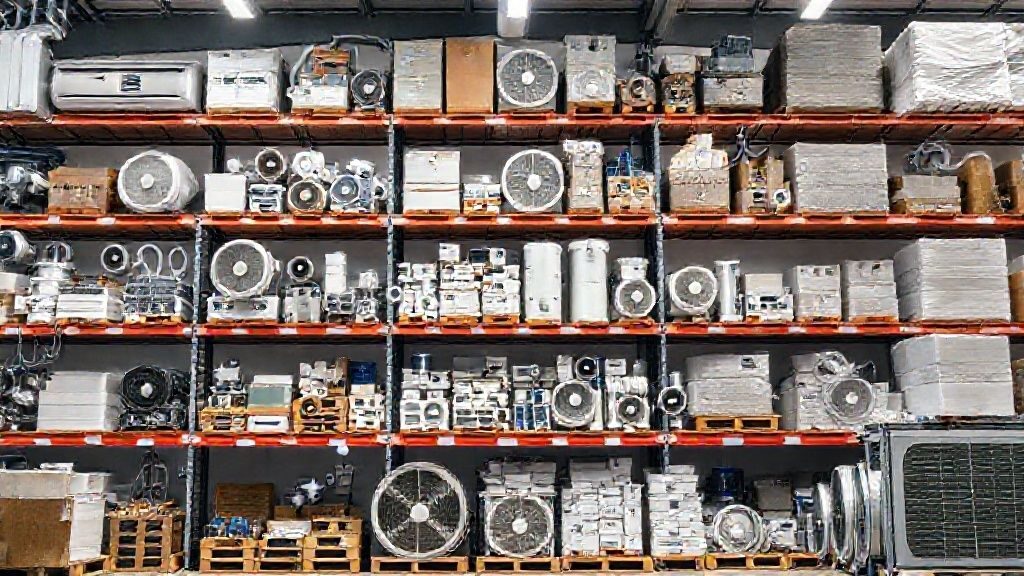
Folks, for decades, I’ve been out in the field, wrenching on units, tracing electrical problems, and figuring out why a house just isn’t cooling right. I’ve seen the evolution of HVAC, from the older, less efficient systems to today’s high-tech, energy-saving marvels. One of the biggest shifts I’ve observed, and one that offers a lot of convenience for homeowners and pros alike, is the move to buying HVAC supplies online. Back in my early days, if you needed a specific part, you drove to a local supplier, hoped they had it in stock, and sometimes waited days for an order. It was just how things were done.
I remember one sweltering summer down in Tampa, Florida, where I had a call for an old split system that was just blowing warm air. The homeowner was sweating bullets, and I needed a specific capacitor to get it back up and running. The local parts house didn’t have it, and ordering it meant at least a 24-hour wait. Nowadays, with online options, I could have cross-referenced the part, found it available from an online vendor, and likely had it shipped overnight, potentially getting that family cool much faster. The internet has really opened up the playing field for getting what you need, when you need it.
Key Highlights
- Broad Selection: Online stores offer a vast array of HVAC parts, tools, and complete systems.
- Competitive Pricing: Often find better deals due to lower overheads and direct-to-consumer models.
- Convenience: Shop from anywhere, at any time, without driving to multiple stores.
- Detailed Information: Access product specifications, reviews, and installation guides easily.
- Fast Delivery: Many online suppliers offer quick shipping options, sometimes even overnight for critical parts.
Why Choose Online HVAC Supply Stores?
When you’re dealing with HVAC, whether it’s a simple filter change or replacing a major component, getting the right parts quickly and efficiently is key. That’s where online HVAC supply stores really shine. The primary reason folks are shifting their purchasing habits is simple: convenience and selection. You aren’t limited by the inventory of a single brick-and-mortar store in your town. Instead, you have access to warehouses across the country, stocking thousands of different parts, tools, and even complete systems.
Think about it. You can be sitting at your kitchen table, diagnosing an issue with your furnace, and then with a few clicks, order the exact thermostat or igniter you need. No driving around, no wasted gas, no dealing with limited business hours. Most reputable online suppliers have detailed product descriptions, often with schematics and compatibility guides, which can be invaluable. This level of information helps ensure you’re getting the correct part the first time around, reducing the hassle of returns and project delays.
Another big factor is pricing. Online retailers often have lower overhead costs compared to traditional storefronts. This can translate into more competitive pricing for you, the consumer. When you’re looking at a significant purchase like a new condenser coil or even a whole new furnace selection, those savings can add up quickly. Plus, with the ability to easily compare prices across different sites, you’re empowered to find the best deal without having to haggle or drive to three different stores.
Finally, there’s the accessibility of specialized items. Local stores might only carry the most common parts for the most popular brands. But what if you have an older system, or a less common brand? Online stores are much more likely to stock those harder-to-find components. This broad reach means less time spent searching and more time spent fixing, which is something every homeowner appreciates, especially when the weather isn’t cooperating.
Essential HVAC Supplies You Can Buy Online
The range of HVAC supplies available online is extensive. It’s not just for contractors; homeowners can find nearly everything they need for maintenance, repairs, or even system upgrades. Let’s break down some of the most common and essential items you’ll find readily available.
Air Filters: This is probably the most frequent purchase for any HVAC system owner. You can find every size and MERV rating imaginable online, from basic pleated filters to high-efficiency HEPA-style filters. Buying in bulk online can often save you money and ensure you always have a fresh filter on hand, which is crucial for air quality and system efficiency.
Thermostats: From simple programmable models to advanced smart thermostats that you can control with your phone, the online marketplace offers a huge variety. Brands like Nest, Ecobee, Honeywell, and others are all available, often with better pricing and more detailed reviews than you might find locally. Selecting the right thermostat can significantly impact your comfort and energy bills.
HVAC Parts: This is where the real depth of online inventory comes into play. You can find specific components like:
- Capacitors: Essential for starting and running motors in your AC unit and furnace.
- Contactors: Electrical switches that power major components like compressors and fan motors.
- Igniters and Flame Sensors: Critical safety and operational parts for gas furnaces.
- Blower Motors and Wheels: Responsible for circulating air throughout your home.
- Relays and Circuit Boards: The brains and switching mechanisms of your system.
- Condensate Pumps and Drain Lines: For managing the water removed from the air by your AC.
- Refrigerant and Charging Hoses: Though handling refrigerant often requires EPA certification, these supplies are available for professionals.
Tools and Equipment: Beyond parts, you can stock up on a wide array of HVAC specific tools. This includes manifold gauges, vacuum pumps, leak detectors, multimeters, specialized wrenches, and safety equipment like gloves and goggles. For more advanced DIYers or professionals, even larger equipment like mini-split systems or packaged units can be purchased and shipped directly.
Ductwork and Venting: Flexible and rigid ducting, registers, grilles, and all the necessary accessories like sealants and tapes are also available. If you’re undertaking a renovation or adding a new room, online suppliers make it easy to get all the components you need for your ventilation system.
The bottom line is that if it’s part of an HVAC system, chances are you can find it online. The convenience of having these items delivered to your doorstep saves time and effort, letting you focus on the task at hand.
Finding Top Brands & Quality Parts Online
When you’re shopping for HVAC supplies, whether it’s a small component or a major piece of equipment, quality matters. You want parts that are reliable, durable, and compatible with your existing system. The good news is that online stores provide access to all the major, trusted brands you’d expect to find, and often at competitive prices.
You’ll regularly see offerings from industry giants like Carrier, Lennox, Trane, Goodman, York, and Rheem. These companies have built their reputations on producing solid, long-lasting equipment, and their parts are engineered to meet specific performance standards. For example, if you’re looking for new equipment, you can often find a wide range of carrier hvac for sale from reputable online distributors. Always aim for OEM (Original Equipment Manufacturer) parts when possible, especially for critical components, as these are designed by the manufacturer of your system and guaranteed to be a perfect fit and function.
However, you’ll also encounter aftermarket parts. These are made by third-party manufacturers and can sometimes be a more budget-friendly option. While many aftermarket parts are perfectly acceptable, especially for more generic components like certain capacitors or relays, it’s crucial to do your homework. Look for brands with good reputations, read reviews, and check warranties. Sometimes, saving a few bucks upfront on a no-name brand can lead to bigger headaches and expenses down the line if the part fails prematurely.
A good online supplier will clearly label whether a part is OEM or aftermarket. They’ll also provide detailed product descriptions, part numbers, and often cross-reference guides to help you ensure compatibility. Don’t be shy about using the search functions and filters on these sites. You can often filter by brand, part type, model number, and even specific specifications like voltage or tonnage. This makes it much easier to narrow down your options and find exactly what you need.
Beyond specific parts, many online stores also offer complete systems. If you’re considering replacing an entire unit, you can research different brands, compare specifications like SEER ratings, and read customer reviews to make an informed decision. The depth of information available online far surpasses what you’d typically get from a single local showroom. Just remember, while buying the equipment online is convenient, installing a full system often requires professional expertise and certification, especially when dealing with refrigerant.
Tips for Selecting the Right HVAC Components
Choosing the correct HVAC components, especially when you’re buying online without a salesperson guiding you, requires a bit of diligence. Getting it wrong can lead to wasted time, money, and frustration. Here are my tried-and-true tips for making sure you select the right parts and equipment every time.
1. Know Your System’s Details: Before you even start browsing, gather all the information about your existing HVAC unit. This means having the manufacturer, model number, and serial number handy. These are usually found on a sticker or plate on the outdoor condenser unit, the indoor furnace, or the air handler. This information is critical for cross-referencing parts and ensuring compatibility. Many online suppliers have “parts lookup” tools where you can input your model number and see a diagram of your system with corresponding part numbers.
2. Understand the Specific Part You Need: If you’re replacing a faulty component, remove the old part if possible and look for any labels, numbers, or specifications printed on it. Capacitors, for example, will have microfarad (MFD) and voltage ratings that must be matched exactly. Blower motors will have horsepower, RPM, voltage, and rotation specifications. Don’t guess; verify these details. Pictures of the old part can also be helpful for comparison with online listings.
3. Sizing is Critical for Major Components: If you’re looking at replacing a compressor, an evaporator coil, or even a whole unit, proper sizing is paramount. An undersized system won’t cool or heat effectively, and an oversized system will cycle too frequently, leading to inefficiency and premature wear. This is a complex calculation that ideally involves a load calculation (like Manual J). For air conditioners, you’ll often see ratings in tons (e.g., 2-ton, 3-ton), which refers to cooling capacity. Also, understanding efficiency ratings like SEER (Seasonal Energy Efficiency Ratio) is important. If you’re unsure how to measure efficiency, a good resource for understanding these metrics is a guide on how to find SEER on AC unit.
4. Read Product Descriptions Carefully: Don’t just look at the picture. Read the full product description, specifications, and compatibility notes. Some parts might look identical but have subtle differences in mounting, wiring, or voltage. Pay attention to any disclaimers about professional installation being required.
5. Check Customer Reviews and Ratings: Other buyers’ experiences can offer valuable insights. Look for reviews that specifically mention compatibility with certain models or ease of installation. Consistent positive reviews are a good sign of a quality product and a reliable seller.
6. Understand Warranty Information: Before you finalize a purchase, know the warranty terms for the part or equipment. What’s covered? How long does it last? What’s the return policy if the part is incorrect or defective? Reputable suppliers will have clear warranty and return policies.
7. When in Doubt, Consult a Pro: While buying online is convenient, diagnosing complex issues and selecting highly technical parts can be tricky. If you’re uncertain, it’s always wise to consult a qualified HVAC technician. They can help you identify the exact problem and the precise part number needed, saving you potential headaches and ensuring your system operates safely and efficiently. If you ever need professional guidance on your existing system or are looking for upgrades, it’s always a good idea to seek out best hvac service providers.
Understanding Shipping and Delivery for HVAC Supplies
One of the biggest advantages of buying HVAC supplies online is getting them delivered right to your door. However, shipping and delivery for HVAC components can vary significantly depending on the size, weight, and urgency of your order. Understanding these nuances will help you manage expectations and choose the best option for your needs.
Standard vs. Expedited Shipping: For smaller, lighter items like air filters, thermostats, or most electrical components, standard ground shipping (usually FedEx, UPS, or USPS) is the most common and cost-effective option. Delivery times typically range from 3 to 7 business days. If you’re in a pinch, most online suppliers offer expedited shipping options like 2-day or overnight delivery, though these come at a higher cost. It’s often worth the extra expense if a critical part is needed to restore heating or cooling, especially during extreme weather.
Freight Shipping for Large Items: This is where things change. If you’re ordering something substantial like a new outdoor condenser unit, an air handler, a packaged unit, or even a large coil, it will likely ship via freight carrier. Freight shipping involves specialized trucks and different delivery procedures. Here’s what to expect:
- Longer Lead Times: Freight shipping typically takes longer than standard parcel services, often 5-10 business days, depending on the distance and the carrier’s route.
- Delivery Appointment: Freight companies usually require a scheduled delivery appointment. They’ll call you to set up a specific date and time window. Make sure someone is available to receive the shipment.
- Curbside Delivery: Most freight deliveries are “curbside,” meaning the driver will bring the item to the edge of your property. They are generally not responsible for moving the item into your garage or home. You’ll need to arrange for your own help or equipment to get the heavy item where it needs to go.
- Inspection is Crucial: This is extremely important. Before signing for any freight delivery, thoroughly inspect the packaging and the item itself for any signs of damage. Look for dents, punctures, or crushed corners. If you see any damage, make a clear note of it on the delivery receipt BEFORE you sign. If the damage is significant, you might even refuse the shipment. Document everything with photos. Once you sign for it without noting damage, it becomes much harder to file a claim.
Shipping Costs: Shipping fees can vary widely. Some online stores offer free shipping on certain orders (often above a specific dollar amount), while others charge based on weight, dimensions, and destination. For freight items, shipping costs can be substantial, so always factor this into your total price comparison. Some companies bundle the shipping cost into the price of the unit, while others list it separately.
Tracking Your Order: Reputable online suppliers will provide tracking information as soon as your order ships. For standard parcels, you’ll get a tracking number you can use on the carrier’s website. For freight, you’ll typically get a PRO number, which is their equivalent for tracking large shipments. Keeping an eye on your tracking is a good habit to manage your project timeline.
Understanding these aspects of shipping will help you plan your HVAC projects more effectively and ensure your supplies arrive safely and on time.
Wholesale HVAC Supplies for Professionals
While this article is geared towards helping homeowners navigate online HVAC purchases, it’s important to touch upon the significant benefits online wholesale suppliers offer to professionals. HVAC contractors, installers, and even property managers are increasingly relying on the internet for their bulk supply needs. The advantages are substantial, making online wholesale a powerful tool for streamlining operations and boosting profitability.
Bulk Pricing and Discounts: The most obvious benefit is access to wholesale pricing. When buying in volume, contractors can secure significantly better rates than individual consumers. Many online wholesale platforms offer tiered pricing, where the per-unit cost decreases as the quantity ordered increases. This directly impacts a contractor’s bottom line, allowing them to offer competitive prices to their clients while maintaining healthy profit margins.
Vast Inventory: Just like with retail online stores, wholesale sites boast an immense inventory. This means contractors can find everything from common consumables like filters, ducts, and copper tubing to specialized tools, diagnostic equipment, and complete air conditioner house unit systems. Having access to such a comprehensive range of products reduces the need to source from multiple vendors, saving time and simplifying procurement.
Convenience and Efficiency: For a busy contractor, time is money. Ordering online eliminates the need to drive to various supply houses, wait in line, and hope the specific part is in stock. Orders can be placed 24/7, from the job site or the office, at any time that’s convenient. This efficiency allows technicians to spend more time on billable work and less time on logistics.
Account Management and Credit Facilities: Many online wholesale suppliers offer dedicated contractor accounts. These accounts often come with features like net 30 or net 60 credit terms, consolidated billing, and access to a purchase history, which simplifies accounting and inventory management. Some even provide dedicated account managers who can assist with large orders or complex product selections.
Direct Shipping to Job Sites: A huge advantage for professionals is the option to have supplies shipped directly to a job site. This saves contractors the hassle of picking up materials and transporting them, especially for large or heavy items. It minimizes staging time and ensures materials are on location when needed, keeping projects on schedule.
Technical Resources and Training: Beyond just selling parts, many wholesale sites offer valuable resources for professionals. This can include technical manuals, installation guides, troubleshooting tips, and even online training modules. Staying up-to-date with the latest equipment and techniques is crucial in the HVAC industry, and these resources are a significant perk.
For professionals looking to optimize their purchasing, leveraging online wholesale platforms is a no-brainer. These sites, such as the resources found at wholesale hvac suppliers, offer a powerful combination of competitive pricing, vast selection, and unmatched convenience, allowing businesses to operate more smoothly and effectively in a demanding industry.
Expert Support & Resources for Your HVAC Needs
Even with the vast selection and detailed information available online, sometimes you just need a little extra help. Maybe you’re stuck between two similar parts, or you need clarification on a technical specification. Reputable online HVAC supply stores understand this, and they often provide excellent support channels and resources to assist you.
Customer Service: Look for online retailers that offer multiple ways to contact customer service. This typically includes phone support, email, and often live chat. A knowledgeable customer service team can help you with everything from confirming part compatibility to tracking an order. When you’re dealing with technical equipment, having direct access to someone who understands the products can be invaluable. Don’t hesitate to use these channels if you have questions before making a purchase. It’s always better to ask than to guess and end up with the wrong part.
Technical Documentation and Guides: Many websites go beyond just selling products. They often host libraries of technical documentation, installation guides, and even troubleshooting manuals. If you’re tackling a DIY repair, these resources can be a lifesaver. You might find wiring diagrams, step-by-step installation instructions for specific components, or explanations of common HVAC issues. Some sites even have video tutorials, which can be incredibly helpful for visual learners.
Blog Posts and Articles: A well-maintained blog section on an HVAC supply website can be a goldmine of information. These articles often cover common maintenance tips, seasonal HVAC advice, explanations of new technologies, and guides on how to choose the right system or component for your home. It’s a great way to educate yourself and become more confident in handling basic HVAC tasks. Regularly checking the blog can keep you informed on industry trends and best practices. If you’re interested in learning more, you might want to read our blog for more insights and tips.
FAQ Sections: Don’t overlook the FAQ (Frequently Asked Questions) section. These are typically compiled from common inquiries customers have, and they can often provide quick answers to your questions about shipping, returns, product warranties, or basic troubleshooting without needing to contact support directly.
Community Forums or Expert Q&A: Some advanced online platforms even offer community forums where you can ask questions and get advice from other DIYers or experienced technicians. While user-generated content should always be approached with a critical eye, these forums can sometimes offer practical, real-world solutions that aren’t found in official documentation.
The key here is to utilize these resources. Don’t feel like you’re alone when buying HVAC supplies online. The best online stores recognize the need for comprehensive support and provide various tools to help you make informed decisions and successfully complete your HVAC projects.
FAQ
Q1: Is it safe to buy HVAC refrigerant online?
A1: While refrigerant is available online, it’s generally restricted to EPA-certified technicians. Federal regulations require a Section 608 certification to purchase and handle most refrigerants. Homeowners should not attempt to buy or add refrigerant themselves, as improper handling can be dangerous and illegal. Always consult a professional for refrigerant-related issues.
Q2: Can I return an HVAC part if it’s the wrong one or defective?
A2: Most reputable online HVAC supply stores have return policies, but they vary. Always check the specific return policy before purchasing. Typically, parts can be returned if they are unused and in original packaging within a certain timeframe. Defective parts are usually covered by a warranty. Be aware that shipping costs for returns might be your responsibility unless the item was sent in error or defective.
Q3: How do I know if an online HVAC supplier is trustworthy?
A3: Look for several indicators: a professional-looking website, clear contact information (phone number, email, physical address), secure payment gateways (HTTPS in the URL), positive customer reviews (on their site and third-party review sites), and transparent shipping and return policies. Established companies with a long history tend to be more reliable.
Q4: Are online HVAC parts cheaper than buying from a local supplier?
A4: Often, yes. Online retailers typically have lower overhead costs, which can translate into more competitive pricing. They also have access to a larger market, fostering greater competition. However, always factor in shipping costs, especially for larger items, which can sometimes negate the initial price savings. For immediate needs or very specific parts, a local supplier might be quicker, even if slightly more expensive.
Q5: Is it okay to install HVAC parts myself if I buy them online?
A5: For simple tasks like changing air filters or replacing a thermostat, absolutely. Many homeowners can also handle basic repairs like replacing capacitors or contactors with the right tools and knowledge. However, for complex repairs involving refrigerant, gas lines, high voltage, or structural modifications, it’s strongly recommended to hire a certified HVAC technician. Safety and proper system operation are paramount.
Final Thoughts
The landscape of HVAC supplies has changed dramatically over the years. What used to require multiple trips to a physical store can now often be accomplished from the comfort of your home with a few clicks. Buying HVAC supplies online offers unparalleled convenience, access to a massive inventory of parts and equipment from top brands, and often more competitive pricing.
Whether you’re a homeowner looking for a new filter or a specific replacement part, or a professional needing bulk supplies, the online marketplace is a powerful resource. Just remember to do your homework: know your system, double-check part numbers and specifications, understand shipping policies, and don’t hesitate to utilize the expert support channels provided by reputable online retailers. With a little diligence, you can confidently navigate the world of online HVAC supplies and keep your systems running smoothly for years to come. It’s a smart way to manage your home’s comfort, and it’s a trend that’s here to stay.