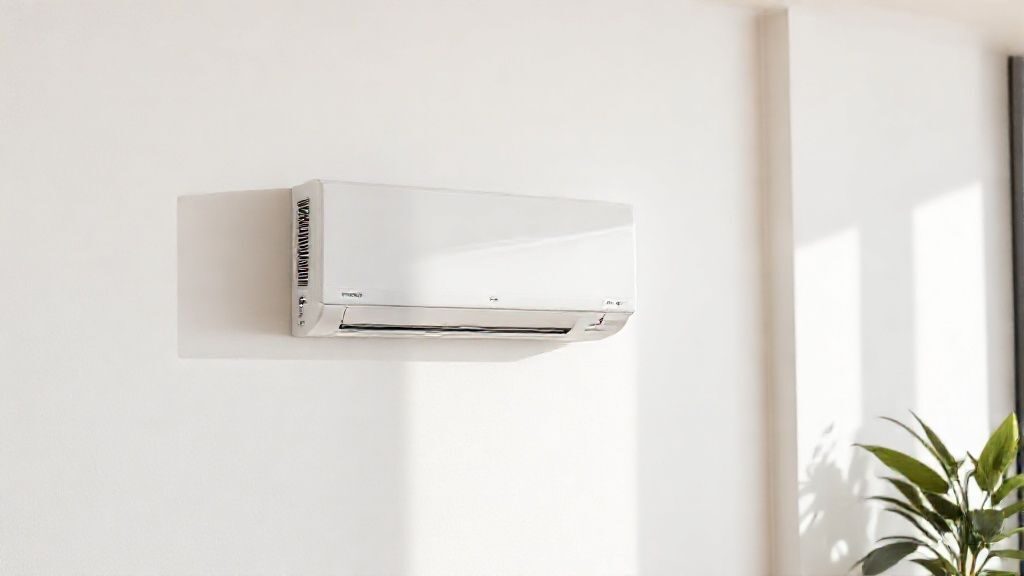
Alright, let’s talk about Mitsubishi mini split air conditioners. I’ve been in the HVAC game for longer than I care to admit, and I’ve seen just about every type of heating and cooling system out there. From the old, clunky window units to the massive commercial systems, I’ve installed them, repaired them, and sometimes, even removed them. One of the biggest changes I’ve witnessed, and for the better, has been the rise of mini split technology, and Mitsubishi has really been a leader in that field. These aren’t just fancy gadgets; they’re solid pieces of engineering that deliver real comfort and efficiency.
I remember a job a few years back in a historic home outside Charleston, South Carolina. The owner wanted air conditioning, but traditional ductwork wasn’t an option without tearing out plaster walls and intricate moldings that were hundreds of years old. A central system would have been a nightmare, not to mention expensive and destructive. We looked at a Mitsubishi multi-zone mini split system. We were able to install individual indoor units discreetly in each room that needed cooling, all connected to a single outdoor condenser. The homeowner got precise temperature control without ruining the historical integrity of his house. It was a perfect fit, and that’s a story I’ve repeated in homes and small businesses across the country, from renovated garages in Phoenix to sunrooms in Seattle.
Key Highlights
- Mitsubishi mini splits offer exceptional energy efficiency, often exceeding traditional central systems.
- They provide precise zone control, allowing you to heat or cool individual rooms or areas independently.
- Installation is typically less invasive and faster than ducted systems, especially for additions or older homes.
- These systems operate very quietly, both indoors and outdoors, enhancing home comfort.
- Mitsubishi offers a wide range of indoor unit styles, including wall-mounted, floor-mounted, and ceiling cassettes, to fit various aesthetics.
- They can provide both heating and cooling, making them a versatile year-round solution.
- Advanced filtration systems improve indoor air quality.
What Are Mitsubishi Mini Split Air Conditioners?
At its core, a mini split system is a heating and cooling solution that doesn’t rely on ductwork. It’s got two main components: an outdoor condenser unit and one or more indoor air-handling units. These two parts are connected by a small conduit that houses the refrigerant line, power cable, and condensate drain. Mitsubishi Electric is a major player here, known for their “Zoned Comfort Solutions” which is a pretty accurate way to describe what these systems do.
Unlike a traditional central air conditioner that cools your whole house whether you’re using every room or not, a mini split lets you target specific areas. This “zone control” is a game-changer for energy efficiency. Imagine you spend most of your time in the living room and bedroom. With a mini split, you can keep those areas perfectly comfortable while letting less-used rooms sit at a slightly warmer or cooler temperature. This isn’t a new concept, but Mitsubishi has refined it to a high degree of performance and reliability. It’s a smart way to manage your home’s climate, and it saves you money on your utility bills.
You’ll find these systems are often called “ductless” systems for obvious reasons. This means no big, bulky ducts running through your attic or crawl space, which often leak air and waste energy. The refrigerant lines that connect the indoor and outdoor units are small, usually requiring just a three-inch hole in the wall. This makes them ideal for additions, converted attics or basements, or older homes that were never built with ductwork in mind. They’re also a popular choice for homes where one part of the house gets significantly more sun exposure than another, leading to hot spots a central system might struggle to even out.
Key Benefits of Mitsubishi Mini Split Systems
Let’s get down to why folks choose Mitsubishi mini splits. There are several solid reasons, and they usually boil down to comfort, efficiency, and flexibility.
Unmatched Energy Efficiency
This is often the first thing homeowners notice. Mitsubishi mini splits use inverter technology. What does that mean in plain English? It means the compressor can vary its speed to match the exact heating or cooling load. Instead of constantly turning on and off at full blast like older systems, it continuously adjusts, maintaining a steady temperature. This avoids energy-intensive start-up cycles and keeps the system running at its most efficient point. We’re talking about SEER ratings that often go well into the 20s and even 30s, far outperforming many conventional systems. Over the lifespan of the unit, those savings add up significantly.
Precise Zone Control
As I mentioned, zoning is a huge benefit. With a multi-zone system, you can have multiple indoor units, each with its own thermostat, connected to a single outdoor unit. This means your bedroom can be at one temperature, the living room another, and maybe an office at a third. This eliminates wasted energy spent heating or cooling unoccupied rooms. It also addresses hot and cold spots common in homes with central systems, leading to a much more even and comfortable environment throughout your living space. For example, if you have a sunroom, you can crank down the AC there without freezing out the rest of the house. It’s smart comfort.
Quiet Operation
Nobody wants an HVAC system that sounds like a jet engine taking off. Mitsubishi units are known for their quiet operation. The indoor units run at whisper-quiet levels, often around 19-26 decibels, which is quieter than a library. The outdoor units are also designed to be unobtrusive, making them a good neighbor. This is a big deal, especially if you live in a quiet neighborhood or have the outdoor unit near a patio or bedroom window.
Flexible Installation
The ductless nature makes installation incredibly versatile. You don’t need extensive renovations. A small opening in the wall for the conduit is all that’s typically required. This makes them perfect for:
- Additions, sunrooms, and garages converted into living spaces.
- Older homes without existing ductwork.
- Basement finishing projects.
- Areas where a central system struggles, like a particularly sunny room or an upstairs bedroom.
- Small commercial spaces or offices that need localized climate control.
Improved Indoor Air Quality
Many Mitsubishi mini split models come with advanced multi-stage filtration systems. These filters can capture dust, allergens, viruses, and bacteria, improving the air you breathe. Some even have deodorizing filters. Plus, without ductwork, you avoid the common issue of dust, mold, and allergens accumulating in ducts and then being circulated throughout your home. This is a big plus for anyone with allergies or respiratory sensitivities.
Types of Mitsubishi Mini Split Units & Configurations
Mitsubishi offers a variety of indoor units and system configurations to suit just about any space and aesthetic. It’s not a one-size-fits-all situation, which is a good thing.
Single-Zone vs. Multi-Zone Systems
- Single-Zone: This setup involves one outdoor unit connected to one indoor unit. It’s perfect for conditioning a single room, a small apartment, an office, or a new addition. It’s the simplest and often the most cost-effective option for a dedicated space.
- Multi-Zone: Here, one outdoor unit can connect to two or more (up to eight, depending on the model) indoor units. This is where the zone control really shines. Each indoor unit operates independently, allowing for different temperatures in different rooms. This is what we used in that historic home in Charleston.
Indoor Unit Styles
The beauty of Mitsubishi is the range of options you have for how the indoor unit looks and where it’s placed:
- Wall-Mounted Units: These are the most common and recognizable type. They mount high on a wall, out of the way, and come in various sizes and sleek designs to blend with your decor. They distribute air efficiently from above.
- Floor-Mounted Units: If wall space is limited, or if you prefer a unit closer to the floor (mimicking a radiator), these are a great option. They’re often placed against a wall, blending in more subtly than a wall-mounted unit might in some settings.
- Ceiling Cassettes: These units are installed flush with your ceiling, offering a very discreet look. Only a decorative grille is visible. They distribute air in multiple directions, providing even comfort, and are a popular choice in commercial settings or open living spaces.
- Ducted Mini Splits (Compact Ducted/Horizontal-Ducted): While primarily known as “ductless,” Mitsubishi also offers compact ducted indoor units. These are installed in an attic, ceiling cavity, or crawl space and connect to very short runs of ductwork to serve one or two rooms. This offers a nearly invisible solution while still benefiting from the mini split technology. They’re excellent for maintaining a clean aesthetic or for providing conditioned air to a few adjacent rooms from a single hidden unit.
- Multi-Position Air Handlers: For those who want the efficiency of a mini split but prefer a traditional ducted system feel, Mitsubishi offers air handlers that can be connected to standard ductwork. This allows a single outdoor mini split unit to serve an entire home through a conventional duct system, combining inverter technology efficiency with whole-house distribution.
The flexibility in unit types means you can find a Mitsubishi solution that not only performs well but also fits the architectural and aesthetic requirements of your home or business.
Mitsubishi Mini Split Installation Process Explained
Installing a Mitsubishi mini split system is usually a less invasive process than putting in a full central ducted system, but it still requires a professional touch. It’s not a DIY job if you want it done right and want to maintain your warranty.
Initial Assessment and Sizing
The first step is a thorough assessment of your space. We look at square footage, ceiling height, insulation levels, window types, sun exposure, and even the number of occupants. Proper sizing is critical. An undersized unit won’t keep you comfortable on the hottest or coldest days, and an oversized unit will short-cycle, wasting energy and potentially leading to humidity problems. We use industry-standard calculations to determine the exact heating and cooling load for each zone you want to condition.
Outdoor Unit Placement
The outdoor condenser unit needs to be placed on a solid, level pad, typically within 50-75 feet of the indoor units. We always consider factors like noise (though they are quiet), aesthetics, and accessibility for maintenance. It needs good airflow around it, so we avoid placing it in cramped spaces or too close to shrubs or fences. Proper clearance is important for efficient operation and future servicing.
Indoor Unit Placement
This is where the flexibility comes in. We’ll discuss with you the best location for each indoor unit, considering factors like airflow patterns, proximity to electrical outlets, and minimizing the length of the refrigerant lines. The goal is to maximize comfort and efficiency while making the unit as unobtrusive as possible.
Connecting the Units
Once placements are decided, a small hole (typically 2.5 to 3 inches in diameter) is drilled through the wall to connect the indoor and outdoor units. Through this hole, we run the copper refrigerant lines, a condensate drain line (to remove moisture), and the electrical communication cable. The lines are usually covered by a plastic conduit or “line-hide” to protect them and maintain a neat appearance on the exterior of your home. This is much less disruptive than installing large ductwork, which often requires significant construction or renovation.
Electrical Work
A dedicated electrical circuit is usually required for the outdoor unit, and sometimes for the indoor units as well, depending on the system configuration. This ensures the system receives stable power and operates safely. This is definitely a job for a licensed electrician, which is part of our professional installation service. If you’re comparing costs, be sure to ask about the electrical requirements, as this can be a hidden cost with some installers. Speaking of costs, understanding things like the cost of 2.5 ton trane heat pump will help you put mini split pricing in perspective, as mini splits often represent a different type of investment with different benefits.
Vacuum and Charge
Before the system is started, the refrigerant lines are thoroughly evacuated using a vacuum pump. This removes all air and moisture from the lines, which is absolutely critical for the system’s longevity and efficiency. Then, the system is charged with the correct amount of refrigerant. This is a precise step that skilled technicians perform using specialized gauges and scales.
Testing and Commissioning
Finally, we power up the system and test all functions—heating, cooling, fan speeds, thermostat controls—to ensure everything is operating correctly and efficiently. We’ll show you how to use your new remote control or smart thermostat and answer any questions you have. A proper start-up ensures the system is ready to provide years of reliable comfort.
Maintenance Tips for Your Mitsubishi Mini Split
Like any high-performance machine, your Mitsubishi mini split needs regular maintenance to keep running smoothly and efficiently. The good news is that much of it is simple and can be done by you.
Clean or Replace Air Filters Regularly
This is the most important maintenance task. The indoor units have reusable filters that need cleaning every 2-4 weeks, especially during peak use seasons. Just slide them out, wash them with warm, soapy water, let them dry completely, and slide them back in. Dirty filters restrict airflow, make the unit work harder, reduce efficiency, and can even freeze up the coil. Mitsubishi filters are generally very easy to access and clean.
Keep Outdoor Unit Clear
The outdoor condenser needs good airflow to dissipate heat. Make sure it’s free of leaves, grass clippings, dirt, and any other debris. Trim back any shrubs or plants that are growing too close. In winter, clear snow and ice from around the unit. A good rule of thumb is to maintain at least 18-24 inches of clear space around the unit on all sides.
Inspect and Clean Coils
Every few months, or at least annually, check the indoor unit’s evaporator coil for dirt and dust buildup. If it looks dirty, you can often gently brush it clean or use a specialized coil cleaner. For the outdoor coil, a hose can be used to gently rinse dirt off the fins, ensuring you don’t bend them. For a deeper clean, especially on the outdoor unit, consider professional help, as bent fins can reduce efficiency.
Check the Condensate Drain Line
The drain line removes moisture from the indoor unit. If it gets clogged with algae or debris, water can back up and cause leaks. Periodically check that water is draining freely from the outdoor end of the line. If you notice any pooling around the indoor unit or a musty smell, it might be clogged. You can sometimes flush it with a vinegar solution, but if persistent, call a professional.
Professional Tune-Up
Even with your regular upkeep, I always recommend an annual professional tune-up. A technician will check refrigerant levels, electrical connections, fan motors, and overall system performance. They’ll also perform a deeper cleaning of coils and other components that you can’t easily access. This proactive approach catches small issues before they become big, expensive problems and ensures your system maintains its high efficiency. Think of it like getting the oil changed in your car—it just extends the life and performance of your investment.
Understanding Mitsubishi Mini Split Costs & ROI
Let’s talk money, because that’s always a big part of the decision. The initial investment in a Mitsubishi mini split system can be higher than a traditional window unit or even some basic central air conditioners, but the return on investment (ROI) often makes it a very smart choice in the long run.
Initial Installation Costs
The price for a Mitsubishi mini split system varies widely based on several factors:
- System Type: A single-zone system for one room will be significantly less expensive than a multi-zone system with three or four indoor units.
- Unit Capacity (BTUs): Larger units designed for bigger spaces or higher loads naturally cost more.
- Indoor Unit Style: Wall-mounted units are generally the most affordable. Ceiling cassettes or ducted units can increase costs due to more complex installation.
- Installation Complexity: Factors like the length of refrigerant lines, the need for extensive electrical upgrades, difficulty of access, or specific aesthetic requirements can all influence labor costs.
- Geographic Location: Labor rates vary across the country.
Roughly, a single-zone installed system might range from $3,000 to $6,000, while a multi-zone system with multiple indoor units could easily go from $7,000 to $15,000 or more, depending on the number of zones and complexity. It’s always best to get a detailed quote tailored to your specific needs. When considering installation options, also consider how compact these systems are. For comparison, you might also look at information regarding furnace closet size to understand the space savings inherent in ductless systems.
Energy Savings
This is where the ROI really shines. Mitsubishi mini splits are incredibly energy efficient. Their high SEER (Seasonal Energy Efficiency Ratio) and HSPF (Heating Seasonal Performance Factor) ratings mean they use less electricity to achieve the same level of comfort. Because you can cool or heat only the zones you’re using, you’re not wasting energy on unoccupied rooms. Many homeowners report significant reductions in their monthly utility bills—sometimes 30% or more—after switching from older, less efficient systems or even central AC in certain scenarios. These savings accumulate year after year, eventually offsetting the initial investment.
Rebates and Incentives
Don’t forget to check for local, state, and federal rebates or tax credits. Many utility companies and government programs offer incentives for installing high-efficiency HVAC systems like Mitsubishi mini splits. These can sometimes knock a substantial amount off the upfront cost, making the investment even more appealing. Your HVAC contractor should be able to help you identify applicable programs in your area.
Increased Home Value
A modern, efficient, and comfortable HVAC system can add value to your home. Potential buyers often see high-efficiency mini splits as a desirable feature, especially given rising energy costs. It’s an upgrade that pays dividends in both comfort and marketability.
Long-Term Reliability and Warranty
Mitsubishi is known for building robust and reliable equipment. When properly installed and maintained, these systems are built to last. They typically come with solid warranties on parts and compressors, giving you peace of mind. A system that lasts longer and breaks down less frequently also contributes to a better long-term ROI.
Why Choose Mitsubishi for Your HVAC Needs?
There are many brands out there, so why do I often recommend Mitsubishi? It comes down to a few key factors that have proven themselves out in the field over years.
Industry Leader and Innovation
Mitsubishi Electric is not just another HVAC company; they’ve been at the forefront of ductless technology for decades. They consistently innovate, pushing the boundaries of efficiency, quiet operation, and smart controls. When you choose Mitsubishi, you’re often getting technology that others are still trying to catch up with. They invest heavily in R&D, and it shows in their product performance.
Proven Reliability and Durability
From my experience, Mitsubishi units are built tough. They’re engineered to withstand various climates and provide consistent performance for many years. When installed correctly and maintained, their equipment holds up very well. This reliability means fewer service calls and a longer lifespan for your investment. That’s a big deal for homeowners; nobody wants to deal with constant breakdowns.
Superior Comfort
Their inverter technology, which allows the compressor to modulate its speed, doesn’t just save energy; it also provides superior comfort. Instead of blasts of cold or hot air, you get a continuous, even temperature with minimal fluctuations. This also helps in better humidity control during cooling cycles, making your home feel more comfortable even at higher temperatures. Their multi-vane airflow systems also ensure even distribution throughout the room.
Extensive Product Line
As we discussed earlier, Mitsubishi offers a massive range of indoor unit styles and system configurations. Whether you need a simple wall-mounted unit for a single room, a discreet ceiling cassette for an open-concept living area, or a multi-zone system for an entire home, they have a solution. This flexibility ensures you don’t have to compromise on aesthetics or functionality.
Environmental Responsibility
Mitsubishi is committed to sustainability. Their systems use R410A refrigerant, which has zero ozone depletion potential. Their high efficiency also means a reduced carbon footprint due to lower energy consumption. For those looking to make environmentally conscious choices, Mitsubishi is a strong contender.
Ultimately, choosing Mitsubishi for your HVAC needs means investing in a high-quality, efficient, and reliable system backed by a company with a long-standing reputation for excellence. It’s an investment in comfort and peace of mind. For those curious about other options and general HVAC services, you might want to learn more about how to find the best hvac providers in your area.
Frequently Asked Questions About Mitsubishi Mini Splits
Q: How long do Mitsubishi mini split systems typically last?
A: With proper installation and regular maintenance, you can expect a Mitsubishi mini split system to last 15 to 20 years, and sometimes even longer. The key is that professional installation and consistent filter cleaning, along with annual check-ups, really extend the life of the unit.
Q: Are mini splits good for heating in cold climates?
A: Yes, absolutely. Mitsubishi offers “Hyper-Heating INVERTER®” (H2i®) models specifically designed for very cold climates. These units can provide 100% heating capacity down to 5°F (-15°C) and can operate effectively in temperatures as low as -13°F (-25°C), or even lower for some models. They are highly efficient heat pumps, which means they move heat rather than generate it, making them very cost-effective even when it’s freezing outside. While a conventional furnace might still be necessary for extreme emergencies or if you’re considering a whole-home solution, these systems are robust for most cold-weather heating needs.
Q: Can I install a Mitsubishi mini split myself?
A: I strongly advise against it. While “DIY kits” exist for some brands, Mitsubishi Electric systems require specialized tools, knowledge of refrigerant handling, and electrical expertise for proper installation. Incorrect installation can lead to refrigerant leaks, electrical hazards, poor performance, reduced efficiency, and it will void your warranty. Always use a certified, professional installer to ensure safety, performance, and warranty validity. You wouldn’t try to install a propane air conditioner rv system without professional help, and it’s the same for a mini split.
Q: Do mini splits improve air quality?
A: Yes, many Mitsubishi mini split indoor units come equipped with advanced filtration systems that can capture dust, allergens, pollen, bacteria, and even some viruses. Some models include deodorizing filters. Also, because there’s no ductwork, you eliminate the common issue of dust and contaminants accumulating in ducts and then being recirculated throughout your home.
Q: What is the warranty on Mitsubishi mini splits?
A: Mitsubishi Electric offers competitive warranties. Typically, you’ll find a 5-year limited warranty on parts and a 7-year limited warranty on the compressor when purchased from an authorized dealer. However, if installed by a Mitsubishi Electric Diamond Contractor, the warranty can often be extended to 10 years or even 12 years on parts and the compressor, which is a significant benefit and another reason to choose a qualified professional for installation.
Q: How often do I need to clean the filters?
A: It’s recommended to clean the reusable air filters in your indoor unit every 2 to 4 weeks, especially during periods of heavy use. This frequency can vary depending on factors like pets, allergies, and overall dust levels in your home. A clean filter is crucial for maintaining efficiency and good airflow.
Get a Quote for Your Mitsubishi Mini Split System
Choosing the right HVAC system is a big decision, and it’s one that affects your comfort and your wallet for years to come. While I’ve laid out a lot of information here about Mitsubishi mini splits, the best next step is always to get a personalized assessment and quote for your specific situation. Every home and every family’s needs are different. What works perfectly for one person might not be the ideal solution for another.
A professional HVAC technician can evaluate your home’s layout, insulation, and your heating and cooling requirements. They can help you determine the right size, configuration (single-zone or multi-zone), and type of indoor units that will provide the most efficient and comfortable solution for you. They can also explain any available rebates or financing options that might make your investment even more manageable.
Don’t hesitate to reach out to a trusted professional. A good contractor won’t just give you a number; they’ll explain the options, walk you through the process, and help you understand exactly what you’re getting. Making an informed decision is key to long-term satisfaction with your HVAC system. To start that conversation and get a tailored solution, I recommend you contact us for a quote. It’s an investment in your home’s comfort and efficiency, and it’s worth doing right.
Final Thoughts
Having spent decades in this business, I’ve seen a lot of trends come and go. But Mitsubishi mini split air conditioners aren’t a trend; they’re a solid, proven technology that continues to evolve and improve. Their ability to deliver precise comfort, exceptional efficiency, and flexible installation options makes them a standout choice for many homeowners and small businesses today.
Whether you’re looking to cool a new addition, enhance comfort in a specific room, or find an alternative to traditional ducted systems, a Mitsubishi mini split deserves your serious consideration. They represent a significant leap forward in home comfort technology, offering solutions that were simply not practical or possible with older systems. Take the time to understand your needs, get a professional assessment, and make an informed decision. You’ll be glad you did.