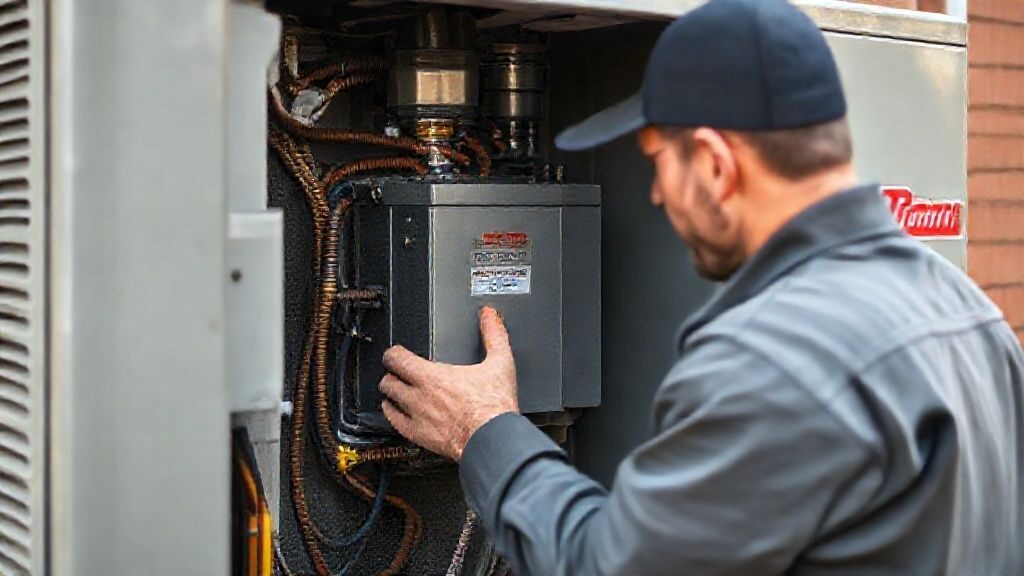
As an HVAC technician with decades under my belt, I’ve seen just about every AC problem imaginable. One of the most common, and often misunderstood, issues I come across involves the AC capacitor, especially in Trane units. Homeowners often panic, thinking their entire system is shot when it’s really a relatively small, yet critical, component that’s failed. It’s like a car that won’t start; sometimes it’s the engine, but often it’s just a dead battery. With ACs, that “battery” is frequently the capacitor.
I remember a call last summer from a homeowner in Tampa, Florida. It was a scorching 95-degree day, and their Trane unit had completely stopped blowing cold air. The outdoor unit was silent. They were convinced it was a compressor failure, looking at a huge repair bill or even a full system replacement. After a quick check, I found the fan blades could be spun easily by hand, and the compressor hummed, but didn’t start. A bulging capacitor confirmed my suspicion. Thirty minutes later, with a new capacitor installed, their Trane was purring and cooling their home again, saving them a significant amount of money and a lot of unnecessary worry. Understanding your Trane AC capacitor is key to diagnosing problems quickly and making informed decisions about repairs.
Key Highlights
- A Trane AC capacitor is vital for starting and running your unit’s fan and compressor motors.
- Common signs of failure include the unit not starting, humming noises, clicking sounds, or weak airflow.
- Diagnosing a bad capacitor involves visual inspection and, for the technically inclined, using a multimeter, but always prioritize safety.
- While DIY replacement is possible, dealing with high voltage makes professional service a safer and often more reliable option.
- Replacement costs vary, but typically range from $100 to $400, depending on the capacitor type and labor.
- Regular maintenance helps extend the life of your capacitor and your entire Trane AC system.
- Matching the exact microfarad (uF) and voltage (VAC) ratings is crucial when finding a replacement.
What is an AC Capacitor and Why is it Important?
Let’s get down to basics. Think of an AC capacitor as an energy storage device, a bit like a temporary battery. Your Trane air conditioner has two main motors: one for the outdoor fan and one for the compressor. These motors need a significant jolt of electricity to get them going, much more than the steady supply they receive once they’re running. That initial surge of power is provided by the capacitor.
Specifically, most modern Trane units, especially those that cool a small house ac unit, utilize what’s called a dual-run capacitor. This single component has three terminals and serves both the outdoor fan motor and the compressor motor. It gives them the necessary boost to start and then helps maintain a consistent electrical flow to keep them running efficiently. Some older or simpler units might have separate start capacitors (for the initial jolt) and run capacitors (for continuous operation). The start capacitor provides a very high initial boost and then disconnects, while the run capacitor stays in the circuit to help regulate the motor’s power consumption.
Without a properly functioning capacitor, your Trane AC unit simply won’t work right. The motors won’t have the power to start or maintain their speed, leading to various operational issues, from complete shutdown to reduced cooling capacity. It’s a small part, but it performs a big job in the overall efficiency and function of your air conditioning system. Even a perfectly sized system, expertly installed after a careful assessment of how to calculate ac size for your home, will falter if this tiny component fails.
Common Signs of a Failing Trane AC Capacitor
Recognizing the symptoms of a failing capacitor can save you time and money. Here’s what I’ve seen consistently in the field:
1. The Unit Won’t Start or Cycles Improperly
This is the most obvious sign. You turn on your AC, and nothing happens. Or, you might hear the indoor fan blowing, but the outdoor unit remains silent. If you go outside, you might hear a low hum from the outdoor unit, indicating the compressor or fan motor is trying to start but can’t get the necessary boost from the capacitor. Sometimes, the unit will try to start, fail, and then try again after a few minutes, leading to short cycling. If your Trane is attempting to start, but the fan blades aren’t spinning, or the compressor isn’t engaged, a weak capacitor is often the culprit.
2. Humming or Clicking Sounds from the Outdoor Unit
When a capacitor starts to go bad, it can’t deliver the full power needed. You’ll often hear the motor trying to draw power, resulting in a distinct humming sound. This humming is the motor struggling against insufficient power. If it’s the start capacitor that’s failing, you might also hear a clicking sound as the relay tries repeatedly to engage the motor but can’t sustain it.
3. The Outdoor Fan Runs, But the Compressor Doesn’t (or Vice Versa)
Because many Trane units use a dual-run capacitor, one part of it might fail while the other still works. This means you might see the outdoor fan spinning, but the air coming from your vents is not cold because the compressor isn’t running. Or, less commonly, the compressor might try to run, but the outdoor fan doesn’t spin, leading to the unit overheating quickly. This is a tell-tale sign that one section of a dual capacitor has failed.
4. Weak Airflow or Warm Air From Vents
If the fan motor’s capacitor is failing, the fan might still run, but at a reduced speed. This leads to weaker airflow and less efficient heat exchange. If the compressor’s capacitor is failing, the compressor might not run at all, meaning the refrigerant isn’t being circulated, and you’ll get warm air. Even if it’s struggling to run, it won’t be cooling effectively.
5. Higher Energy Bills
A struggling capacitor means your Trane AC motors are working harder and longer to achieve the desired cooling. This inefficiency directly translates to higher energy consumption and, consequently, increased electricity bills. If your bills have mysteriously jumped without a change in usage patterns, a failing capacitor could be contributing to the problem.
How to Diagnose a Faulty Trane AC Capacitor
Diagnosing a faulty capacitor can be straightforward, but it requires caution. You are dealing with electricity, sometimes high voltage, so safety is paramount. Always, and I mean always, turn off the power to your outdoor unit at the breaker box before you touch anything. Don’t just rely on the thermostat or the service disconnect switch near the unit; go to the main breaker for your home to ensure no power can reach the unit.
1. Visual Inspection
Once the power is off and you’ve waited a few minutes for any residual charge to dissipate, locate the capacitor. It’s usually a cylindrical component found inside the control panel of your outdoor unit. It might be black, silver, or another color. Look for obvious signs of failure:
- Bulging or Swelling: The top or sides of the capacitor might appear domed, swollen, or bulging. This is a strong indicator of internal failure.
- Leaking Oil or Residue: Capacitors contain a dielectric fluid. If you see any oily residue or a brown discharge around the terminals or on the body, it’s leaking and has failed.
- Burn Marks: Any scorch marks or discoloration around the terminals or on the capacitor’s body can indicate overheating and failure.
If you see any of these visual cues, the capacitor is likely bad and needs replacement.
2. Using a Multimeter (for Experienced Individuals)
If there are no visual signs, but you suspect the capacitor, you can test it with a multimeter that has a capacitance (uF) setting. This step involves handling charged components, so if you are not experienced with electrical work and multimeters, do not attempt this. Call a professional.
- Turn off Power: Again, kill the main power to the unit at the breaker.
- Discharge the Capacitor: Capacitors can hold a lethal charge even after power is off. Use an insulated screwdriver with a plastic or rubber handle to short out the terminals. Be careful not to touch the metal blade of the screwdriver. Touch the metal shaft between the common and fan terminals, and then between the common and herm (compressor) terminals for a dual capacitor. You might see a spark; this is normal as the capacitor discharges.
- Disconnect Wires: Carefully note which wire goes to which terminal (Herm, Fan, Common) before disconnecting them. Taking a photo with your phone can be very helpful.
- Measure Capacitance: Set your multimeter to the capacitance (uF) setting. Touch the probes to the appropriate terminals (e.g., Herm and Common, then Fan and Common for a dual capacitor).
- Check Readings: Compare the reading on your multimeter to the microfarad (uF) rating printed on the capacitor label. A healthy capacitor should read within +/- 5% of its rated value. If it’s significantly lower, shows an open circuit, or gives erratic readings, it’s bad.
Even if you’re comfortable with a multimeter, remember that this is a high-voltage component, and a mistake can be dangerous. When in doubt, call a professional. For more general advice on HVAC systems, you can always read our blog for insights.
Trane AC Capacitor Replacement: DIY vs. Professional Service
The question of whether to replace a Trane AC capacitor yourself or hire a professional comes down to several factors: your comfort with electrical work, your understanding of safety protocols, and the potential risks involved.
DIY Replacement: What to Consider
If you have experience with electrical components, understand how to safely discharge a capacitor, and are meticulous about matching replacement parts, a DIY replacement is technically feasible. The steps generally involve:
- Cutting power at the main breaker.
- Locating and visually inspecting the capacitor.
- Safely discharging the capacitor using an insulated tool.
- Disconnecting and labeling the old capacitor’s wires.
- Removing the old capacitor.
- Installing the new capacitor, ensuring correct terminal connections.
- Securing the new capacitor and replacing the access panel.
- Restoring power and testing the unit.
The primary advantage of DIY is cost savings. A capacitor itself is relatively inexpensive. However, the risks are significant. Capacitors can store a charge that is powerful enough to cause severe injury or even death. Incorrect wiring can damage your unit’s fan motor or compressor, leading to far more expensive repairs than the initial capacitor replacement. Also, if the capacitor wasn’t the sole problem, you might still be without AC and have to call a professional anyway.
Professional Service: The Safer Choice
For most homeowners, I strongly recommend calling a qualified HVAC technician. Here’s why:
- Safety: Professionals are trained to handle high-voltage components safely, reducing the risk of electric shock.
- Expertise: They can accurately diagnose whether the capacitor is truly the problem or if another underlying issue is causing the symptoms. They also know how to properly size and install the correct replacement.
- Proper Discharge: They have the right tools and knowledge to safely discharge the capacitor before removal.
- Warranty and Guarantee: Professional work often comes with a warranty on parts and labor, providing peace of mind.
- Comprehensive Check: While on site, a technician can perform a quick general inspection of your Trane unit, potentially identifying other minor issues before they become major problems.
While DIY might seem appealing, the potential dangers and the complexity of correctly diagnosing and repairing HVAC electrical components make professional service the prudent choice for the vast majority of homeowners. If you’re looking for professional service or to simply contact us for a quote, we’re always ready to help.
How Much Does a Trane AC Capacitor Replacement Cost?
The cost to replace a Trane AC capacitor can vary. It primarily breaks down into two components: the cost of the part itself and the labor involved for a professional technician.
Cost of the Part
The capacitor itself is generally inexpensive. Depending on the type (single or dual run), brand, and microfarad/voltage ratings, you might expect to pay:
- Standard Run Capacitors: These typically range from $10 to $30.
- Dual-Run Capacitors: More common in Trane units, these usually cost between $15 and $60.
- Specialty or OEM Trane Capacitors: Some specific Trane models might require proprietary capacitors, which could push the part cost up to $50-$100, though this is less common for standard run capacitors.
It’s important to remember that purchasing from an HVAC supply house or directly from a distributor might be cheaper than buying a marked-up part from a retail store or having a technician supply it as part of their service.
Labor Costs
This is where the bulk of the cost comes in when hiring a professional. HVAC technicians charge for their expertise, time, and the liabilities involved in working with high-voltage equipment. Labor costs can vary significantly based on:
- Geographic Location: Services in urban, high cost-of-living areas typically cost more than in rural areas.
- Time of Service: Emergency service calls (evenings, weekends, holidays) will almost always be more expensive than routine weekday appointments.
- Company Rates: Different HVAC companies have different overheads and pricing structures.
- Diagnostic Time: If the technician needs to spend extra time diagnosing the issue, this will add to the overall labor cost.
On average, for a professional to diagnose and replace a Trane AC capacitor, you can expect to pay anywhere from $100 to $400 in total. This range includes the part and labor. In some cases, if the service call includes other preventative maintenance or diagnostic checks, the total might be slightly higher, but for a straightforward capacitor replacement, this range is a good estimate.
Factors Influencing Cost
- Emergency Service: Expect to pay a premium of $50-$150 or more for after-hours or weekend service.
- Warranty: If your Trane unit is still under warranty, the part itself might be covered, but you would still be responsible for labor costs. Always check your warranty terms.
- Additional Repairs: Sometimes, a failing capacitor can be a symptom of a larger electrical problem, or it might have damaged other components like the fan motor if left unchecked. These additional repairs would increase the overall cost.
While $100-$400 might seem like a lot for a small part, it’s a worthwhile investment for safety, proper diagnosis, and ensuring your Trane AC runs efficiently, preventing more costly damage down the line. It’s also significantly less than replacing a compressor or a full outdoor heat pump unit, which can run into thousands of dollars.
Maintaining Your Trane AC System for Optimal Performance
Keeping your Trane AC system in good shape isn’t just about avoiding costly repairs; it’s about ensuring it runs efficiently, extends its lifespan, and provides consistent comfort. While a capacitor is a small part, it’s connected to the overall health of your unit.
1. Regular Professional Tune-Ups
This is probably the most important step. I recommend getting your Trane AC system professionally serviced at least once a year, preferably in the spring before the cooling season really kicks in. During a tune-up, a technician will:
- Clean Coils: Dirty evaporator and condenser coils reduce efficiency and make your unit work harder, stressing components like the capacitor.
- Check Refrigerant Levels: Incorrect refrigerant levels also force the compressor to work harder.
- Inspect Electrical Connections: Loose or corroded connections can cause power fluctuations, which can damage capacitors and motors.
- Test Capacitor: A good technician will test the capacitance as part of their routine check, catching a weak capacitor before it completely fails.
- Lubricate Moving Parts: Reduces friction and wear on motors.
- Check Airflow: Ensure your system is moving air properly throughout your home.
Regular maintenance can identify a failing capacitor before it leaves you without AC on the hottest day of the year. It also helps improve the overall efficiency of your unit, which can lower your energy bills.
2. Keep the Outdoor Unit Clean
Your Trane outdoor unit, often housing components of an outdoor heat pump unit, needs airflow to dissipate heat. Make sure it’s free from obstructions. Trim back shrubs, weeds, and grass at least two feet in all directions. Remove any leaves, dirt, or debris that accumulates on or around the unit. A gentle spray with a garden hose can help keep the condenser coils clean, improving heat transfer and reducing strain on the compressor.
3. Change Air Filters Regularly
This is a simple DIY task that often gets overlooked. A clogged air filter restricts airflow to your indoor unit. This makes your entire system work harder, straining the blower motor and potentially leading to freezing of the evaporator coil. Check your filter monthly and replace it every 1-3 months, or more frequently if you have pets or allergies.
4. Ensure Proper Thermostat Settings
Avoid constantly fiddling with your thermostat. Setting it to a comfortable temperature and leaving it there, or using a programmable thermostat to manage temperatures when you’re away, prevents the system from constant starts and stops, which can put extra stress on the capacitor.
5. Address Issues Promptly
Don’t ignore warning signs like strange noises, reduced cooling, or units struggling to start. The sooner you address an issue, the less likely it is to escalate into a more severe and expensive repair. A hum from the outdoor unit, for instance, might just be a capacitor starting to fail, which is a relatively cheap fix now, but could lead to a burned-out compressor if ignored, which is a very expensive fix.
Finding the Right Trane AC Capacitor for Your Unit
If you or your technician are replacing a Trane AC capacitor, ensuring you have the correct replacement part is absolutely critical. Using the wrong capacitor can lead to further damage, inefficient operation, or even a fire hazard.
1. Match the Microfarad (uF) Rating
This is the most important specification. The microfarad rating (often written as MFD or µF) indicates the capacitor’s storage capacity. You will find this number printed on the side of the existing capacitor. For example, it might say “40/5 uF” for a dual-run capacitor. The first number (40 uF) is for the compressor (HERM terminal), and the second number (5 uF) is for the fan motor (FAN terminal). A single-run capacitor would just have one uF rating, like “35 uF.”
It is essential to match these numbers exactly. A small variance (e.g., +/- 5%) is usually acceptable, as most capacitors are manufactured with a slight tolerance, but do not deviate significantly from the original rating. Using a capacitor with too high or too low a uF rating will cause the motor to operate inefficiently, overheat, and eventually fail prematurely.
2. Match the Voltage (VAC) Rating
The voltage rating indicates the maximum voltage the capacitor can safely handle. Common ratings are 370 VAC and 440 VAC. You can always use a capacitor with a higher voltage rating than your original (e.g., replacing a 370 VAC with a 440 VAC), but you must never use one with a lower voltage rating. Using a lower voltage capacitor will cause it to overheat, fail quickly, and potentially explode.
3. Physical Size and Terminal Configuration
While not as critical as uF and VAC, the physical size and terminal configuration are practical considerations. Ensure the new capacitor will fit into the existing mounting bracket and that it has the correct number of terminals (usually two for a single, three for a dual) and that they are arranged in a way that allows for easy connection of the wires.
4. Brand and Quality
While Trane manufactures its own line of parts, capacitors are fairly generic components. You don’t necessarily need a “Trane-branded” capacitor. High-quality aftermarket capacitors from reputable manufacturers (like Genteq, AmRad, Packard) are perfectly acceptable and often more readily available and affordable. Focus on matching the uF and VAC ratings from a trusted brand rather than seeking an OEM-only part unless specified by your unit’s documentation.
Where to Find Replacements
HVAC supply houses are the best source for quality capacitors. Online retailers also carry a wide selection. If you’re having a professional perform the replacement, they will source the correct part for you, ensuring it meets all specifications for your specific Trane model.
FAQ
How long does an AC capacitor typically last?
On average, an AC capacitor lasts between 5 to 10 years. However, factors like extreme temperatures, frequent power surges, running oversized units, or continuous short cycling can significantly shorten its lifespan. A good quality capacitor in a well-maintained system can last even longer.
Can a bad capacitor damage other components in my Trane AC?
Yes, absolutely. A failing capacitor can cause motors (fan or compressor) to constantly try to start without success, leading to overheating and eventually burning out the motor windings. Replacing a capacitor early is much cheaper than replacing a compressor or a fan motor, which are significantly more expensive parts of your Trane unit.
Is it normal for a capacitor to get hot?
A capacitor will naturally warm up during operation, but it should not be excessively hot to the touch or show signs of burning. Excessive heat is a sign of an impending failure, often due to being overloaded, an incorrect rating, or simply reaching the end of its lifespan. If you suspect it’s overheating, it’s best to have it checked.
What’s the difference between a start capacitor and a run capacitor?
A start capacitor provides a powerful surge of electricity to get the motor moving from a standstill. It’s only in the circuit for a very short period (milliseconds) during startup, then disengages. A run capacitor remains in the circuit continuously while the motor is running. It helps maintain the motor’s efficiency and power factor, ensuring smooth and consistent operation. Many modern Trane units use dual-run capacitors that perform both run functions for the compressor and fan from a single component.
Why do capacitors fail?
Capacitors often fail due to age and normal wear and tear. Other common causes include:
- Overheating: Exposure to high ambient temperatures (especially common in hot climates), or internal heat generation from continuous operation.
- Voltage Spikes: Power surges from lightning strikes or grid fluctuations can damage the capacitor’s internal dielectric material.
- Incorrect Sizing: Using an improperly sized capacitor can stress it, leading to premature failure.
- Defective Manufacturing: Rarely, a capacitor might be faulty from the factory.
- Motor Issues: If a motor is struggling, it can draw excessive current, overloading and damaging the capacitor.
Final Thoughts
The Trane AC capacitor is a small part with a huge responsibility in your cooling system. While its failure can be alarming, understanding the symptoms and the diagnosis process can help you respond effectively. My advice, from years of seeing these systems day in and day out, is to always prioritize safety. If you’re not completely comfortable with electrical work, let a professional handle it. The peace of mind, correct diagnosis, and proper installation are worth the investment.
Regular maintenance is your best defense against unexpected breakdowns, including capacitor failures. A well-maintained Trane system runs more efficiently, lasts longer, and keeps your home comfortable without drama. Pay attention to the subtle cues your AC gives you, and address potential problems proactively. It’s often the small, inexpensive fixes that prevent the truly costly ones down the line.