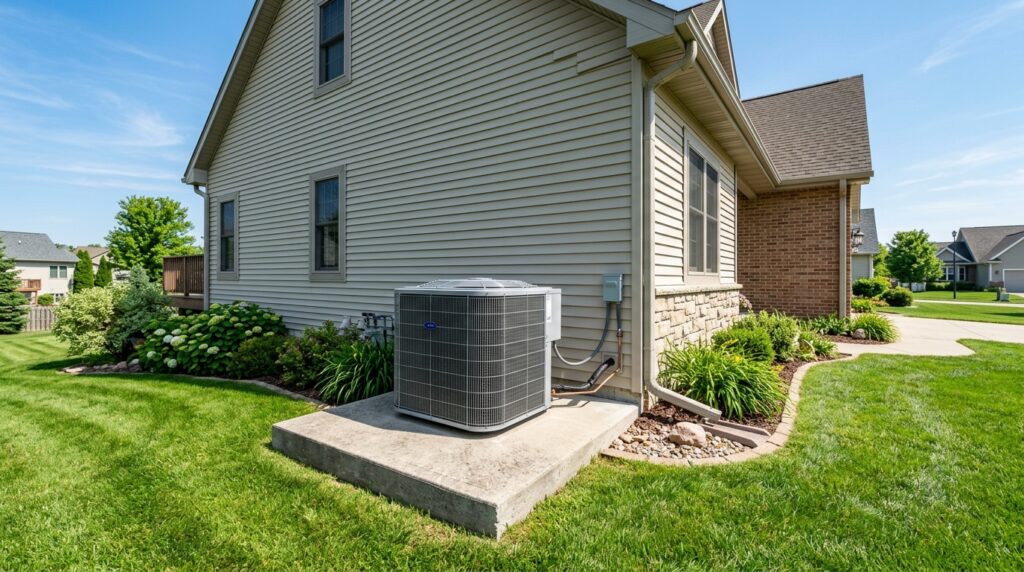
In 2026, the typical central air conditioning installation cost in the US runs from $5,000 to $28,000 for a full HVAC replacement including equipment and labor, while a central AC-only replacement usually falls between $3,500 and $14,000. Most homeowners land around $10,000 to $13,000 for a full replacement once labor, permits, and any electrical or ductwork work are included.
Those ranges are wide for a reason. Your final number depends on the size of the system, the efficiency tier you pick, the shape of your existing ductwork and electrical service, where you live, and the ongoing refrigerant transition reshaping equipment pricing. This guide breaks down each piece so you can read a quote with confidence.
2026 Central AC Installation Cost by Size
Browse complete AC systems at contractor pricing, then have a local pro install. Compare models and current prices on our complete AC systems page.
Cooling capacity is measured in tons, where 1 ton equals 12,000 BTUs. Most homes use systems between 1.5 and 5 tons, and each additional ton adds roughly $1,000 to $1,500 to the project. A 2-ton unit costs significantly less than a 5-ton unit, both for the equipment and the labor to set it.
| Approx. AC Tonnage | Typical Installed Cost (Central AC) | Notes |
|---|---|---|
| 1.5 – 2 tons | $3,500 – $6,000 | Smaller homes; lower end of the range |
| 2.5 – 3 tons | $5,000 – $9,000 | Common mid-size home range |
| 3.5 – 4 tons | $7,000 – $12,000 | Larger homes; may trigger electrical upgrades |
| 5 tons | $9,000 – $14,000+ | Largest residential systems; often needs panel work |
| Full HVAC replacement (AC + furnace/air handler) | $5,000 – $28,000 | Real-world total commonly $10,000 – $13,000 |
Do not let a contractor guess at tonnage. A proper load calculation, often called a Manual J, sizes the system to your home rather than the old unit. The Air Conditioning Contractors of America (ACCA) publishes the load calculation standards reputable installers follow. An oversized unit short-cycles, wastes energy, and dehumidifies poorly.
What Drives the Cost Up or Down
Beyond size, several factors swing the final bill. Understanding them helps you compare quotes line by line.
- Ductwork: If your home lacks ducts, or existing ducts need replacement, sealing, or significant modification, costs can rise by $3,000 to $6,000 or more. Incompatible refrigerant line sets may also need replacing.
- Electrical: Older homes often need a new circuit, disconnect switch, or main panel upgrade to safely run a modern unit. This typically runs $1,500 to $4,000, with panel work for larger 3-to-5-ton systems landing around $2,000 to $3,000.
- Permits: Most municipalities require permits and inspections. Fees generally range from $150 to $500, though the average HVAC replacement permit across 28 US cities tracked for 2026 is about $139. Some cities charge as little as $25, others more than $500.
- Region and labor: Labor accounts for 30 to 60 percent of the total bill. High-cost areas like California, the Northeast, Hawaii, and Alaska can run 15 to 50 percent above the national average, while the Southeast and Midwest often come in below it. Labor shortages add upward pressure everywhere.
- Brand and equipment tier: Premium brands such as Trane and Lennox typically cost about 20 percent more than mid-range brands like Carrier and Rheem for similar capacity.
The Refrigerant Transition (Why 2026 Prices Are Higher)
The HVAC industry is moving away from older refrigerants like R-410A toward lower global-warming-potential alternatives such as R-32 and R-454B, driven by federal regulation. This shift alone is adding an estimated 10 to 30 percent to the cost of new equipment in 2026. Because the rules and product availability are still settling, confirm current refrigerant compatibility and pricing with your contractor rather than assuming last year’s numbers.
Efficiency Tiers: SEER2, HSPF2, and AFUE
Efficiency ratings tell you how much cooling or heating you get per dollar of energy. As of late 2025, federal minimums are set under updated SEER2 testing standards, so always verify the current minimum for your region with the official source rather than a hard number that may shift in 2026.
- SEER2 measures cooling efficiency over a season. Higher numbers mean lower energy bills but higher upfront equipment cost.
- HSPF2 measures heating efficiency for heat pumps.
- AFUE measures gas furnace efficiency as a percentage of fuel converted to heat.
Upgrading to a high-efficiency system in the 17 to 20 SEER2 range can add roughly 15 percent to the mid-range project cost. The payback depends on your climate and electricity rates. In hot regions where the AC runs much of the year, the higher tier often pays off; in mild climates, a mid-tier unit may be the smarter buy. For current ratings and verified product listings, check the ENERGY STAR directory and the US Department of Energy efficiency standards pages.
Tax Credits and Rebates
Federal tax credits can meaningfully lower the net cost of a qualifying high-efficiency system. The amounts, eligibility, and which equipment qualifies are set by the IRS and tied to specific efficiency thresholds, and these details can change. Rather than relying on a fixed figure that may differ in 2026, confirm the current credit directly at the official source: see the IRS guidance on the Energy Efficient Home Improvement Credit, and cross-check qualifying models on ENERGY STAR.
On top of federal credits, many states and utilities offer rebates for high-efficiency central air systems and heat pumps. Ask your installer which rebates they handle paperwork for, and search your utility’s website before signing. Stacking a utility rebate with a federal credit can move the math significantly.
Professional vs DIY: Code and EPA Realities
Central AC installation is not a realistic DIY project for almost any homeowner. Handling refrigerant requires EPA Section 608 certification, and it is illegal to knowingly release refrigerant or to buy certain refrigerants without it. Beyond the law, sizing, line-set brazing, vacuum and charge procedures, and electrical tie-ins all affect safety, warranty, and performance.
Most jurisdictions also require a permit and inspection. Skipping the permit can void manufacturer warranties, create insurance problems, and cause headaches when you sell the home. A licensed contractor who pulls the permit and passes inspection protects you on all three fronts. The practical DIY savings are not worth the legal and warranty risk.
How to Save Money
- Get at least three itemized quotes. Insist that each one lists equipment, labor, permits, ductwork, and electrical separately so you can compare apples to apples.
- Right-size the system. A Manual J load calculation prevents paying for tonnage you do not need, which also lowers running costs.
- Match the efficiency tier to your climate. A 17 to 20 SEER2 upgrade adds about 15 percent; only pay for it if your cooling season justifies the payback.
- Stack incentives. Combine federal credits with state and utility rebates, and have the contractor confirm qualifying model numbers.
- Seal existing ducts where possible rather than replacing them, and ask whether your current line set is compatible with the new refrigerant before assuming full replacement.
- Time the purchase. Off-season installation in spring or fall can come with better scheduling and occasional pricing flexibility.
Signs You Need Replacement Instead of Repair
Repair makes sense for a newer unit with an isolated problem. Replacement usually wins when several of these stack up:
- The system is 12 to 15 years old or older.
- It still uses R-410A or older refrigerant, making repairs costlier as those refrigerants phase out.
- Repair costs approach or exceed half the price of a new unit.
- Energy bills keep climbing even though usage has not changed.
- Some rooms never cool evenly, or the unit runs constantly in summer.
- You face frequent breakdowns or repeated refrigerant leaks.
If two or more of these apply, ask your contractor to price both options. Often the long-term energy savings and reliability of a new, efficient system outweigh sinking more money into an aging one.
Get quotes from vetted HVAC contractors in your area. Comparing two or three installers is the single best way to control the price.
Frequently Asked Questions
How much does it cost to install central air conditioning in 2026?
A full HVAC replacement generally runs $5,000 to $28,000 including equipment and labor, while a central AC-only replacement typically falls between $3,500 and $14,000. Many homeowners land around $10,000 to $13,000 for a full replacement.
What size central air conditioner do I need?
Sizing is measured in tons, with most homes using 1.5 to 5 tons (1 ton equals 12,000 BTUs). The right size comes from a Manual J load calculation rather than copying the old unit, since each added ton raises the project cost by roughly $1,000 to $1,500.
Why is central AC more expensive in 2026?
The industry is transitioning from older refrigerants like R-410A to lower global-warming-potential options such as R-32 and R-454B under federal rules, which is adding an estimated 10 to 30 percent to new equipment costs. Labor shortages and regional cost differences also push prices up.
Are there tax credits for installing a high-efficiency central AC?
Yes, the federal Energy Efficient Home Improvement Credit can offset part of the cost of qualifying high-efficiency systems, and many states and utilities add rebates. Because amounts and eligibility can change, confirm the current credit at IRS.gov and check qualifying models on ENERGY STAR.
Can I install central air conditioning myself?
It is not practical or legal for most homeowners because handling refrigerant requires EPA Section 608 certification, and most areas require a permit and inspection. Hiring a licensed contractor protects your warranty, insurance, and safety.
How does a higher SEER2 rating affect the price?
Higher SEER2 systems cost more upfront but use less energy over time. Upgrading to a high-efficiency 17 to 20 SEER2 unit can add about 15 percent to the mid-range project cost, with payback depending on your climate and electricity rates.