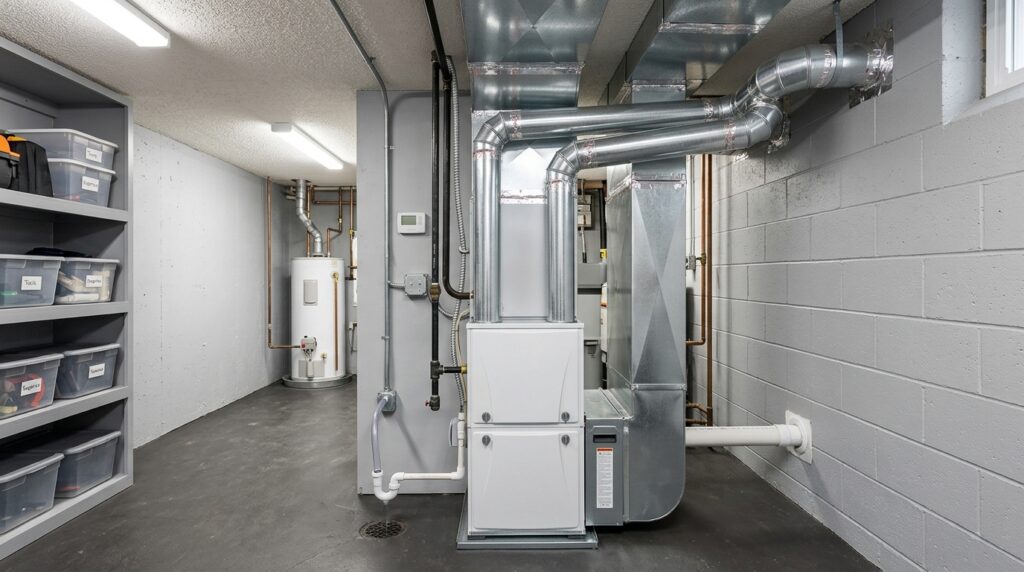
For most US homes, furnace installation cost in 2026 runs about $3,000 to $7,500 for a complete, professional gas furnace install, with the average landing near $4,800. Many homeowners pay between $4,500 and $6,300 for a quality mid-range unit, while premium high-efficiency setups with complex ductwork and code upgrades can reach $12,000 or even $14,000.
Those figures cover a standard “changeout” through a more involved replacement. Where your project falls depends on the size of your home, the efficiency tier you pick, the condition of your existing ductwork, and your local labor market. This guide breaks down each of those factors so you can budget with confidence and know when a quote is fair.
Furnace Installation Cost Breakdown for 2026
Browse gas heat systems at contractor pricing, then have a local pro install. Compare models and current prices on our gas heat systems page.
The single biggest variable is the equipment itself, followed by labor and any upgrades your home needs to meet code. Here is how the typical numbers shake out.
| Item or Furnace Type | Typical 2026 Cost | Notes |
|---|---|---|
| Gas furnace (installed) | $3,800 to $10,000 | Most common choice. High-efficiency 96%+ AFUE models run $7,500 to $12,000. |
| Average installed project | ~$4,800 | Most projects fall between $2,800 and $6,900. |
| Mid-range gas unit (common) | $4,500 to $6,300 | Where most homeowners land. |
| Furnace + AC together | $5,000 to $12,500 | Averages near $7,500; full system upgrades can reach $15,000. |
| Ductwork repair or resize | $500 to $3,000 | Old, leaky, or undersized ducts add cost. |
| Permits and inspections | $50 to $300 | Can reach $400 to $1,500 in some areas. |
| Old unit removal | $50 to $200 | Disposal of the existing furnace. |
| High-efficiency upgrade | +$500 to $2,500 | Roughly 30% more than a standard model. |
Because estimates vary widely by source, treat the table as a planning tool, not a fixed quote. Always get two or three written bids from licensed local contractors.
What Drives the Cost
Two furnaces with the same efficiency can cost very different amounts to install. These are the factors that move the number:
- Furnace size (BTU capacity): Larger homes need more heating output, which raises both equipment and labor costs. Proper sizing matters. An undersized unit cannot keep up, while an oversized one short-cycles, wastes energy, and wears out early.
- Efficiency tier (AFUE): Higher-efficiency condensing furnaces cost more upfront but cut energy bills over time. Stepping up adds roughly $500 to $2,500, or about 30% to the price.
- Ductwork condition: Old, leaky, or undersized ducts can add $500 to $3,000 if they need repair, resizing, or replacement. Fixing them helps the new unit run efficiently and last longer.
- Electrical upgrades: If your panel or wiring cannot support the new furnace or its advanced controls, electrical work adds to the total.
- Permits and inspections: Most jurisdictions require permits. Fees usually run $50 to $300 but can reach $400 to $1,500 in some areas.
- Region and labor market: Rates vary by city and contractor. High-wage metros and areas with strict permitting tend to cost more.
- Installation complexity: A like-for-like changeout in the same spot is cheapest. Switching fuel types, moving the unit to an attic, or upgrading gas lines and venting all add labor and materials.
- Old unit removal: Hauling away and disposing of the old furnace typically adds $50 to $200.
Efficiency Tiers and How They Change Price
Gas furnaces are rated by Annual Fuel Utilization Efficiency (AFUE), which measures how much fuel is converted into usable heat. A 90% AFUE unit turns 90% of its fuel into heat for your home, with the rest lost through exhaust.
Standard models hover in the low-to-mid 80s for AFUE, while high-efficiency condensing units hit 90% and above. Those high-efficiency models cost more upfront, but they trim your monthly energy bills and are more future-proof. As of late 2025, the Department of Energy has set roughly a 95% AFUE minimum for most non-weatherized gas furnaces beginning in 2028, so a higher-efficiency choice now positions you ahead of that change. Confirm current and upcoming standards at energy.gov.
If you are pairing the furnace with a new air conditioner or heat pump, you will also see SEER2 and HSPF2 ratings, which measure cooling and heating efficiency for that equipment. Higher numbers mean better efficiency and a higher price. For verified equipment ratings, the AHRI Directory lets you check matched system performance.
Tax Credits and Rebates
High-efficiency heating equipment may qualify for federal tax credits, and many utilities and states offer additional rebates that can meaningfully lower your net cost. Because credit amounts, qualifying efficiency levels, and program availability can change, verify the details before you buy rather than relying on a contractor’s word alone.
- Check current federal energy efficiency tax credits at IRS.gov and the consumer-facing guidance on ENERGY STAR.
- Look up state and utility rebates through your local utility provider and your state energy office.
- Keep your AHRI certificate and itemized invoice. You will likely need them to claim a credit or rebate.
Tax rules and incentive programs can shift year to year, so treat the official IRS and ENERGY STAR pages as your source of truth for any 2026 figures.
Professional Installation vs DIY and the Code Realities
Installing a gas furnace is not a do-it-yourself project for most homeowners. Gas furnace work involves combustion, fuel lines, venting, and electrical connections, all of which carry safety and legal requirements.
- Permits are usually mandatory. Most jurisdictions require a permit and inspection to confirm the install meets code. Skipping this can void warranties and complicate a future home sale.
- Refrigerant work is regulated. If your project includes an AC or heat pump, handling refrigerant requires EPA certification under federal rules.
- Proper sizing requires a load calculation. Quality contractors run a Manual J load calculation rather than guessing. The Air Conditioning Contractors of America (ACCA) publishes the standards reputable installers follow.
- Warranties depend on professional install. Many manufacturers require installation by a licensed pro to keep the equipment warranty valid.
The realistic DIY savings rarely outweigh the safety risk, code exposure, and warranty loss. For gas equipment, hire a licensed HVAC contractor.
How to Save Money
You can lower your furnace installation cost without cutting corners on safety or quality:
- Get multiple written bids. Compare at least two or three quotes with line-item detail so you can see exactly what each includes.
- Choose a like-for-like changeout when possible. Keeping the same fuel type and location avoids costly gas line, venting, and relocation work.
- Right-size the unit. Insist on a load calculation. Paying for capacity you do not need wastes money up front and on every energy bill.
- Stack incentives. Combine federal tax credits with utility and state rebates to bring down the net price.
- Bundle furnace and AC if both are aging. Replacing them together often costs less than two separate jobs and ensures a properly matched system.
- Schedule in the off-season. Contractors are often less booked in spring and fall, which can mean better pricing and faster scheduling.
- Weigh efficiency against payback. A higher-AFUE unit costs more now but can pay for itself through lower bills, especially in colder climates.
Signs You Need a Replacement
Repairing makes sense for a newer furnace, but replacement is often the smarter long-term move when these signs add up:
- Age: Furnaces approaching or past 15 to 20 years are usually nearing the end of their service life.
- Rising energy bills: A steady climb in heating costs often points to declining efficiency.
- Frequent or expensive repairs: When repair bills start stacking up, replacement frequently costs less over time.
- Uneven heating or short-cycling: Rooms that never warm up, or a furnace that turns on and off rapidly, can signal an aging or improperly sized unit.
- Strange noises or odors: Banging, rattling, or persistent smells warrant a professional inspection right away.
- Safety concerns: Any sign of a cracked heat exchanger or carbon monoxide risk means you should stop using the unit and call a licensed pro immediately.
If your furnace is old, struggling, and costing you on repairs and bills, a new high-efficiency unit can pay you back in comfort and savings while positioning you ahead of the upcoming 2028 efficiency standards.
Get quotes from vetted HVAC contractors in your area. Comparing two or three installers is the single best way to control the price.
Frequently Asked Questions
How much does it cost to install a gas furnace in 2026?
A complete professional gas furnace installation typically costs between $3,000 and $7,500, with the average near $4,800. Most homeowners pay $4,500 to $6,300 for a mid-range unit, while premium high-efficiency setups can reach $12,000 or more.
Does a high-efficiency furnace cost more to install?
Yes. Stepping up to a high-efficiency condensing furnace typically adds about $500 to $2,500, or roughly 30% to the price. The higher upfront cost is offset by lower monthly energy bills over time.
Are there tax credits or rebates for a new furnace?
High-efficiency furnaces may qualify for federal tax credits and additional utility or state rebates. Because amounts and eligibility can change, verify current details at IRS.gov and ENERGY STAR before you buy, and keep your AHRI certificate and invoice.
Can I install a gas furnace myself?
For most homeowners, no. Gas furnace work involves combustion, fuel lines, venting, and electrical connections, and most jurisdictions require permits and inspections. Many warranties are also void without licensed professional installation.
What is AFUE and why does it matter?
AFUE, or Annual Fuel Utilization Efficiency, measures how much fuel a furnace converts into usable heat. A higher AFUE means lower energy waste and bills. As of late 2025, the Department of Energy has set roughly a 95% AFUE minimum for most non-weatherized gas furnaces starting in 2028.
When should I replace my furnace instead of repairing it?
Consider replacement when your furnace is 15 to 20 years old, repairs are frequent or expensive, energy bills keep rising, or you notice uneven heating, short-cycling, or safety concerns like a cracked heat exchanger.