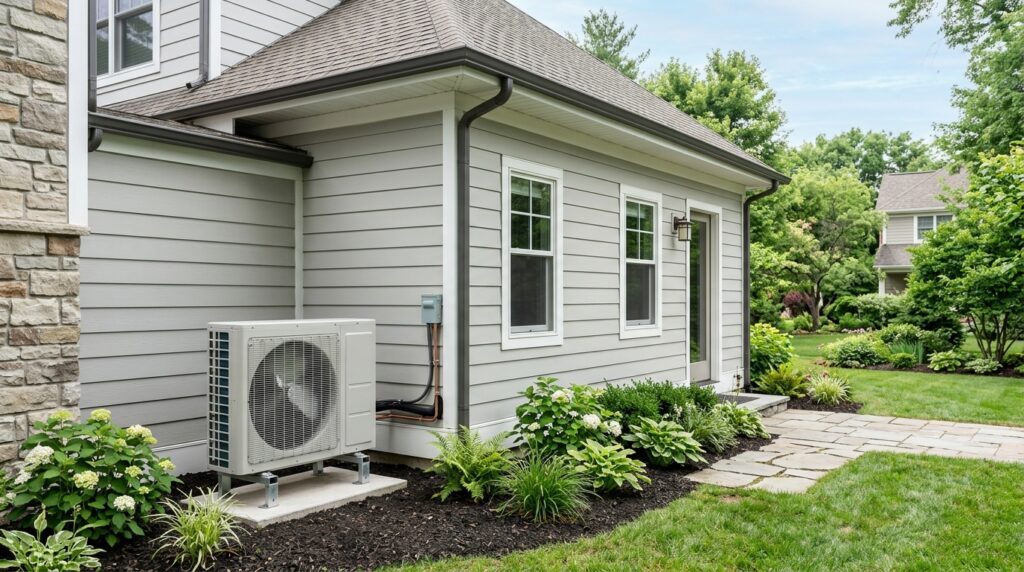
For 2026, the typical installed heat pump cost in the US runs between $8,500 and $25,000 before rebates, with an average of roughly $15,400. A common 2.5 to 3-ton air-source system in an existing home usually lands between $9,400 and $16,750 installed, while a basic single-zone mini-split can start near $1,454 and a complex geothermal system can reach up to $72,000.
Those ranges are wide for a reason. The system type, the size your home actually needs, the efficiency tier you choose, and project realities like ductwork and electrical work all push the final number up or down. This guide walks through the real numbers so you can budget with confidence and spot when a contractor’s quote is fair.
Real Installed Price Ranges for 2026
Browse heat pump systems at contractor pricing, then have a local pro install. Compare models and current prices on our heat pump systems page.
Here is how the typical spending breaks down before any incentives:
- Low end: Basic installations such as a single-zone mini-split can start around $1,454.
- Typical range: Most homeowners pay $4,238 to $7,941 for professional installation of a unit, or more broadly $8,500 to $25,000 for a complete system replacement.
- High end: Complex projects, especially geothermal heat pumps, can reach up to $72,000.
One important note on 2026 pricing: figures shift with refrigerant rules, tariffs, and regional labor markets, so treat any specific number here as a planning estimate rather than a fixed quote. Always confirm current equipment pricing and incentives through the official sources linked below as of late 2025.
Cost by Size and System Type (2026)
System type is the single biggest cost driver, followed closely by capacity (measured in tons). Use this table as a starting point, then get a professional quote based on a Manual J load calculation.
| Heat Pump Type / Capacity | Average Installed Cost Range (2026) | Notes |
|---|---|---|
| Single-zone mini-split | From about $1,454 | Least expensive option; ductless and zone-specific. |
| Lower-capacity air-source unit | Around $3,500 | Equipment plus labor for a smaller home. |
| 3-ton air-source (with labor) | $3,900 to $6,200 | Common size for many US homes. |
| Higher-capacity air-source unit | Up to $8,800 | For larger homes or higher loads. |
| 2.5 to 3-ton system, existing home (full install) | $9,400 to $16,750 | Reflects a complete installed system. |
| Complete system replacement | $8,500 to $25,000 | Broad range covering most whole-home jobs before rebates. |
| Cold-climate heat pump premium | $2,000 to $10,000+ | Added on top of a standard system in cold regions. |
| Geothermal system | Up to $72,000 | Drilling or excavation drives the high cost. |
What Drives the Cost
Beyond type and size, several project factors can change your bottom line significantly.
- Ductwork: New ductwork can add $2,000 to $7,500. A full duct replacement may run $3,000 to $6,500 depending on layout and accessibility. Geothermal duct modifications range from $1,400 to $5,600.
- Electrical upgrades: Many installs require panel work. Upgrading an undersized 100-amp or a full 200-amp panel can cost $2,500 to $5,500.
- Permits: Local building permits typically cost $50 to $300.
- Region and labor: Labor is 30 to 40 percent of a typical install and varies widely by location. A whole-home install might cost around $8,000 in New Mexico but $33,000 in New York.
- Brand: Premium brands with advanced features and longer warranties can add $1,500 to $4,000 in equipment cost.
- Refrigerant transition: The 2026 shift to A2L refrigerants such as R-454B has raised equipment manufacturing costs by 15 to 20 percent because of new safety sensors and leak detection. Combined with 2025 tariffs, this represents a lasting increase in system complexity and cost.
Accurate sizing matters more than most buyers expect. An oversized unit short-cycles and wastes money, while an undersized one struggles in extreme weather. Insist on a professional Manual J load calculation from a contractor following ACCA standards rather than a rule-of-thumb estimate.
Efficiency Tiers and How They Change Price
Heat pumps are rated by SEER2 (Seasonal Energy Efficiency Ratio 2) for cooling and HSPF2 (Heating Seasonal Performance Factor 2) for heating. Higher numbers mean better efficiency and lower operating bills, but a higher upfront price.
- Equipment with SEER ratings between 14 and 20 can run $1,600 to $9,500 for the unit alone.
- Moving from a 14 SEER unit to a 16 SEER unit raises the cost by roughly 15 percent.
- Stepping up to the most efficient models available can increase the cost by more than 120 percent.
The right tier depends on your climate and how long you plan to stay. In a mild region, a mid-tier system often returns the best value. In colder climates, a cold-climate model with strong HSPF2 performance can be worth the premium because it reduces reliance on backup heat. You can compare certified efficiency ratings through the ENERGY STAR program before you choose.
Tax Credits and Rebates
Federal incentives can meaningfully lower your out-of-pocket cost, but program details and dollar amounts can change year to year. Rather than relying on a fixed figure, confirm what applies to your purchase as of late 2025 directly with the official sources.
- Federal tax credits: Check current eligibility, qualifying equipment, and credit limits with the IRS and review program details at energy.gov.
- State and utility rebates: Many states and local utilities offer their own rebates that stack with federal credits. Look these up through energy.gov and your utility provider.
Because incentive rules tied to specific tax years can shift, do not assume a hard 2026 dollar amount. Verify with the IRS and energy.gov before signing a contract, and keep your AHRI certificate and receipts for documentation.
Professional vs. DIY, Code, and EPA Realities
Heat pump installation is not a realistic DIY project for most homeowners. Systems use refrigerant, which is regulated, and the 2026 transition to A2L refrigerants adds safety sensor and leak detection requirements that demand trained handling. Working with refrigerant generally requires EPA certification, and improper installation can void your warranty and create safety hazards.
Permits are also required in most jurisdictions, and inspectors check that the work meets local code. A licensed contractor handles the permit, the electrical coordination, proper sizing, and the AHRI-matched equipment pairing that protects your efficiency rating and warranty. The labor share of 30 to 40 percent of project cost buys you that expertise and code compliance.
How to Save Money
- Get at least three quotes from licensed contractors and compare equipment models, not just totals.
- Right-size the system with a Manual J calculation so you do not overpay for capacity you will never use.
- Stack incentives by combining federal credits with state and utility rebates.
- Choose a mid-tier efficiency if you live in a mild climate, since the jump to the highest tiers can more than double equipment cost.
- Address ductwork and electrical early so surprises do not balloon the final bill.
- Time the purchase for off-season periods when contractors may offer better pricing.
Signs You Need a Replacement
Consider replacing rather than repairing when you notice these patterns:
- The system is past its expected service life and needs frequent, costly repairs.
- Energy bills keep climbing even though usage habits have not changed.
- Some rooms never reach a comfortable temperature, suggesting poor sizing or failing components.
- The unit short-cycles, makes unusual noises, or struggles in extreme heat or cold.
- Your current system uses an older refrigerant that is being phased out, making future repairs harder and more expensive.
If two or more of these apply, a replacement often pays for itself over time through lower energy use and avoided repair bills, especially once you factor in available incentives.
Get quotes from vetted HVAC contractors in your area. Comparing two or three installers is the single best way to control the price.
Frequently Asked Questions
How much does it cost to install a heat pump in 2026?
Most US homeowners pay between $8,500 and $25,000 for a complete heat pump system replacement before rebates, with an average around $15,400. A typical 2.5 to 3-ton air-source system in an existing home runs $9,400 to $16,750 installed.
What is the cheapest type of heat pump to install?
A single-zone ductless mini-split is usually the least expensive option, starting around $1,454. Geothermal systems are the most expensive, reaching up to $72,000 because of the required drilling or excavation.
How much do ductwork and electrical upgrades add to a heat pump install?
New ductwork can add $2,000 to $7,500, and a full duct replacement may run $3,000 to $6,500. Upgrading an undersized or 200-amp electrical panel typically costs $2,500 to $5,500.
Are there tax credits for heat pumps in 2026?
Federal tax credits and state or utility rebates may apply, but amounts and eligibility can change by tax year. As of late 2025, confirm current details with the IRS and energy.gov before purchasing, and keep your AHRI certificate and receipts.
Can I install a heat pump myself?
For most homeowners, no. Heat pumps use regulated refrigerant that generally requires EPA certification to handle, and most jurisdictions require permits and code inspections, so a licensed contractor is the safe and warranty-protecting choice.
How does efficiency affect heat pump cost?
Higher SEER2 and HSPF2 ratings cost more upfront but lower operating bills. Moving from a 14 SEER unit to 16 SEER adds about 15 percent, while the most efficient models can increase equipment cost by more than 120 percent.