
Choosing among the many types of heat pumps available today is one of the more consequential decisions a homeowner can make for long-term comfort and energy costs. The market offers air source heat pumps, geothermal heat pumps, ductless mini-splits, air-to-water systems, and absorption units, each suited to different climates, budgets, and home configurations. Getting this decision wrong means paying too much upfront, underperforming in cold snaps, or retrofitting a system that never quite fits the house. This guide breaks down every major heat pump type with the specifics you need to match the right system to your home.
Table of Contents
- Key takeaways
- 1. Understanding the types of heat pumps before you buy
- 2. Air-source heat pumps: the most common choice
- 3. Geothermal heat pumps: high efficiency for the long term
- 4. Absorption heat pumps: a specialized alternative
- 5. Comparing heat pump types side by side
- My take on choosing the right heat pump type
- Find the right heat pump system at wholesale prices
- FAQ
Key takeaways
| Point | Details |
|---|---|
| Heat source determines type | The DOE classifies heat pump systems first by where heat comes from, then by how it is delivered. |
| Air-source dominates residential use | Air source heat pumps represent over 60% of global sales due to lower cost and wide installer availability. |
| Geothermal excels in extreme climates | Ground-source systems use stable underground temperatures for higher efficiency, especially in very cold regions. |
| Delivery method matters as much as source | Ducted, ductless, and air-to-water delivery options depend heavily on existing home infrastructure. |
| Real-world fit beats headline efficiency | Matching system type to your specific home and climate produces better outcomes than chasing top efficiency ratings alone. |
1. Understanding the types of heat pumps before you buy
Before comparing specific products, you need a framework. The U.S. Department of Energy classifies heat pump systems first by heat source and sink, then by delivery method. That two-axis framework cuts through most of the confusion.
The primary decision criteria to evaluate include:
- Heat source: Air-to-air systems pull heat from outdoor air. Ground-source systems extract heat from the earth. Absorption units use thermal energy from gas or solar.
- Delivery method: Ducted systems distribute conditioned air through existing ductwork. Ductless mini-splits deliver directly to individual rooms. Air-to-water systems feed hydronic (radiant) heating loops.
- Climate suitability: Air-source systems lose efficiency as outdoor temperatures drop. Geothermal systems maintain performance year-round due to stable ground temperatures.
- Existing infrastructure: Homes with ducts favor central ducted systems. Homes without ducts, or with radiant floors, need ductless or hydronic options.
- Budget: Upfront equipment and installation costs vary widely across types, from under $5,000 for a single-zone mini-split to well over $20,000 for a full geothermal installation.
Pro Tip: Before requesting any quotes, document whether your home has existing ductwork, a radiant floor system, or neither. This single piece of information will immediately narrow your viable options and prevent wasted consultations.
2. Air-source heat pumps: the most common choice
Air source heat pumps account for the majority of residential installations worldwide, driven by lower costs, straightforward installation, and broad contractor availability. They work by extracting heat from outdoor air in winter and reversing the process to cool in summer. Within this category, three distinct delivery variants exist.
Ducted air-source heat pumps
These are central systems that connect to existing ductwork and condition the entire home from a single outdoor unit and air handler. They are the most familiar configuration for homeowners replacing a gas furnace or central AC. Ducted whole-house systems cost approximately $3,500 to $5,000 for equipment alone, with installation adding to the total. They suit homes with well-sealed, properly sized duct systems. Poorly insulated or leaky ducts will undercut efficiency significantly.
Ductless mini-split heat pumps
Mini-splits consist of one outdoor compressor connected to one or more indoor air handlers mounted on walls or ceilings. They are the preferred solution for homes without ductwork, room additions, or zone heating needs. Ductless mini-splits average $3,000 per unit to install, with multi-zone setups reaching $14,500 or more depending on the number of indoor units and home size. Because they bypass ducts entirely, they avoid duct losses that can reduce system efficiency by 20 to 30 percent in homes with older ductwork.
Air-to-water heat pumps
Air-to-water systems extract heat from outdoor air and transfer it to a water loop that feeds radiant floor heating, radiators, or domestic hot water tanks. They are less common in North America but well-established in Europe. These systems pair well with homes that already have hydronic heating infrastructure.
Key advantages of air-source systems:
- Lower upfront cost compared to geothermal
- Wide availability of qualified installers
- Suitable for most U.S. climate zones with modern cold-climate models
- Dual function as both heating and cooling system
- Eligible for federal tax credits and utility rebates in most states
Limitations to consider:
- Performance degrades below 0°F in standard models (cold-climate models extend this range)
- Ducted variants require existing duct infrastructure in good condition
- Outdoor unit requires clearance and regular maintenance
3. Geothermal heat pumps: high efficiency for the long term
Geothermal heat pumps, also called ground-source heat pumps, exchange heat with the earth rather than outdoor air. Because ground temperatures below the frost line remain stable year-round, typically between 45°F and 75°F depending on location, these systems maintain higher efficiency in extreme cold that air-source units cannot match.
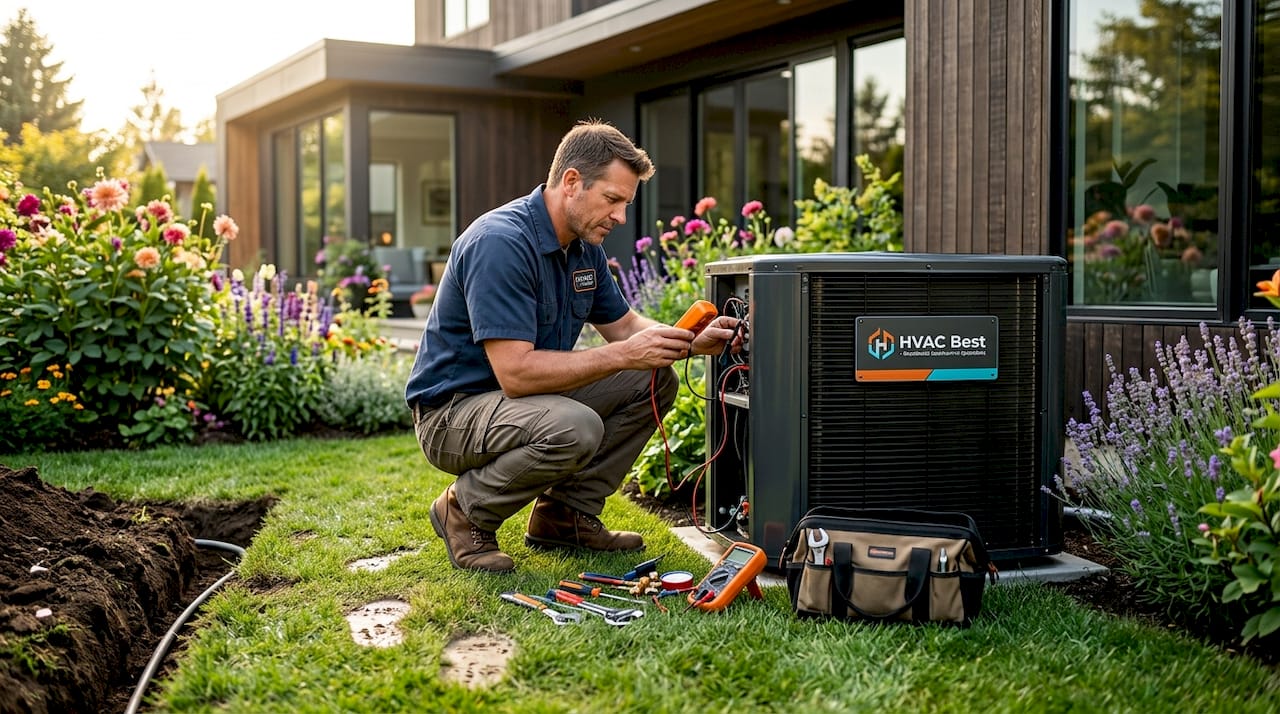
The installation process requires either vertical boreholes drilled 150 to 400 feet deep or horizontal trenches dug 4 to 6 feet below grade. Both approaches involve significant excavation work, which is the primary driver of higher upfront costs. Total installed costs for a geothermal system typically range from $15,000 to $30,000 or more, depending on lot size, soil conditions, and loop configuration.
Where geothermal systems make the most sense:
- Homes in climates with prolonged, severe winters where air-source efficiency drops significantly
- New construction where loop installation can be planned before landscaping
- Properties with sufficient land area for horizontal loops
- Homeowners with a long time horizon, typically 10 or more years, to recoup the higher upfront investment
- Locations with high electricity rates where efficiency gains translate to substantial dollar savings
Pro Tip: Ask your geothermal installer about hybrid configurations that pair a ground-source heat pump with a supplemental air-source or gas backup. In moderate climates, this can reduce drilling costs while maintaining efficiency advantages during peak cold periods.
Geothermal systems also have fewer outdoor components exposed to weather, which translates to lower maintenance requirements over time. The underground loop itself carries manufacturer warranties of 25 to 50 years in most cases.
4. Absorption heat pumps: a specialized alternative
Absorption heat pumps operate on a fundamentally different cycle than the electric compression systems described above. Instead of using electrical energy to drive a compressor, they use thermal energy from sources such as natural gas, propane, solar-heated water, or geothermal hot water to drive the refrigeration cycle.
The key distinctions from conventional electric heat pumps include:
- Energy input: Thermal rather than electrical, making them relevant where gas is cheaper than electricity or where solar thermal collectors are already installed
- Efficiency metric: Rated by gas utilization efficiency (GUE) rather than COP; high-efficiency gas absorption units can achieve GUE values above 1.5, meaning they deliver more heat energy than the gas energy consumed
- Residential adoption: Limited in North America due to higher equipment costs, fewer qualified installers, and the widespread availability of electric alternatives
- Best fit scenarios: Homes in areas with very low gas prices, off-grid properties with solar thermal systems, or commercial applications where large-scale gas infrastructure already exists
Absorption heat pumps are a later consideration for most residential buyers. They require a specific fuel or thermal context to make economic sense, and the installation pool of qualified contractors is considerably smaller than for electric systems.
5. Comparing heat pump types side by side
The table below presents a direct comparison of the primary heat pump varieties across the factors most relevant to homeowners.
| Feature | Ducted air-source | Ductless mini-split | Geothermal | Absorption |
|---|---|---|---|---|
| Typical installed cost | $6,000–$12,000 | $3,000–$14,500 | $15,000–$30,000+ | $10,000–$20,000+ |
| Heat source | Outdoor air | Outdoor air | Ground/earth | Gas or solar thermal |
| Cold climate performance | Moderate to good | Moderate to good | Excellent | Good (gas-dependent) |
| Requires ductwork | Yes | No | No (typically) | Varies |
| Installation complexity | Low to moderate | Low | High | Moderate to high |
| Maintenance frequency | Annual | Annual | Low (loop) | Annual |
| Best for | Homes with existing ducts | Homes without ducts, zone heating | Severe climates, long-term owners | Gas-rich or solar thermal homes |
Pro Tip: When reviewing efficiency ratings, look at the Heating Seasonal Performance Factor (HSPF2) for air-source systems and the Energy Efficiency Ratio (EER) for geothermal. These seasonal metrics reflect real-world performance better than single-point COP figures listed in spec sheets.
Real-world efficiency depends far more on matching the system to the home and climate than on chasing the highest headline rating. A geothermal system in a mild climate may not justify its cost premium over a well-specified cold-climate mini-split. The comparison table above is a starting point, not a final answer.
My take on choosing the right heat pump type
I’ve reviewed hundreds of heat pump installations over the years, and the single most consistent mistake I see homeowners make is treating heat pump selection as a product decision rather than a systems decision.
Most people walk into the process asking “which brand is best?” when the question that actually determines their satisfaction is “which type fits my home, climate, and budget?” A premium ducted air-source system installed in a house with leaky ducts will underperform a mid-range mini-split in the same house every time. The type selection matters more than the brand selection.
The second pattern I see consistently is underestimating the value of geothermal in cold climates. Homeowners see the $20,000-plus installation quote and stop reading. What they miss is that the operating cost difference over 15 to 20 years in a northern climate can fully offset that premium, particularly as electricity rates rise. If you plan to stay in your home long-term, the geothermal math often works out.
I also want to flag something that rarely gets discussed: zone heating design with ductless mini-splits is more complex than it looks. Installing three or four indoor units sounds straightforward, but the sizing, placement, and zoning logic require professional assessment to avoid comfort imbalances between rooms. Don’t treat a multi-zone mini-split install as a DIY project without thorough planning.
The best advice I can offer is to get a Manual J load calculation done on your home before committing to any system type. That calculation tells you exactly how much heating and cooling capacity each room needs, and it will guide every subsequent decision.
— Michael
Find the right heat pump system at wholesale prices
Hvac provides homeowners with direct access to heat pump systems, technical guides, and equipment sourced at wholesale pricing. Whether you are comparing air-source and geothermal options or ready to purchase, Hvac’s product catalog covers the full range of residential heat pump configurations.

For homeowners leaning toward ductless systems, Hvac’s detailed ductless mini-split guide covers sizing, installation planning, and zone design in depth. When you are ready to buy, the wholesale heat pump selection at Hvac includes top-rated models across all major types, with pricing that reflects direct-to-buyer sourcing. For the broadest selection of HVAC systems and components, HVACDirect.com offers wholesale access to equipment from leading manufacturers. Hvac’s editorial resources and product pages are built to support every stage of the decision process, from initial research through final purchase.
FAQ
What are the main types of heat pumps for homes?
The primary types are ducted air-source, ductless mini-split, air-to-water, geothermal (ground-source), and absorption heat pumps. Each differs by heat source and delivery method, as classified by the U.S. Department of Energy.
Which heat pump type is most efficient?
Geothermal heat pumps deliver the highest efficiency due to stable underground temperatures, but real-world performance depends on matching the system to your specific climate and home configuration.
Are ductless mini-splits better than ducted heat pumps?
Ductless mini-splits are more efficient in homes without existing ductwork because they avoid duct losses that can reduce system output by 20 to 30 percent. Ducted systems are a better fit when existing ductwork is well-sealed and properly sized.
How much does a heat pump cost to install?
Costs vary by type. Ducted air-source systems run $6,000 to $12,000 installed, ductless mini-splits average $3,000 to $14,500 depending on zone count, and geothermal systems typically range from $15,000 to $30,000 or more.
Can a heat pump replace a furnace completely?
Modern cold-climate air-source and geothermal heat pumps can serve as primary heating systems in most U.S. climates. In regions with extended temperatures below 0°F, a supplemental backup heating source is often recommended for peak demand periods.
Recommended
- Heat & Air Conditioning Pumps: Ultimate Guide to Home Comfort – HVAC.best
- Heat Pump AC Systems: Your Guide to Efficient Home Comfort – HVAC.best
- Heat Pump AC Systems: Your Complete Guide to Efficiency & Comfort – HVAC.best
- Heat Pumps For Sale: Find the Best Deals & Energy-Efficient Models – HVAC.best